Why Is My Oven Not Heating Up? A Practical Troubleshooting Guide
Urgent, step-by-step troubleshooting guide to diagnose and fix an oven that won’t heat up. Learn safe checks, common causes, and when to call a professional for reliable oven heating.


Most ovens that fail to heat up stem from power, control, or element issues. Start by confirming the outlet and plug, then verify the door seals and control settings. If those basics pass, follow the diagnostic flow to identify whether a fuse, bake element, or thermal fuse is at fault.
Immediate safety and quick checks for why my oven not heating up
According to Oven Cook Pro, safety should come first when your oven won’t heat. Begin with the simplest checks to avoid unnecessary service calls. Make sure the oven is completely powered off before you start inspecting components. If you smell gas or see smoke, stop and evacuate, then contact emergency services. With the power off, inspect the three basics: the outlet and plug, the oven door seal, and the oven settings on the control panel. A loose plug or a tripped circuit breaker is the most common culprit and is usually easy to fix. If the basics check out, proceed to the diagnostic flow to pinpoint which part may be failing.
- Safety first: disconnect power before handling any internal components.
- Check for visible signs of damage on the bake element or broil element (cracks, burns).
- Confirm the oven pilot or ignition is functioning for gas ovens; if you’re uncertain, skip to professional help.
Common causes at a glance
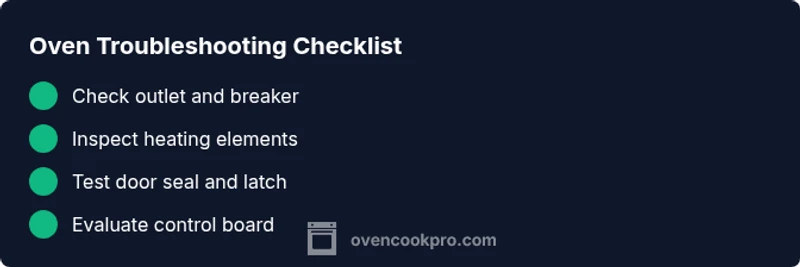
There are several frequent reasons an oven fails to heat, and many are repairable at home if you follow safe steps. This quick checklist helps you triage the issue before diving deeper:
- Power supply issues: a blown fuse, tripped circuit breaker, or outlet fault can prevent the oven from receiving power.
- Faulty heating elements: the bake element (bottom) or broil element (top) may be damaged or burned out.
- Thermal fuse or sensor failure: a blown thermal fuse will cut power to the heating elements to prevent fire.
- Door latch or seal problems: a door that won’t seal or latch properly can prevent proper heating or trigger safety shutoffs.
- Control board issues: electronic controls or sensors can misread temperatures and stop heating correctly.
If you see obvious physical damage, replace the affected part before testing further. If no issues are visible, move to a structured diagnostic flow.
Diagnostic flow: symptom to solution
This section helps you map symptoms to likely causes and practical fixes. Start with the simplest checks and move to more involved tests:
- Symptom: oven shows a temperature reading but does not heat. Diagnosis: power and settings check + sensor check. Solution: reset breaker, verify control settings, and test with a thermometer.
- Symptom: no power to the oven on, display dark. Diagnosis: power supply fault. Solution: inspect outlet, circuit breaker, and cord.
- Symptom: power at display but no heat when set to bake. Diagnosis: heating element or fuse. Solution: inspect elements for damage and test fuses.
- Symptom: gas oven won’t ignite. Diagnosis: ignition or gas supply issue. Solution: check ignition electrode and gas valve; call a professional for gas-related problems if uncertain.
If these checks don’t reveal the problem, it’s time to perform the safe, step-by-step fixes described below or contact a qualified technician.
Step-by-step fixes you can try safely
- Power and outlet test: Ensure the oven is plugged in securely and the outlet is supplying power. Reset the circuit breaker if it has tripped. If you have a multimeter, verify 120V (or the appropriate voltage for your region) at the outlet. Tip: Do not touch exposed wiring.
- Check the door seal and latch: A faulty seal or latch can prevent heating or trigger safety shutoffs. Inspect for cracks or gaps and replace the gasket if needed. Tip: A simple test is to close the door on a thin piece of paper; if you can pull it out easily, the seal is compromised.
- Inspect heating elements: Look for visible damage on the bake and broil elements. If you see a blister, crack, or burn marks, replace the element. Tip: When in doubt, unplug the unit and check with a continuity tester if you have one.
- Test the thermal fuse: If the oven has power but won’t heat, the thermal fuse may be blown. This test often requires a service tool and should be done by a professional. Tip: A blown fuse is a common safety feature; do not bypass it.
- Examine the control board and sensors: If the display is responsive but temperatures are incorrect, the thermostat sensor or control board could be faulty. Try resetting the control panel to defaults; if still off, call for diagnostics. Tip: Take a photo of the control panel settings before you reset so you can restore them later.
- When to call a professional: If there’s gas involved, if you smell gas, or if you’re not confident performing electrical tests, stop and seek a certified technician. Tip: Regular maintenance can prevent many of these issues from recurring.
Safety tips and common mistakes
- Never bypass safety devices like thermal fuses or door interlocks. These components protect you and your home from fire and gas leaks.
- Always disconnect power before inspecting internal components.
- Use the correct replacement parts specified for your model; mismatched parts can cause further damage.
- If you’re ever unsure, err on the side of safety and call a professional.
- Keep a basic repair log and note any recurring symptoms to help technicians diagnose faster.
Prevention tips to keep your oven heating reliably
- Schedule regular maintenance checks, including ignition systems (gas ovens) and heating elements.
- Clean the oven regularly to prevent grime from causing uneven heating and sensor faults.
- Test temperature accuracy with an external oven thermometer every few months.
- Protect electrical connections by ensuring cords aren’t frayed and outlets are not overloaded.
- Use oven-safe cookware and avoid placing metal objects near sensors to prevent false readings.
Steps
Estimated time: 45-60 minutes
- 1
Power and safety check
Turn off power at the breaker and unplug the oven if accessible. Confirm the outlet has power with a tester or a known-good device. Reconnect and try again after a brief wait to ensure the system resets.
Tip: If the breaker trips again, there may be an overloaded circuit or a wiring fault requiring a professional. - 2
Door seal and latch
Inspect the door gasket for cracks or gaps and assess the latch mechanism. A poor seal can prevent proper heating and trigger safety shutoffs. Replace a damaged seal or worn latch as needed.
Tip: Use a flashlight to check for Micro gaps around the door; even small leaks can affect heating accuracy. - 3
Inspect heating elements
Look for visible signs of damage on the bake and broil elements. If you see charring, cracking, or warping, replace the affected element. Ensure the oven is unplugged before removal/inspection.
Tip: Handle elements with care to avoid breaking ceramic insulation; confirm compatibility with your model. - 4
Test thermal fuse and sensors
If the oven has power but no heat, the thermal fuse may be blown. This test typically requires a multimeter and is best done by a technician. Do not bypass the fuse.
Tip: Note any error codes from the control panel that point to sensors or boards. - 5
Evaluate the control board
If controls respond but temperatures are off or no heat occurs, the control board or temperature sensor may be faulty. A reset can help; if issues persist, professional diagnosis is advised.
Tip: Take photos of control settings and any error messages before calling for service. - 6
When to call a professional
If you smell gas, hear unusual noises, or aren’t confident performing electrical tests, contact a licensed technician immediately. Gas ovens require special safety procedures.
Tip: Professional maintenance can prevent future failures and ensure safe operation.
Diagnosis: Oven won't heat or reach the set temperature
Possible Causes
- highPower issue (outlet, plug, or circuit breaker)
- highFaulty bake/broil element
- mediumBlown thermal fuse
- lowDoor latch/seal problem
- lowControl board or sensor failure
Fixes
- easyCheck outlet and plug, reset breaker if tripped; verify power at the wall.
- easyInspect heating elements for visible damage and replace if needed.
- hardTest and replace the thermal fuse if power is present but heating fails.
- easyInspect door seal/latch; replace if damaged to restore proper sealing.
- hardAssess control board or sensor; contact a professional for diagnostics and replacement.
Questions & Answers
What is the first thing I should check if my oven won't heat?
Begin with power, outlet, and circuit breaker checks. Make sure the oven is plugged in and the breaker is reset if tripped. Then confirm the door seal and that the control settings match your recipe.
First check power and the breaker, then verify the door seal and control settings.
Can a faulty bake element cause no heat at all?
Yes. A damaged bake or broil element can prevent heat from reaching the oven cavity. Inspect for visible damage and replace the element if needed.
A bad bake or broil element can stop heating; inspect and replace as needed.
Is a blown thermal fuse the most common reason an oven won't heat?
A blown thermal fuse is a common safety-related cause when the oven shows power but no heat. It typically requires professional replacement due to safety considerations.
A blown thermal fuse is common when there’s power but no heat, and usually needs a pro.
When should I call a professional for oven heating problems?
Call a professional if you detect gas odors, complex electrical faults, or if you are uncomfortable diagnosing or replacing parts. A licensed technician can safely diagnose and repair the issue.
Call a professional for gas issues or complex electrical faults; don’t DIY if unsure.
Can a control board failure prevent heating?
Yes. A faulty control board or faulty temperature sensor can prevent heating or cause incorrect temperatures. It often requires diagnostic testing and board replacement.
Yes, a bad control board or sensor can stop heating and needs testing by a pro.
Main Points
- Start with power and door checks before deeper diagnostics.
- Identify whether the issue is element, fuse, or sensor related.
- Never bypass safety components—call a professional if unsure.
- Regular maintenance reduces future heating problems.