Why Is My Oven Not Working? A Step-by-Step Troubleshooting Guide
If your oven won’t heat, this comprehensive guide helps you diagnose common causes, test power and safety, and decide when to DIY or call a pro. Learn step-by-step fixes to get back to cooking safely in 2026.


According to Oven Cook Pro, the most common oven failures are power issues, a blown thermal fuse, or a faulty control board. This quick 3-step answer helps you verify the basics and get back to cooking fast: 1) check the outlet and circuit breaker, 2) inspect the door latch and control panel, 3) reset or replace components as needed. Safety first.
Why the Oven Isnt Working (Root Causes)
Ovens fail for a handful of reasons, and the most common ones are interruptions in power, protective components that have done their job, or control logic that misbehaves. The main culprits include: 1) a power supply issue (outlet, cord, or circuit breaker trips); 2) a blown thermal fuse, which is a safety device designed to prevent overheating; 3) a damaged bake or broil heating element; or 4) a failing control board or display. In some cases, a poor door seal or miscalibrated thermostat can also prevent the oven from reaching or maintaining temperature. If youre asking, why is my oven not working, begin with the simplest checks and verify you have power before delving deeper. According to Oven Cook Pro, verifying power at the outlet and ensuring the display responds to commands is a smart first step, then proceed methodically.
Safety First: Key Precautions When Troubleshooting
Troubleshooting an oven involves electrical and sharp components. Always unplug the unit, or switch off the circuit at the breaker, before touching any internal parts. Use insulated gloves if you need to handle elements. Keep children and pets away. If you smell burning or see melted connectors, stop immediately and call a pro. Never bypass safety interlocks or attempt to bypass the thermal fuse; these safety devices are there to prevent fires. When in doubt, consult the manual or manufacturer support. After safety checks, note symptoms and plan your steps.
Quick Checks You Can Do Right Now
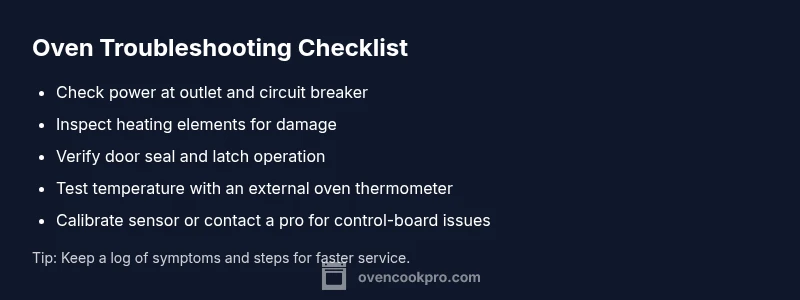
- Ensure the oven is properly plugged in and the outlet works by testing with another appliance or a lamp.
- Check the circuit breaker or fuse for trips and reset if necessary.
- Confirm the door closes firmly and the latch engages; a misaligned door can prevent heating.
- Look for error codes or blinking lights on the display and jot them down for later reference.
- If your oven has a power light but no activity, power to the unit may be interrupted by a neutral/ground fault.
Electrical and Power Troubleshooting
Power-related issues are the most common culprits. Start by verifying there is power at the outlet and that the dedicated circuit isnt overloaded. Inspect the power cord for damage and test the outlet with a known-good device. If the breaker trips, identify which circuit feeds the oven and consider relocating it if you notice repeated trips. A tripped breaker or blown fuse is a frequent cause of an oven that wont heat. If youre uncertain, consult a licensed electrician.
Mechanical and Sensor-Related Issues
Beyond power, mechanical faults can fool you into thinking the oven isnt working. Inspect heating elements for visible damage or scorching, which can indicate failure. A faulty thermostat or temperature sensor can cause wrong temperature readings, making your food undercook or burn. Check the door seal; a poor seal can prevent heat retention. Some ovens display error codes when sensors fail; note any codes and cross-reference with the manual. In some models, the control board governs both display and heating; faults here manifest as unresponsive controls or intermittent heating.
Temperature Calibration and Sensor Tests
Temperature calibration problems occur when the oven doesnt reach setpoints or overshoot. Use a calibrated oven thermometer placed inside to compare actual oven temperature against the set temp. If theres a consistent discrepancy (e.g., 25b0F/15b0C or more), calibration or sensor replacement may be required. Some models allow software-based calibration in the settings; others require professional service. While testing, avoid opening the door repeatedly, as it can disrupt heat buildup and skew results.
When to Repair Yourself vs Call a Pro
DIY fixes work for obvious power or loose-component issues. If youre comfortable with basic electrical checks (unplugging, testing outlets, inspecting visible elements) you can address many problems. However, complex failures such as a failed thermal fuse, control board, or sensor replacement are best left to a trained technician. Always obtain a written quote before major repairs and verify warranty implications.
Preventive Maintenance for Longevity
Regular cleaning and inspection extend oven life and prevent issues. Wipe away spills promptly to avoid corrosion and inspect racks and seals for wear. Replace damaged door gaskets and ensure your oven rack is properly seated. Schedule a periodic professional inspection if your model has important safety features (self-cleaning cycles or electronic control boards). Maintaining a log of symptoms and repairs helps identify recurring problems and informs future service.
Troubleshooting Mindset and Next Steps
Adopt a methodical approach: start with the simplest power checks, then progress to heating element and sensor inspections. After each step, test heating to confirm whether the issue is resolved or persists. If you find no solution after basic checks, escalate to a professional rather than guessing. Document both symptoms and steps taken to assist future service calls.
Steps
Estimated time: 60-90 minutes
- 1
Power safety and initial checks
Unplug the oven and switch off the circuit at the breaker before touching any components. Confirm there is power by testing the outlet with a lamp or independent device. If you smell burning or see melted wiring, stop and call a pro immediately.
Tip: Always assume circuits can carry live current even when the outage seems localized. - 2
Test the power supply and circuit
Plug the oven back in only after ensuring the outlet is functioning. If the breaker trips again, you may have an overloaded circuit or a larger electrical fault. Consider temporarily moving nonessential devices off the same circuit.
Tip: Use a dedicated circuit for heavy appliances when possible. - 3
Inspect heating elements and visible components
With power safely off, examine bake and broil elements for signs of bulging, cracking, or scorching. Food debris can also cause uneven heating; clean as needed and look for damaged connectors.
Tip: Never touch hot elements; wait for them to cool completely. - 4
Check the door latch and seals
Make sure the door closes flush and the seal is intact. A misaligned latch or worn gasket can prevent heat buildup. Gently reseat the door and replace seals if you notice gaps.
Tip: A simple door adjustment can restore heating in many units. - 5
Calibrate or test the temperature sensor
If your model allows calibration, follow the manual to adjust offset values. Use a calibrated oven thermometer inside to compare actual temperature to the setpoint. Record discrepancies for future reference.
Tip: Keep notes of the exact differences you observe. - 6
Decide on replacement or service
If the issue persists after the above steps, parts like the thermal fuse, sensor, or control board may be faulty. Obtain a cost estimate for parts and labor before proceeding; some repairs are not cost-effective for older models.
Tip: Ask for a written quote and warranty terms before agreeing to service.
Diagnosis: Oven won't heat to the set temperature
Possible Causes
- highPower issue (outlet, plug, or circuit breaker tripped)
- highBlown thermal fuse or faulty bake/broil element
- mediumFaulty oven temperature sensor or control board
- lowDoor latch/seal problem preventing operation
Fixes
- easyCheck the outlet and circuit breaker; test other appliances to confirm power presence
- mediumInspect the heating elements for visible damage; replace if burnt or broken
- hardTest or replace the temperature sensor or control board; professional service often required
- easyEnsure the door is fully closed and latch works; readjust gasket if needed
Questions & Answers
Why wont my oven heat to the set temperature consistently?
Inconsistent heating is often tied to a faulty temperature sensor, calibration drift, or a failing control board. Start by testing with a separate thermometer to gauge actual heat, then check the sensor or board per the manual. If the discrepancy persists, professional service may be required.
Inconsistent heating often comes from a bad sensor or control board; test with an external thermometer and consider sensor replacement or board service.
Is a blown thermal fuse common, and how can I tell?
A blown thermal fuse is a common safety failure in ovens that won’t heat. It usually results in no heating at all. If you have basic electrical knowledge, you can check continuity with a multimeter after safely disconnecting power; otherwise, call a technician.
A blown thermal fuse stops heat entirely; testing requires caution and often a pro.
Can I repair the control board myself?
Control boards are complex and often sit behind safety features. DIY replacement is possible for some models with explicit instructions, but miswiring can create safety hazards. If unsure, hire a licensed technician and verify warranty terms.
Controlling boards are tricky—best left to a professional unless you have model-specific, clear instructions.
What safety steps should I take before troubleshooting?
Power down the unit at the breaker, unplug the cord, and wear protective gloves. Keep kids and pets away, and never work on hot components. If you smell something burning, stop and seek professional help.
Always power down and stay safe; burning smells mean stop and call a pro.
How long does a typical oven repair take?
Repair time varies by model and issue but most common fixes can be completed within a few hours once parts are sourced. Complex board-level problems may take longer or require a parts shipment.
Most standard repairs take a few hours once parts are available.
When is replacement more cost-effective than repair?
If the oven is old, frequently breaking, or repair quotes exceed a practical percentage of a new unit, replacement may be more cost-effective. Consider energy efficiency and warranty coverage in the decision.
If repairs keep adding up and the oven is aging, it might be time to replace.
Watch Video
Main Points
- Identify root cause by starting with power and breaker checks
- Dont ignore unusual smells or sounds from the oven
- Calibration can improve temperature accuracy but may require a pro
- Regular maintenance prevents many oven issues