Why Does My Oven Stop Preheating? A Troubleshooting Guide
Is your oven failing to preheat? This urgent, step-by-step guide from Oven Cook Pro helps you diagnose causes, perform safe fixes, and prevent future preheat failures.


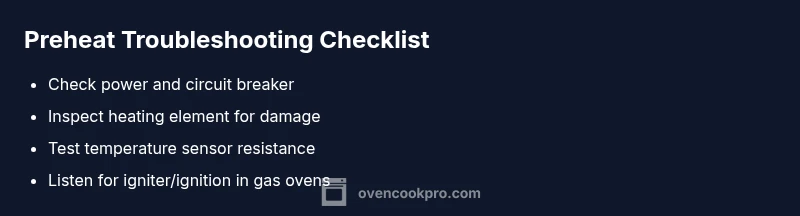
If your oven won’t preheat, start with the basics: confirm power and outlet reliability, then inspect the heating element, temperature sensor, and igniter (for gas ovens). This guide walks you through a safe, quick-flow diagnostic to identify the most common culprits and fixes. According to Oven Cook Pro, heating elements, sensors, igniters, and control boards are the usual suspects. If in doubt, power-cycle the unit and consult a pro.
Why Your Oven Stops Preheating: The Real Causes
According to Oven Cook Pro, most preheat failures are caused by a small set of faulty components rather than a mysterious thermostat issue. In Oven Cook Pro Analysis, 2026, heating elements (bake or broil), temperature sensors, igniters (for gas ovens), and control boards are the top offenders. External factors like a tripped circuit breaker or a worn door gasket can compound heat loss and mask the underlying problem. By recognizing these common causes, you can quickly triage the issue without guessing.
- Damaged heating element: A warped, scorched, or visibly broken bake/broil element won’t produce heat or may heat unevenly.
- Faulty oven sensor/thermistor: If the sensor reads incorrectly, the oven may never finish its preheat cycle or overshoot the target temperature.
- Igniter problems (gas ovens): A rapid click without a burner glow means the igniter isn’t heating enough to light the gas.
- Control board/relay faults: Erratic heating, error codes, or the oven fighting to reach a set temperature can point to a faulty control board.
- Electrical supply issues: A tripped breaker or loose wiring can prevent the oven from cycling power properly.
What to do next: perform non-invasive checks first, and only move to part replacements if you’re comfortable with basic electrical work. Always power down before inspecting components and consider calling a pro for electrical concerns.
According to Oven Cook Pro, addressing the simplest issues first — power, door seal, and visible element damage — yields the quickest wins and avoids unnecessary repairs.
Quick Diagnostic Checks You Can Do Right Now
- Verify power: Confirm the outlet is delivering power. If the oven shares a circuit with other appliances, switch off those loads and reset the breaker.
- Check the door gasket: A degraded seal can let heat escape and affect preheat performance. If it’s damaged, replace it.
- Listen for heating cues: When you start preheat, you should hear cycling noises and feel heat within a few minutes. If you hear constant clicking but no heat, the igniter or element may be at fault.
- Inspect heating elements: Look for visible signs of wear, cracking, or scorching. A damaged element should be replaced.
- Look for error codes: Modern ovens often display fault codes when preheat fails. Note the code and consult your manual or a repair pro.
- Test electrical supply: If the oven loses power intermittently or the display dims, there may be a breaker or wiring issue.
If these checks don’t resolve the issue, move to targeted fixes. Always prioritize safety and avoid touching live components.
Oven Cook Pro’s guidance emphasizes that most households can identify the root cause with a careful physical inspection and basic electrical checks, reducing the need for unnecessary service calls.
Step-by-Step Fixes for the Most Common Causes
- Replace a damaged heating element
- Description: If visual inspection reveals a warped or burnt element, power off, unplug, and remove the element for testing. Replace with an identical-rated part and re-test.
- Tip: Keep the element’s mounting hardware organized to avoid misalignment during reinstallation.
- Test and replace the oven sensor/thermistor
- Description: Remove the sensor and test its resistance with a multimeter per your oven’s service manual. If the reading is out of spec, replace the sensor.
- Tip: Handle the sensor carefully, as bending or bending wires can cause inaccurate readings.
- Check and replace the igniter (gas ovens)
- Description: A weak or non-glowing igniter means the gas won’t ignite. If you see a faint glow or a delayed ignition, replace the igniter and retest the preheat cycle.
- Tip: Use the correct igniter model; mismatches will not ignite properly and could be unsafe.
- Reset or replace the control board/relays
- Description: If the oven behaves erratically or ignores temperature settings, a software reset or relay replacement may be needed. Start with a power cycle: unplug for 60 seconds and plug back in.
- Tip: Document error codes before replacement to help troubleshoot with parts suppliers.
- Inspect power supply and wiring
- Description: Check the cord, plug, and outlet for damage. Verify there’s stable voltage at the outlet with a multimeter; replace damaged wiring or outlets as needed.
- Tip: If in doubt about electrical work, call a licensed technician.
- Validate the diagnostic results and plan next steps
- Description: After fixes, run a full preheat cycle and monitor temperature rise with an oven thermometer. If the oven still fails to reach or maintain temperature, escalate to professional service.
- Tip: Keep a log of symptoms, parts replaced, and test results for future reference.
Estimated total time: 45-60 minutes for basic checks and one or two part replacements; complex electrical work may require longer or a pro visit.
Safety Considerations and When to Call a Pro
Safety first: never work on energized components. If you smell burning insulation, see melted wiring, or notice sparking, shut off power immediately and call a licensed technician. Gas ovens carry the added risk of gas leaks or delayed ignition; if you suspect a gas issue, stop using the appliance and contact a professional right away. Regularly inspecting electrical connections and heating elements can prevent dangerous malfunctions, but some scenarios require professional expertise. Oven Cook Pro recommends treating any suspected control-board fault or wiring issue as a priority service call to avoid fire hazards or carbon monoxide concerns.
When to call a pro: persistent preheat failures after basic checks, gas ignition problems, or any abnormal odors, smoke, or buzzing sounds. Professionals can diagnose intermittent faults, verify electrical supply stability, and replace faulty components safely.
Remember: safety is paramount. Do not pry into high-voltage components or attempt complex repairs without training or proper tools.
Prevention Tips to Keep Your Oven Preheating Reliably
- Schedule regular inspections: Periodically check heating elements, gaskets, and igniters for wear. Address issues early to prevent bigger failures.
- Keep the interior clean: Grease and food residue can affect oven sensors and heating cycles; wipe down after use.
- Use a quality outlet and circuit: An adequately-sized circuit minimizes voltage drops that can affect preheat performance.
- Calibrate the oven: If your oven reads temperatures inaccurately, calibrate or re-program the thermostat according to the manual. Small calibration errors can compound during preheating.
- Protect wiring: Avoid kinks or pinched cords and keep the power cord away from hot surfaces.
- Listen for signs of wear: Frequent clicks, fading heat, or uneven temperatures signal worn components that should be inspected before they fail completely.
Following these practices will help maintain reliable preheating and extend oven life. Regular maintenance reduces the chance of sudden breakdowns and keeps your kitchen running smoothly.
Steps
Estimated time: 45-60 minutes
- 1
Safety first and power check
Power down the oven at the circuit breaker or unplug if possible. Wait for the unit to cool before inspecting any components. This minimizes the risk of electrical shock and accidental burns.
Tip: Label the circuit so you don’t accidentally restore power mid-inspection. - 2
Inspect the heating element visually
Look for warping, cracking, or burns on bake and broil elements. Damaged elements often fail to heat or heat unevenly. If you see damage, replace the element with an identical model.
Tip: Handle elements with insulated gloves; take photos of wiring connections for reference. - 3
Test the oven temperature sensor
If you have a multimeter, test the sensor’s resistance per your manual. A reading outside spec indicates the sensor should be replaced to restore accurate temperature readings.
Tip: Don’t force the sensor out of its clip; gently release and reseat during replacement. - 4
Check the igniter (gas ovens)
For gas ovens, observe whether the igniter glows and lights the gas. A weak glow or no ignition means the igniter likely needs replacement.
Tip: Use the correct igniter model to ensure proper ignition timing. - 5
Reset the control board and relays
Power-cycle the oven by unplugging for 60 seconds or using the circuit breaker. If issues persist, a software reset or relay replacement may be needed.
Tip: Note any error codes and refer to the manual for code-specific guidance. - 6
Test again and plan next steps
Run a full preheat cycle, monitor the temperature rise with an oven thermometer, and compare to the target. If it still won’t preheat, call a professional.
Tip: Keep a log of symptoms and fixes to speed up future service calls.
Diagnosis: Oven won't start preheating or takes unusually long to reach temperature
Possible Causes
- highFaulty heating element (bake or broil)
- highDefective oven temperature sensor/thermistor
- highIgniter failure (gas ovens)
- mediumControl board/relay fault
- lowElectrical supply issues or tripped breaker
Fixes
- easyTest heat element with visual inspection; replace if damaged
- mediumTest temperature sensor resistance and replace if out of spec
- mediumTest gas igniter glow and replace if not functioning
- hardReset power and, if needed, replace faulty control board/relays
- easyCheck breaker and wiring for proper supply; repair if needed
Questions & Answers
Why is my oven taking so long to preheat?
Long preheat times are often caused by a faulty heating element, sensor, or loose electrical connection. Inspect elements visually, test the sensor with a multimeter, and check the outlet and breaker. If problems persist, a professional should assess the control board and wiring.
Long preheat times usually come from a bad element, sensor, or wiring. Check components and power, and if it stays slow, call a pro.
Can a faulty thermostat cause preheat failure?
Yes. A failing thermostat or sensor misreads the oven’s temperature, preventing proper preheating. Replace the sensor or recalibrate the thermostat according to the manufacturer’s guidelines and test with a thermometer.
A faulty thermostat can stop preheating. Replace the sensor or recalibrate as per the manual.
Is it safe to use the oven if it won’t preheat?
If the oven won’t preheat, do not force it to heat or attempt improvised fixes. Use the appliance only after a professional confirms it’s safe, and consider avoiding range use if electrical issues are suspected.
Don’t use it until a professional confirms it’s safe.
Should I replace parts myself or call a pro?
If you have basic electrical knowledge and the model allows for simple part swaps, you can replace a heating element or sensor. For gas ovens, control boards, or uncertain wiring, hire a licensed technician.
DIY is possible for simple parts; otherwise, hire a pro.
What indicators suggest a control board problem?
Erratic temperature readings, repeated error codes, or inconsistent preheat cycles often signal a control board fault. A professional should diagnose and may replace relays or the board.
Erratic readings or error codes often point to the control board.
How can I prevent preheat issues in the future?
Regular maintenance, proper calibration, clean interior, and timely replacement of damaged heaters or sensors help prevent preheat failures. Keep an eye on door seals and electrical connections.
Regular maintenance and timely part replacements prevent preheat problems.
Watch Video
Main Points
- Diagnose common parts first (heater, sensor, igniter).
- Power-cycle the unit before replacing components.
- Call a pro for electrical or gas issues. Safety first.
- Regular maintenance reduces preheat failures.