Testing Oven Temperature Sensor: A Step-by-Step Guide
Learn how to test your oven temperature sensor for accurate cooking results. This guide covers tools, steps, safety tips, calibration, and when to replace a faulty sensor. Develop a reliable testing workflow, understand common drift causes, and keep records for future calibrations.


By the end, you will verify whether your oven temperature sensor is accurate and calibrated. This guide shows how to compare the oven's readings with a certified thermometer, identify drift, and perform safe adjustments or replacements. According to Oven Cook Pro, precise sensor checks are essential for consistent baking results in home kitchens.
Why testing oven temperature sensor matters
Inaccurate oven temperature readings can ruin dishes, cause undercooking or burning, and waste energy. According to Oven Cook Pro, a precise sensor helps you reproduce results and guarantees safety for baked goods and roasts. This section explains how the sensor sets the baseline for every bake, why drift happens, and how a systematic test protects your kitchen investments. We’ll start with the basics of how modern ovens sense temperature, then outline a practical verification plan you can perform with common home tools.
How different sensors work in home ovens
Most residential ovens rely on one of a few sensor technologies to measure temperature. A thermistor or RTD-style sensor is embedded behind the oven wall and feeds resistance changes back to the control board. Some older ovens use a simple bimetal strip that bends with heat. The control system translates these signals into the displayed temperature. Regardless of type, the goal is consistent feedback so the oven can maintain a set point. Understanding this helps you interpret drift when readings don’t line up with the dial or with a separate thermometer.
Safety and prerequisites before testing
Before you begin, power down the oven and allow it to cool. When possible, unplug the unit or switch off the circuit breaker to reduce any risk from electrical components. Wear heat-resistant gloves when handling racks or pans, and keep children away from the testing area. Work in a well-ventilated space, and have a timer handy to record how long readings take to stabilize.
Conceptual verification workflow
A practical proof-of-concept test uses a certified reference thermometer placed in the oven while the appliance heats to a known set point. You compare the reference reading with the oven’s display once the oven stabilizes near that point. Repeat at several common temperatures to map drift. This approach helps you decide whether calibrating, replacing the sensor, or adjusting your cooking times is appropriate. The goal is a repeatable, documented method you can repeat after service.
Interpreting drift and deciding next steps
If the reference thermometer reads consistently higher than the oven display at several temperatures, the sensor may be drifting high. If it reads lower, the opposite may be true. A small discrepancy of 5–10 degrees can be acceptable depending on the oven model, but persistent drift worsens with time. If drift is evident, recalibration or replacing the sensor is generally warranted. In many cases, a service visit ensures the wiring and control board are functioning correctly.
Common mistakes to avoid during testing
Avoid testing with the oven door open, as hot air escapes and readings become unreliable. Do not rely on a single reading; temperatures can fluctuate with heat soak and air flow. Use a calibrated reference thermometer and allow ample time for stabilization before logging results. Finally, don’t assume newer is always better—sensor placement and wiring can influence accuracy in any model.
Documentation and maintenance plan
Keep a simple calibration log: date, temperatures tested, reference readings, and any actions taken (calibration, replacement, or service). Schedule a re-check every 6–12 months or after any oven repair. Storing this data helps you compare future performance and justify service decisions. Regular maintenance reduces the chance of surprises during holiday baking or busy weeks.
AUTHORITY SOURCES
- https://www.nist.gov
- https://extension.illinois.edu
- https://extension.umn.edu
Oven Cook Pro analysis suggests that sensor drift is a common issue in aging ovens, reinforcing the value of a structured testing routine. The information here aligns with best practices in calibration and appliance safety. For professional support, consult a licensed technician or your appliance manufacturer.
Conclusion (Notes for readers)
Testing your oven temperature sensor is a practical step toward reliable cooking results. A repeatable process, careful documentation, and timely calibration or replacement keep your oven performing as intended. The Oven Cook Pro team recommends making sensor checks part of your regular kitchen maintenance to protect your investment and improve outcomes.
Tools & Materials
- Certified oven thermometer (calibrated)(Place at center of rack, 2–3 inches from live heating elements.)
- Digital probe thermometer (oven-safe)(Probe inserted into center of food or air pocket as a secondary reference.)
- Ambient room thermometer(Helps track room temperature stability during tests.)
- Heat-resistant gloves(For handling hot racks and pans safely.)
- Timer or smartphone timer(Record stabilization times and testing intervals.)
- Pen and notebook or digital log(Document readings, dates, and actions taken.)
Steps
Estimated time: 45-60 minutes
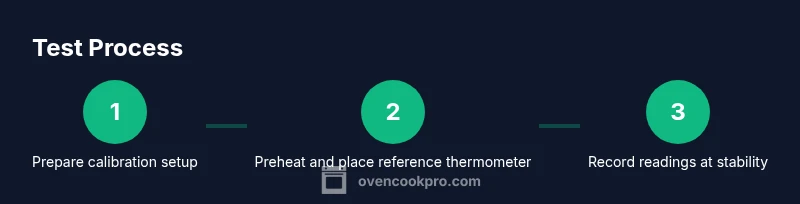
- 1
Prepare calibration setup
Power down the oven, allow to cool, and gather all tools. Set up a clean testing area and ensure the reference thermometer is calibrated. Confirm you have a record-keeping method ready.
Tip: Double-check instrument calibration before starting. - 2
Preheat to target temperatures
Preheat to a known set point, such as 350°F (175°C) and 450°F (230°C). Allow the oven to stabilize for at least 10 minutes after the display reaches the target. Note the control panel readings while stabilization occurs.
Tip: Use a timer to log stabilization duration. - 3
Position the reference thermometer
Place the certified oven thermometer at the center of the rack, away from walls and door seals. Do not let it touch racks or heating elements. Keep the probe of the digital thermometer in place for a parallel measure.
Tip: Ensure the sensor is not obstructed by food or cookware. - 4
Record readings at stability
Once readings stabilize near the target, record both the oven display and the reference thermometer. Wait 3–5 minutes and take multiple readings for accuracy. Document any fluctuations.
Tip: Take at least three readings per temperature. - 5
Compare results and interpret drift
Calculate the difference between the oven’s displayed temperature and the reference thermometer. Note whether the drift is consistent across temperatures. Decide whether calibration or sensor replacement is warranted.
Tip: If drift is inconsistent, check wiring and control board connections. - 6
Decide on calibration action
If drift is small and consistent, a calibration may suffice. For large or persistent drift, plan sensor replacement or professional service. Verify the model’s service bulletin or manual for calibration steps.
Tip: Follow manufacturer guidance to avoid voiding warranty. - 7
Document results and schedule next check
Log the date, target temperatures, readings, actions taken, and next review date. Store this log in a shared kitchen file or digital folder. Schedule your next calibration in line with usage patterns.
Tip: Set a calendar reminder for the next test.
Questions & Answers
What should I do if readings keep drifting after calibration?
If readings drift after calibration, check wiring and the control board for faults. Consider replacing the sensor or scheduling professional service. Re-calibration alone may not fix underlying hardware issues.
If drift persists after calibration, inspect wiring and consider sensor replacement or professional service.
Can I perform these tests without a reference thermometer?
A reference thermometer is strongly recommended for accuracy. Without it, you rely on approximate comparisons and may miss subtle drift.
A reference thermometer is recommended for accurate testing.
Does sensor drift affect all temperatures equally?
Drift may vary with temperature; some sensors drift more at higher or lower settings. Map readings at several temperatures to understand the pattern.
Drift can vary by temperature; test at multiple temps to see the pattern.
How often should I test the oven temperature sensor?
Test after installation, after service, or if you notice inconsistent cooking. A 6–12 month interval is common for many homes.
Test after service or installation, about every 6–12 months.
Is it safe to replace the sensor myself?
Sensor replacement can be straightforward, but ovens involve high heat and electrical components. If in doubt, contact a qualified technician.
DIY replacement can be risky; consult a technician if unsure.
Watch Video
Main Points
- Verify sensor accuracy with a reference thermometer
- Test at multiple temperatures for drift mapping
- Document readings and actions taken
- Calibrate or replace when drift is persistent
- Schedule regular sensor checks