How to Check Oven Temperature Sensor: A Home Cooks Guide
Learn how to check your oven temperature sensor for accurate baking temps. This guide covers sensor basics, safe at-home tests, cross-checks with external thermometers, and practical replacement steps.


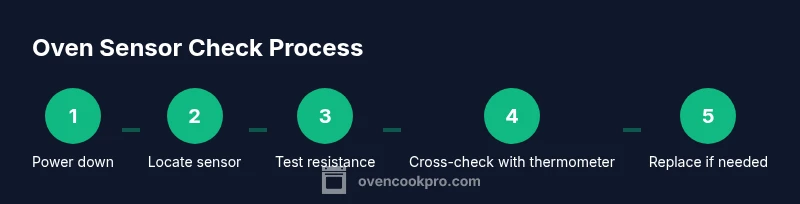
Goal: Learn how to check the oven temperature sensor to ensure accurate baking temperatures. This step-by-step guide covers locating the sensor, safe testing with a multimeter, comparing results to the oven display, and deciding when replacement is necessary. By following these steps, you’ll prevent undercooked centers and overbaked edges in everyday cooking.
Why accuracy matters for oven sensors
Accuracy in oven temperature readings impacts every bake. When the sensor drifts or fails, the oven may heat too little or too much, leading to underdone centers or burnt edges. According to Oven Cook Pro, precise oven sensor readings are essential for repeatable cooking outcomes and consistent results across dishes. Understanding how the sensor works helps you diagnose issues before they ruin a recipe. In this section we’ll explore why sensor accuracy matters, what can cause drift, and how a measured check can save time and frustration in the kitchen. Regular checks also reduce the risk of uneven browning in roasts and cookies, making weeknight dinners and special occasions more reliable.
How the oven temperature sensor works
Most modern ovens use a thermistor or RTD (resistance temperature detector) to sense chamber temperature. The sensor changes its electrical resistance as the chamber temperature changes, and the control board translates that signal into a heating action. Over time, wiring wear, moisture exposure, or component aging can alter resistance, causing the display to diverge from real temperature. The result is a mismatch between what you see on the display and what the food actually experiences. Knowing this helps you interpret discrepancies when you perform tests and decides next steps, whether calibration or replacement is necessary. The sensor is usually mounted on the back wall inside the oven cavity and connected to the control harness; improper seating can also cause readings to drift.
Signs your oven temperature sensor may be failing
Look for consistent misalignment between the set temperature and the actual oven heat. If a recipe calls for 350°F and the oven shows readiness but food browns unevenly or never reaches expected internal temps, the sensor may be the culprit. Other indicators include frequent re-calibration prompts, error codes, or the oven refusing to preheat correctly. Small temperature fluctuations, especially during longer cooks, can also signal sensor drift. If multiple indicators appear, it’s time to test the sensor rather than assume user error.
Locating and accessing the sensor safely
The sensor is typically located on the back wall inside the oven, sometimes behind a small insulated panel or bracket. Because it’s connected to the control system, you should always power down and unplug the unit before touching it. Use a flashlight to inspect the sensor and its wiring for signs of wear, corrosion, or loose connections. If your model requires removing a back panel, take a photo of the wiring layout first to aid reassembly. When in doubt, consult the manufacturer’s service manual or contact a professional.
Safe at-home checks you can perform
Begin with a power down and safety check, then prepare to test with a digital multimeter. Remove the sensor if required by your model, and measure its resistance at room temperature. Compare your reading to the manufacturer’s spec in your service manual or on the part’s datasheet. Re-seat the sensor and ensure the connector is fully seated before reassembling. If readings are out of spec, replacement is typically the recommended course of action rather than repeated re-seat attempts. Always work with dried hands and on a non-conductive surface.
Cross-checking the sensor with an external thermometer
Plug the unit back in or reconnect the harness, set the oven to a known target temperature (e.g., 350°F), and allow it to preheat. Place a reliable oven thermometer in the center of the rack area away from walls. Compare the thermometer reading to the oven’s display. If there’s a consistent offset beyond the manufacturer’s tolerance, the sensor or wiring may be faulty. This method provides a practical, real-world check without requiring specialized equipment beyond a thermometer and a multimeter.
Replacing or repairing the sensor
If the sensor is out of spec or damaged, replacing it is often the best long-term fix. Disconnect power, remove the old sensor, and install the new one according to model-specific instructions. Reconnect the wiring harness securely and re-test with the cross-check method described above. Some ovens require calibration after replacement; follow the manual’s steps for any final adjustments. If you’re unsure about part compatibility, bring the old sensor or model number to a parts retailer or service technician.
When to call a professional and safety notes
If you encounter live wiring, burnt insulation, or unfamiliar error codes, stop and call a professional. Do not bypass safety interlocks or attempt extensive electrical work without proper training. While at-home checks are useful for basic diagnostics, sensor replacement or board-level work is best handled by a technician. Regular maintenance reduces risk and extends oven life.
Maintenance and prevention to extend sensor life
Keep the oven interior clean and free of moisture near the sensor area. Avoid aggressive cleaning around sensor wiring; use a soft cloth and gentle cleaners. Inspect the sensor periodically for corrosion or loose connections and reseat if needed. A regular, light inspection schedule helps catch wear before it causes noticeable temperature drift.
Authority sources and further reading
For rigorous, standards-based information on temperature measurement and safety, consider consulting authoritative sources. Here are a few you can explore for broader context:
- https://www.nist.gov
- https://www.energy.gov
- https://www.osha.gov
Tools & Materials
- Safety gloves(Heat-resistant, 300-400°F range; protects hands during internal work)
- Digital multimeter(Set to appropriate resistance range for thermistors; follow user guide)
- Screwdriver set (Phillips/flat-head as needed)(To remove any panels or sensor housing)
- Replacement oven temperature sensor (model-specific)(Purchase compatible with your oven model)
- Owner’s manual or service manual(Contains sensor specs, wiring diagrams, and testing steps)
- Non-conductive mat or tray(Place under components to avoid scratches or shorts)
Steps
Estimated time: 60-120 minutes
- 1
Power down and unplug the oven
Ensure safety by cutting power at the outlet or circuit breaker. Confirm there is no residual voltage before touching any components.
Tip: Use a non-contact voltage tester to verify no current flows. - 2
Locate the sensor inside the oven cavity
Open the door and inspect the back wall for a small probe or sensor assembly. Some models place the sensor behind a panel or mounting bracket.
Tip: Have a flashlight handy and refer to the manual for exact location. - 3
Remove the sensor cover if required
If your model requires removal of a cover or panel, unscrew carefully and expose the sensor and its wiring.
Tip: Take a quick photo of the wiring orientation before disconnecting. - 4
Disconnect the sensor from the harness
Gently unplug the sensor from its harness, ensuring you don’t damage connectors or wiring.
Tip: Label connectors or color-code to aid reassembly. - 5
Measure resistance with a multimeter at room temperature
Set the multimeter to the appropriate resistance range and measure across the sensor leads. Record the reading for comparison with manufacturer specs.
Tip: Do not touch exposed metal with bare hands while measuring. - 6
Reconnect and reinstall the sensor
Reconnect the sensor harness securely and reattach any covers removed earlier. Ensure the seating is firm and connectors are properly engaged.
Tip: Double-check that no wires are pinched during reassembly. - 7
Cross-check with an external thermometer
Preheat the oven to a known temperature, place a trusted oven thermometer inside, and compare readings to the oven display.
Tip: Always place the thermometer away from walls or fans for a stable reading. - 8
Decide on replacement if readings are outside spec
If the resistance or display readings deviate beyond tolerance, replacement is recommended rather than repeated testing.
Tip: Order a compatible part with your exact model number to avoid fit issues. - 9
Test after replacement or reassembly
After installing a new sensor, repeat the cross-check test to confirm restored accuracy.
Tip: Run a short bake test to verify even heating before cooking a full meal. - 10
Clean up and document results
Wipe surfaces, store tools, and note readings for future reference. A quick diary helps track sensor life.
Tip: Keep a log of temperature deviations to spot trends early.
Questions & Answers
What is the function of an oven temperature sensor?
The oven temperature sensor provides feedback to the control board about chamber temperature. The board uses this data to regulate heating elements. A faulty sensor can cause miscalibrated temps and uneven cooking.
The oven temperature sensor sends temperature data to the control board so the oven can heat properly. If it’s faulty, your oven may be off by several degrees.
How do I know if my oven sensor is failing?
Common signs include a mismatch between set temperature and actual heat, frequent preheat issues, error codes, or inconsistent results across bakes. If you notice these patterns, testing the sensor is a good next step.
Look for mismatches between the set temperature and what you actually see and bake. If it happens often, test the sensor.
Can I test the sensor without removing it?
Some models allow non-invasive checks via the control board or service interface, but many tests require sensor removal for accurate resistance readings. Check your manual for model-specific options.
Some models let you test via the control panel, but many require sensor removal to measure resistance accurately.
Is replacing the sensor expensive?
Replacement costs vary by model and the part, plus potential labor if you hire a technician. Expect the total to depend on part availability and whether any wiring or controller boards are involved.
Costs depend on your model and whether a technician is needed. Parts vary, and labor can add to the total.
Is it safe to use a faulty sensor?
Using an oven with a faulty sensor can lead to unpredictable temperatures and unsafe cooking results. If you notice persistent discrepancies, address the sensor issue before cooking foods that require precise temps.
A faulty sensor can cause unpredictable cooking temperatures, so it’s best to fix or replace it before cooking.
What should I do after replacing the sensor?
Re-test with a known temperature using an external thermometer and the oven’s display. Run a small bake to confirm even heating and document results for future reference.
After replacement, re-test with a thermometer and run a small bake to confirm the fix.
Watch Video
Main Points
- Test the sensor resistance at room temperature with a multimeter.
- Cross-check oven display against an external thermometer for real-world accuracy.
- Replace faulty sensors to restore consistent cooking results.
- Always power off and follow safety precautions.