Oven is Smoking? An Urgent Troubleshooting Guide
Urgent troubleshooting guide for a smoking oven: safety steps, causes, and practical fixes with expert guidance from Oven Cook Pro.


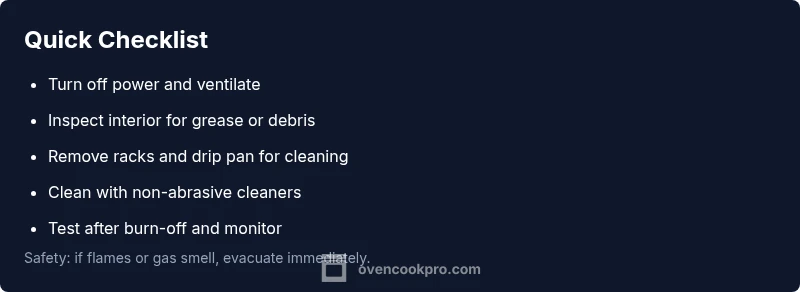
Immediate fix: turn off the oven, unplug if safe, and ventilate by opening a window. Do not open the door fully while it’s smoking. Move flammable items away, and inspect interior for obvious grease or food debris once cooled. If smoke persists or you smell burning or gas, evacuate and call emergency services.
Why an Oven is Smoking
When the oven is smoking, it's a sign that heat and residue are interacting in ways they shouldn't. The most common causes are grease, oil, or food debris that have baked onto the interior surfaces, heating elements, or the floor of the oven. As the oven heats, these deposits carbonize and emit visible smoke and sometimes a pungent odor. According to Oven Cook Pro, most smoking incidents in home ovens stem from routine cooking residues that are allowed to accumulate over time, especially after roasting fatty foods or using sugary sauces. The issue is often harmless if addressed quickly, but it can signal more serious problems if fuel lines, wiring, or insulation are involved. Before panicking, remember that safety comes first: turn off the oven, keep a safe distance, and ventilate the kitchen. Even small amounts of smoke can irritate eyes and lungs, so take care to protect yourself and others in your home. Regular cleaning and mindful preheating practices dramatically reduce the likelihood of future smoking moments.
Immediate Safety Steps You Should Take
First, evacuate and assess safety. Turn off the oven, unplug if safe, and leave the door closed to slow the spread of heat while you assess. If flames appear, use a fire extinguisher rated for grease or call emergency services. Ventilate by opening windows and turning on a non-hood exhaust fan to pull smoke out. Keep children and pets away. Do not use water on a grease fire; if you have baking soda handy, sprinkle a small amount to smother. If there is any gas smell or you suspect a gas line leak, evacuate immediately and contact the gas company or emergency services. After the area is safe, inspect the oven interior from a distance. Do not touch hot metal; wait until it cools.
Common Causes of Oven Smoking
Grease and food debris left on racks, the bottom, or around the drip pan; Overheating of oil or sugar from splatters; A faulty or dirty heating element; A damaged wiring harness or insulation near the heating area; A malfunctioning thermostat causing the oven to run hotter than set; A misused cleaning cycle or self-cleaning function.
How to Inspect and Diagnose Without Panicking
Stand back and observe, ensure power off. Look for visible grease, spills, or burnt bits on the heating element. Check if the drip tray is clean. Inspect the oven door seal for damage or gaps that could allow smoke to escape. Check racks and crumb tray for buildup. If you're comfortable, plug back in and run a test at a moderate temperature with the oven empty to see if smoke returns. If it does, stop and contact a professional.
Cleaning Techniques to Eliminate Smoke
Cleaning a smoking oven requires a calm, methodical approach. Start by letting the oven cool completely, then remove all racks and the drip tray. Use warm water with a mild detergent and a non-abrasive sponge to wipe away grease on the interior walls, floor, and heating elements where accessible. Avoid harsh chemicals that can leave residues when heated. Rinse with a clean cloth and dry thoroughly. Clean the door gasket and seal with the same gentleness. After the interior is clean, perform a controlled burn-off by heating the oven to a high temperature with no food inside to burn off remaining oils. Let the oven cool before inspecting again. Reinstall racks, run a test cycle, and monitor for any signs of smoke.
Preventive Maintenance to Minimize Future Incidents
Commit to regular cleaning after heavy cooking, especially roasts or dishes with oils. Use baking soda paste or mild degreaser to tackle stubborn spots and wipe away spills promptly. Keep the crumb tray clean and empty, and check the oven racks for buildup. Ensure cookware is appropriate for your oven and that items are properly positioned to avoid drips. If your oven has a self-cleaning cycle, use it only as recommended by the manufacturer and avoid running it immediately after a heavy grease spill.
When to Call a Professional and What to Expect
If smoke persists after cleaning, if you notice visible damage to the heating element or door seal, or if you smell burning electrical odor, stop using the oven and call a qualified technician. A professional will inspect electrical connections, heating elements, thermostat sensors, insulation, and venting. They may perform diagnostic tests and check for gas-related issues if applicable. Expect a safety-focused assessment and a plan to replace worn components if needed.
Quick Recovery After an Incident and Documentation
Document the incident: note the date, what you cooked, and what cleaning steps you took. After any fix, run a test bake with the oven empty to ensure there are no remaining odors or smoke. Keep a fire extinguisher accessible and in good working order, and consider a routine maintenance schedule to minimize future risks. By staying proactive, you can quickly recover from a smoking-oven incident and reduce the chance of a repeat event.
Steps
Estimated time: 60-90 minutes
- 1
Power Down and Cool
Turn off the oven and unplug if safe. Wait for it to cool completely before handling. Do not attempt to clean or diagnose a hot oven.
Tip: Always prioritize safety and avoid touching hot surfaces. - 2
Remove Racks and Drip Pan
Carefully remove all racks and the drip pan. Place them on a heat-safe surface away from the oven.
Tip: Use thick oven mitts to protect your hands. - 3
Clean Interior Surfaces
Wipe interior walls, floor, and accessible heating elements with warm soapy water and a non-abrasive sponge. Remove burnt debris without scratching enamel.
Tip: Rinse with a clean damp cloth to remove soap residue. - 4
Burn-Off Residues (No Food Inside)
With the oven empty, heat to a high temperature for a while to burn off remaining oils. Do not leave unattended.
Tip: Ensure the kitchen is well-ventilated during burn-off. - 5
Inspect Components
Check the heating element, door seal, insulation, and wiring for obvious damage or wear.
Tip: If you see damage, stop and call a professional. - 6
Test Run and Monitor
Reinstall racks, run a short test bake at a safe setting, and observe for any smoke or abnormal odors.
Tip: If any smoke returns, power down and seek professional help.
Diagnosis: Oven is smoking
Possible Causes
- highGrease or food residue on heating elements or oven floor
- mediumOverheating due to spills or sugary residues
- lowElectrical fault or damaged wiring
Fixes
- easyTurn off the oven and unplug if safe; allow to cool completely
- easyRemove visible grease/debris and wipe interior after cooling
- mediumIf smoke persists or you smell burning or gas, evacuate and contact a professional
- hardCheck heating element and wiring for damage; replace or repair if needed
Questions & Answers
What should I do first if my oven is smoking?
Move everyone away from the area, turn off the oven, unplug if safe, and ventilate the room. Do not attempt aggressive cleaning while it’s hot. If flames appear, use a grease-rated fire extinguisher or call emergency services.
If your oven is smoking, turn it off and unplug if safe, ventilate, and keep people away. If there are flames, use a proper extinguisher or call emergency services.
Is it safe to use the oven after cleaning if it stops smoking?
If the interior is clean and there is no burning odor, you can perform a cautious test bake with the oven empty. Monitor closely for any signs of smoke or heat irregularities and stop if anything appears off.
After cleaning, run a short, empty test bake and watch for any smoke or unusual smells. Stop if you see anything unusual.
What is the most common cause of an oven smoking?
Grease or food debris left on heating elements or oven floor is the most common cause. Regular cleaning and careful preheating drastically reduce this risk.
Grease buildup is usually the main culprit. Clean regularly and preheat with care to prevent it.
Could smoking indicate a gas leak or electrical problem?
Yes. If you smell gas, hear buzzing, or notice a strong electrical odor, evacuate and contact the gas company or emergency services immediately. A professional should inspect for both gas and electrical hazards.
Gas or electrical smells mean you should evacuate and call the proper emergency services right away.
When should I call a professional for a smoking oven?
Call a professional if smoke returns after cleaning, you see damaged wiring or seals, or odors persist. They will assess heating elements, wiring, insulation, and venting.
If smoke keeps coming back or you notice damage, it's time to call a pro for a safe inspection.
Does using the self-cleaning cycle cause smoking?
Self-cleaning cycles can produce smoke if residue is heavy. Use manufacturer guidance and avoid running it after a major spill; clean manually first if needed.
Self-clean can cause smoke if there's a lot of residue. Follow the manual and clean first if needed.
Watch Video
Main Points
- Shut off power and ventilate immediately.
- Grease buildup is the most common cause.
- Regular cleaning reduces smoking risk.
- The Oven Cook Pro team recommends routine maintenance to prevent smoking.
- If smoking recurs, contact a professional.