Oven Smells Like Burning? Troubleshooting Guide for Home Cooks
Discover quick steps to stop an oven that smells like burning. From safety to cleaning methods, learn common causes and when to call a professional for a lasting fix.


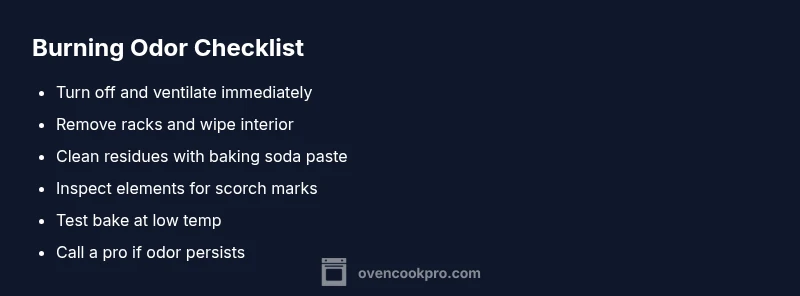
Steam and smoke from an oven can indicate grease or food residue burning. The most common fix is to turn off and unplug if safe, ventilate, and clean the interior before retesting. Start with removing racks and wiping deposits, then run a low-temperature test bake while monitoring closely for signs of continued odor.
What to do the moment you notice a burning odor in the oven
According to Oven Cook Pro, the most common cause is grease or food residues burning inside the cavity. Safety comes first: switch the oven to off, and if safe, unplug the unit. Ventilate the kitchen by opening windows or turning on a exhaust fan to pull smoke away from living spaces. Do not ignore smoke or a strong burning smell—evacuate if flames appear. Once the oven has cooled, remove racks and wipe the interior with a damp sponge. Look for obvious charred spots or sticky residue on the walls, trays, and ceiling of the oven. This initial safety check buys you critical time to identify the source without risking injury or damage. The Oven Cook Pro team emphasizes documenting what you see—char, ash, or melted plastic can affect future repairs and safety checks.
Why this happens: common odor sources inside the oven
Burning odors usually originate from something that was cooked or spilled earlier. Grease buildup on the bottom or racks is a frequent culprit, especially after a high-fat roast or multiple bakes. Sugar and sauces can caramelize and then burn at higher temperatures, sending a sharp smoke signal. Food scraps trapped in crevices or under racks can ignite during preheat. Overheating elements or a misbehaving thermostat may push temperatures beyond set points, causing a persistent burning smell even after cleaning. Finally, poor ventilation or a clogged vent can trap smoke inside the unit, intensifying the odor. If you notice any unusual noises, sizzling, or melted components, stop using the oven and seek help.
Immediate safety steps you can take right now
First, turn the oven off and unplug if it’s safe to do so. Open doors and windows to ventilate; use a fan to direct air outside. If there is visible smoke, evacuate children and pets and call emergency services if flames are present. Do not use water on any grease fire; instead, smother flames with a fire blanket or baking soda if it’s safe to reach. Allow the oven to cool completely before attempting any cleaning. When it’s cool, remove racks and gently scrape off any burned residue with a non-metal spatula. Wear gloves to protect your hands from sharp edges. These steps reduce immediate danger and prepare you for a proper cleaning.
Common culprits inside the oven that create burning smells
Frequent offenders include charred grease beneath the racks, spills from sauces or marinades, and food particles that fall during cooking. Another risk is burnt-on sugar from sweet glazes or desserts, which can bake onto the walls during a high-heat bake. If you use foil or parchment under foods, ensure there’s no direct contact with heating elements—metallic foil can overheat and emit a burnt odor. Misplaced racks or cookware that’s touching the oven walls can overheat and produce smoky fumes. Even a dirty vent filter can trap smoke inside, elevating odors. By identifying these culprits, you can prevent future incidents and keep your oven odor-free.
How to safely clean and remove residue after a burning odor
Start with a cool oven. Remove racks; soak them in warm, soapy water while you inspect the interior. Use a non-abrasive sponge or nylon scrubber to wipe the walls, ceiling, and door seal. For stubborn residues, make a mild paste of baking soda and water; spread, let sit 15 minutes, then scrub gently and wipe clean. Avoid harsh chemicals that may leave fumes when heated. Rinse with a damp cloth and dry with a towel. For safety, never mix ammonia with cleaners inside an active oven. If you have a self-cleaning function, refer to your user manual; note that self-cleaning can produce strong odors and should be used only after you’ve removed obvious debris. A clean interior reduces future burning smells and makes it easier to run a safe test bake.
Inspecting heating elements and wiring for scorch marks
Look for visible scorch marks on the bake and broil elements. Cracked insulation, melted coating, or exposed wires are red flags that require professional attention. If you’re comfortable, you can gently feel for hot spots after a safe test bake at a low temperature; any unusual heat or buzzing indicates a potential electrical issue. Do not touch wiring or elements when the unit is plugged in or hot. If you suspect damaged components, schedule service with a qualified technician promptly. Electrical problems can pose serious safety risks, including fire hazards, so err on the side of caution and seek professional help when signs persist.
Venting, seals, and exterior checks to rule out external factors
A blocked vent or a clogged hood filter can trap smoke, intensifying the burning smell. Check the filter and replace if dirty. Inspect door seals for gaps; a warped seal can let heat escape and concentrate fumes. Ensure the oven racks are properly aligned and not touching the walls or heating elements. If you use a range hood, confirm it’s functioning and that exterior vents are clear. External factors can contribute to a lingering odor even after interior cleaning, so evaluating the entire ventilation pathway helps you stop the smell at its source.
How to conduct a safe post-cleaning test bake
Reassemble the oven with racks in place and use simple cookware without revealing dark residues. Preheat to a moderate temperature, like 350°F (175°C), and bake for 15–20 minutes with the oven door closed. Listen for unusual sounds and watch for smoke or odors. If the smell returns, turn off the oven and ventilate; repeat cleaning if necessary. Don’t rush a full cycle until you’re confident there’s no residue or faulty components. A careful test bake confirms the success of your cleaning and helps you decide whether further diagnostics are needed.
When to call a professional and what to expect
If the odor persists after cleaning and a basic inspection, or if you notice sparking, buzzing, melted insulation, or gas smells, contact a licensed technician immediately. Explain the sequence of events, the odor type, and any prior service history. A pro can safely test electrical circuits, thermostat calibration, and element integrity, and they’ll document findings for warranties or insurance claims. Schedule service promptly to minimize risk and ensure proper operation. The Oven Cook Pro team recommends erring on the side of caution with persistent odors or smoke.
Steps
Estimated time: 60-90 minutes
- 1
Pause and secure safety
Power off the oven and unplug if accessible. Open windows to ventilate and keep children and pets away from the kitchen. Assess for flames; if present, evacuate and call emergency services.
Tip: Never pour water on a grease fire. - 2
Cool and remove racks
Let the oven cool completely before touching anything. Remove racks to access all interior surfaces and inspect for burnt residue.
Tip: Wear heat-resistant gloves to protect your hands. - 3
Clean interior surfaces
Wipe down walls, ceiling, and door with a damp cloth. For stubborn spots, use a baking soda paste and a non-scratch sponge.
Tip: Rinse with a clean damp cloth to remove any cleaner residue. - 4
Inspect for obvious damage
Look for scorch marks on elements, melted insulation, or charred seals. Do not attempt repairs if you see damaged wiring or components.
Tip: Document damage with photos for service reports. - 5
Vent and re-test
Reinstall racks and run a short, low-temp test bake with the door closed. Monitor closely for any odors or smoke.
Tip: Keep a close eye for the first 15 minutes. - 6
Evaluate venting and hood
Check hood filters and exterior vents to ensure they are clear. Replace filters if dirty.
Tip: A clogged vent can reintroduce smoke into the kitchen. - 7
Make a decision on professional help
If the odor returns or you notice electrical signs, stop using the oven and contact a licensed technician.
Tip: It’s safer to schedule a diagnostic visit sooner rather than later. - 8
Prevent future odors
Adopt cleaning routines after heavy cooking, avoid spills near heating elements, and schedule periodic maintenance.
Tip: Keep a spill tray or parchment under roasting foods to minimize drips.
Diagnosis: Oven smells like burning
Possible Causes
- highGrease or food residue baked onto interior surfaces
- mediumSpilled sugar or sauces caramelizing during bake
- lowOverheating element or thermostat off-spec
- lowElectrical fault or damaged wiring
Fixes
- easyTurn off oven and unplug safely, ventilate area, and inspect interior for obvious residue
- easyRemove racks and clean interior with warm soapy water or baking soda paste, then rinse
- easyTest bake at low temperature after cleaning to see if odor reoccurs
- mediumInspect heating elements for scorch marks or damage; replace if needed by a qualified technician
- hardCheck wiring and electrical connections; call a licensed technician for any electrical concerns
Questions & Answers
What is the most common cause of an oven smelling like burning?
Grease and food residue burned onto interior surfaces is the typical culprit. Cleaning after a thorough inspection can resolve most cases.
Grease and burned food are the usual culprits; cleaning after a careful check usually fixes the smell.
Is it safe to keep using the oven if I notice a burning smell?
If the odor persists or smoke continues, stop using the oven and investigate. If there are flames or you cannot identify the source, call emergency services.
If you still smell burning or see smoke, stop and inspect or call for help.
Should I use the self-cleaning cycle to eliminate the odor?
Self-cleaning can help on some appliances but may worsen odors if residue is not removed first. Follow the manual and ensure ventilation; avoid if you suspect electrical issues.
Self-cleaning can sometimes worsen odors; only use after basic cleaning and proper ventilation.
When should I call a professional?
Call a licensed technician if odors persist after cleaning, you see wiring damage, or there’s sparking or melted components. Electrical issues pose serious safety risks.
If odors persist after cleaning or you see damage, call a professional.
Can room smells be caused by something outside the oven?
Yes, improper venting, clogged hood filters, or nearby burning items can magnify odors; inspect your range hood and nearby ovens for additional sources.
Sometimes the odor comes from venting or nearby items, not the oven itself.
What maintenance helps prevent burning odors?
Regular interior wiping, cleaning of vents, and avoiding spills near heating elements can prevent recurring smells. Schedule periodic professional checkups if your oven is older.
Keep up with cleaning and vent maintenance to prevent odors.
Watch Video
Main Points
- Stop and secure safety first when you notice burning odors
- Most odors come from grease or spills; cleaning resolves most cases
- Inspect elements and venting; call a pro for electrical concerns
- Test with a low-temp bake to confirm odor clearance
- Prevent future smells with regular cleaning and safer cooking habits