Why Oven Smoking: Troubleshooting and Safe Fixes
Urgent guide to diagnose why your oven is smoking, stop the behavior safely, and prevent recurrence with a step-by-step approach for home cooks.


A smoking oven is usually caused by grease or food residue, overheating, or spilled oils. Start by turning off the oven, letting it cool, and removing any food. Wipe the interior, remove racks, and check for burnt drips. If smoke persists, unplug and call a technician for a professional inspection.
What causes oven smoking and how to identify the most common culprits
Smoking in ovens is alarming, but most cases have straightforward causes. According to Oven Cook Pro, the culprit is usually grease buildup on interior walls or racks, overheated oils, caramelized sugars, or forgotten food that charters under high heat. When you ask yourself why oven smoking happened, start by inspecting recent cooking activities and residues that could ignite. This section breaks down the leading culprits, how they present themselves, and how to confirm them before you start cleaning. Common signs include a faint acrid smell, wisps of smoke without flames, and visible scorch marks on trays or the bottom. By recognizing these patterns, you can focus your cleanup on the right spots and reduce the risk of repeat occurrences during future meals.
Immediate safety actions you should take the moment you notice smoke
Safety first. If you notice smoke, immediately switch off the oven and, if safe, unplug the appliance or switch off the circuit breaker to cut power. Do not try to move a hot rack or open the oven door fully—opening the door can feed oxygen and intensify a flare if there is a fire. Ventilate the kitchen by opening windows and keeping doors to other rooms closed to limit smoke spread. If you detect a burning plastic smell or see flames, evacuate and call emergency services. Once the oven has cooled, assess whether the situation was caused by a spill or residue and plan the next steps carefully.
Do-it-yourself checks you can perform before calling a pro
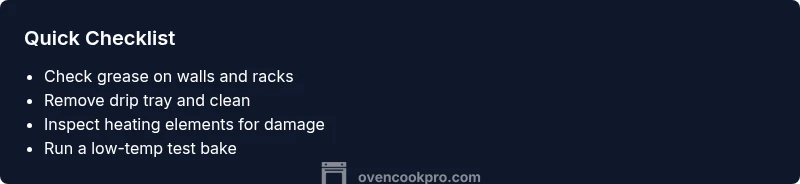
Many smoking oven problems come from simple, fixable issues. Start by removing all racks and the drip tray, then wipe the interior with warm water and a non-abrasive cleaner. Check for grease splatters along the back wall and beneath the rack tracks; these spots are common heat collectors and burns. Inspect the heating elements for visible damage such as darkened spots, melted insulation, or wires exposed. If you see any damage, stop and contact a licensed technician. Also verify that the door gasket is intact and sealing properly; a damaged seal can cause uneven heating and smoke. Finally, verify that any items inside the oven are oven-safe and free of paper, plastic or foil that could melt.
Cleaning and maintenance to prevent future smoking
Preventative maintenance reduces the odds of future smoking during high-heat cooking. Schedule a thorough interior cleaning after baking sessions with sauces, oils, or sugar-based marinades. Use a degreaser recommended for ovens and a soft cloth to avoid scratching the enamel. Regularly wipe the walls, floor, and rack guides and remove baked-on residues before they harden. Empty and clean the drip tray and at least every few uses, depending on your cooking style. For ovens with a self-clean cycle, follow the manufacturer's instructions precisely and avoid using harsh chemicals or metal scrubbers near heating elements. By establishing a routine, you cut down on the time needed to address smoke.
How to test your oven after cleaning and what to monitor
After cleaning, reassemble the oven and perform a controlled test bake. Preheat to a moderate temperature with the door closed and observe for any smoke or unusual smells. Check that your cooling fan runs normally and that there are no hot spots indicated by uneven browning in a test bake. If smoke reappears during the test, document the conditions (temperature, rack level, and food item) and repeat the checks for spills and residues. If the issue persists, do not resume high-heat cooking until a professional assesses the appliance. Keeping notes helps the technician identify the root cause quickly.
Final notes on safety and prevention
Once you have resolved the smoking issue, adopt continued vigilance. Clean spills immediately, avoid cooking sprays near heating elements, and store oils away from the oven heat. Use proper cookware and avoid paper or plastic near the hot surfaces. Establish a simple maintenance routine: quick wipe-down after each heavy meal, a deeper clean weekly, and a thorough check after heavy roasting sessions. Remember that oven smoking, while often manageable, can signal a bigger problem if ignored; staying proactive with cleaning and checks protects your home and your family.
Steps
Estimated time: 30-45 minutes
- 1
Power down safely
Shut off the oven and, if safe, switch off the circuit breaker. Wait for 60 seconds for power to drop, then proceed with caution.
Tip: If you smell burning plastics, do not touch internal components. - 2
Cool and prep the interior
Open the kitchen window after the oven is off, and let the interior cool. Do not attempt to clean a hot cavity. Gather supplies: warm soapy water, a degreaser, and microfiber cloths.
Tip: Keep kids and pets away while smoke is present. - 3
Remove racks and drip tray
Carefully take out racks and the drip tray, then wipe away grease with a non-abrasive sponge. Rinse and dry before reinstalling to prevent future scorching.
Tip: Use oven mitts to avoid burns. - 4
Inspect interior and elements
Look for burnt residue on walls and the bottom, and check heating elements for scorch marks or melting. A damaged element may emit smoke during operation.
Tip: If you see melted insulation, stop and call a technician. - 5
Clean thoroughly and reassemble
After removing the residue, reassemble the oven with dry racks. Use baking soda solution for stubborn stains; wipe dry to finish.
Tip: Avoid harsh solvents near wiring. - 6
Test with controlled bake
Run a short, empty bake at a moderate temperature to confirm there are no lingering odors or smoke. Monitor for unusual smells or sounds and be ready to stop if needed.
Tip: Never leave an active oven unattended in the first minutes.
Diagnosis: Oven emits smoke during cooking
Possible Causes
- highGrease/food residue baked onto interior surfaces
- highOverheating due to preheat mistakes or hot spots
- highSpilled oil or sugar igniting on lower elements
- mediumBurnt plastics or packaging left inside cavity
- mediumElectrical fault or damaged heating element
Fixes
- easyTurn off the oven, unplug if safe, and let it cool completely
- easyRemove racks and clean interior with warm soapy water or degreaser
- mediumInspect heating elements and seals for damage; replace if needed
- easyReplace dripping pans or utensils causing spills; reassemble and test
- hardIf smoke persists, contact a licensed technician
Questions & Answers
Why is my oven smoking after I started a simple bake?
Common culprits include grease or sugar residue that ignites at high heat, or an overheated element from preheating. The first step is to safely power down, cool, and inspect for obvious residues before retrying.
Oven smoking after a bake is usually grease or overheating; safely power down and check for residue before retrying.
Is it safe to use the oven after cleaning?
Yes, once the interior is completely dry and there are no signs of damage, you can run a short test bake at a low temperature. If smoke recurs, stop and seek professional help.
Yes, after a thorough dry and check, you can test with a low-temp bake.
What should I do if I smell burning plastic inside the oven?
Turn off the oven, unplug if safe, and remove any plastic items. Do not reuse until a professional confirms internal components are safe.
Turn off and unplug if safe, remove plastic, and call a pro if unsure.
Could this be a gas leak?
A gas smell requires immediate evacuation and contacting emergency services. Do not operate electrical switches or ignite flames.
If you smell gas, leave the area and call emergency services right away.
When should I call a professional for a smoking oven?
If smoke returns after cleaning, or if you notice burnt wiring, damaged seals, or persistent odors, contact a licensed technician.
Call a professional if smoke returns or there are signs of wiring damage.
Watch Video
Main Points
- Stop and cool if you see smoke
- Clean interior to remove grease buildup
- Inspect heating elements and seals for damage
- Call a technician if smoke persists after cleaning