Does Oven Have Fire? Urgent Troubleshooting Guide
Urgently assess and address an oven fire with expert, step-by-step guidance. This Oven Cook Pro guide covers quick fixes, safety actions, and prevention tips.


Quick answer: The most likely cause of visible flames in an oven is an ignition of fats or food debris, an electrical fault, or a faulty burner. If you see flames, your first move is to turn off power and keep the door closed. Do not open the door or pour water. Call for professional help if flames persist.
Does the Oven Have Fire? Immediate Red Flags and What to Do
If you’re asking, “does oven have fire,” you’re likely facing visible flames, a strong burning odor, or smoke pouring from the oven cavity. Flames may appear as blue, yellow, or orange tongues under the door, sometimes licking around the gaskets. Even small flames require swift action. Your first priority is safety: do not rush to open the door, and never pour water on a grease fire inside an oven. Turn off power at the wall switch or circuit breaker if you can reach it safely, and keep others away. If the flame is spreading or you cannot control it, evacuate and call emergency services. After the event, arrange professional inspection before you reuse the appliance. This guide from Oven Cook Pro is designed to help homeowners diagnose, respond, and prevent future incidents.
Common Causes of Oven Smoke or Flame
Flames or smoke from an oven are rarely random. The most frequent culprits are baked-on grease and food debris that ignite during high-heat cooking. Over time, grease can accumulate around the bottom of the oven or within vent channels, igniting when a hot element is engaged. Faulty electrical components, such as burnt wiring or a failing thermostat, can also create sparks or overheating that leads to flames. Improper use of foil, parchment, or foil trays that touch heating elements can trap heat and ignite. Finally, a vent or exhaust blockage can cause heat to concentrate, increasing any fire risk. Understanding these causes helps you focus your checks during a troubleshooting session.
Safety-First Checklist Before You Intervene
Before you touch the oven, complete a quick safety scan: ensure children and pets are out of the area, and confirm you can reach a power shutoff or breaker safely. If you see active flames, do not try to move the oven rack or remove dishes; closing the door slows oxygen flow. Keep a clear path to the kitchen exit and avoid leaning over the door. If you have a fire extinguisher rated for kitchens, have it within reach. If you can safely reach the power switch, turn off the oven and unplug the unit if possible. If smoke continues or flames worsen, evacuate and call emergency services.
How Heat Sources Inside Ovens Can Ignite
Ovens generate intense heat that can ignite fats, oils, and food remnants. When grease breaks down, it creates flammable vapors that can catch fire. Electrical components, thermostat malfunctions, or relay failures can cause hot spots, arcing, or sparking that ignite insulation or wiring. Also, placing aluminum foil or parchment directly on heating elements can cause arcing or heat buildup. Understanding these heat-source interactions helps you identify the most likely ignition points during a diagnostic check.
Diagnostic Signs Beyond Flames: Smoke, Odor, and Alarms
Flames aren’t the only cue. Thick smoke, a heavy burnt odor, or an audible popping sound can indicate an active fire or overheated components. If you notice melted plastic around the control panel, tripped breakers, or a fuse, these are signs of electrical stress. Many ovens today have built-in alarms and auto shutoffs that trigger before a visible flame; a nuisance beep can indicate an overheat fault. Document any indicators for service technicians.
Step-by-Step: What to Do If You See Fire in the Oven
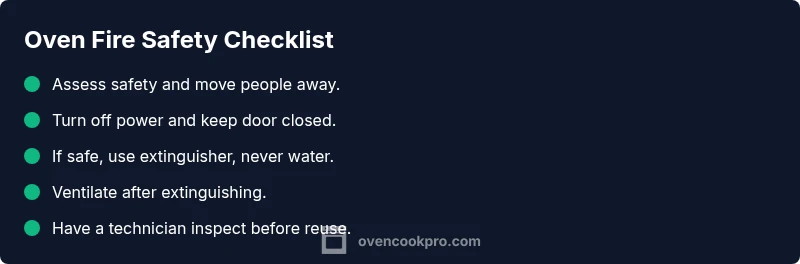
- Prioritize safety: move family members away and ensure exit routes are clear. 2) If safe, switch off power at the wall or circuit breaker and keep the oven door closed. 3) If flames are small and contained, use a Class ABC fire extinguisher or baking soda; never use water. 4) Do not attempt to move racks or remove trays while flames persist. 5) If the fire is spreading, evacuate and call emergency services. 6) After extinguishing, leave the oven door closed until it has cooled completely. 7) Ventilate the kitchen to clear smoke, but avoid inhaling fumes. 8) Do not reuse the oven until a qualified technician inspects for damage.
Step-by-Step: Post-Fire Safety and Cleaning
Let the oven cool completely before investigating. Once cooled, remove any remaining debris carefully with protective gloves, and inspect for melted insulation or damaged wiring. Do not power the unit again until a professional confirms it is safe. If you must clean after a minor flare, use a damp cloth and mild detergent; never scrub hot glass. Check seals and door latches for warping or melting. Replace any damaged components, including the oven rack, insulation liners, or wiring, as recommended by a technician.
Prevention Tips to Avoid Future Oven Flare-Ups
Keep the oven clean: wipe grease and food residue after cooking, especially after broiling or roasting. Use correct bakeware and avoid foil touching heating elements. Do periodic self-clean cycles only as manufacturer recommends and ensure vents are unobstructed. Schedule professional maintenance at least once every year, especially for older models. Use thermostat calibration checks to ensure accurate heat delivery. Finally, store flammable materials away from the oven and check electrical cords and outlets for signs of wear.
When to Call a Professional and What to Expect
If a fire occurs, or you notice ongoing smoking, call a professional immediately. After an incident, a licensed electrician or oven technician will inspect wiring, insulation, gas connections (for gas ovens), and internal components. Expect a safety report detailing what was damaged and what must be replaced or repaired, plus guidance on safe re-use. Oven Cook Pro recommends scheduling service promptly to minimize risk and prevent recurrence.
Steps
Estimated time: 15-30 minutes
- 1
Assess safety and evacuate if needed
Survey the area, ensure everyone is safe, and clear a path to exits. If flames are visible and people are at risk, evacuate immediately and call emergency services. Do not linger near an active fire.
Tip: If anyone is injured, call emergency services right away. - 2
Turn off heat and power
If safe to reach, switch off the oven and cut power at the wall or circuit breaker. Do not reach over or through flames. This removes the heat source and helps prevent the fire from getting bigger.
Tip: Only attempt if you can do so without getting burned. - 3
Keep the door closed
Keep the oven door closed to starve the fire of oxygen. Opening the door can feed the flames; keep yourself and others away from the door until help arrives.
Tip: Use a clear exit path and avoid leaning over the door. - 4
Use a fire extinguisher if safe
If flames are small and contained, use a kitchen-rated fire extinguisher (Class ABC) or baking soda. Do not use water on grease fires inside an oven.
Tip: Stand back and aim at the base of the flames. - 5
Evacuate if fire grows
If the fire continues to spread or you cannot control it, evacuate immediately and contact emergency services. Do not attempt to pull out racks or remove items while flames persist.
Tip: Do not re-enter the home until professionals declare it safe. - 6
Ventilate once out
After the fire is out, ventilate the kitchen to clear smoke. If safe, open exterior doors and use a fan to move air out of the room.
Tip: Avoid inhaling smoke; smoke can irritate lungs. - 7
Cooling and inspection
Allow the oven to cool completely before inspecting for damage. Do not power on the unit until a technician confirms it is safe to reuse.
Tip: Document any signs of damage for the technician. - 8
Arrange professional service
Call a licensed technician to inspect wiring, insulation, seals, and safety components. They will advise on repair or replacement and when it’s safe to cook again.
Tip: Ask about safety checks and replacement parts if needed.
Diagnosis: Oven shows flame, smoke, or burning odor inside cavity
Possible Causes
- highGrease or food debris ignition
- highElectrical fault or short in control board
- mediumOverheated insulation or vent blockage
- lowGas ignition issues (gas ovens) or gas leak
- lowImproper foil/parchment placement near heating elements
Fixes
- easyTurn off oven power at the wall switch or circuit breaker; if safe, unplug the unit.
- easyKeep the door closed to starve oxygen and prevent flames from flaring
- mediumIf flames are small, use a class ABC extinguisher or baking soda; never pour water on grease fires
- easyIf the fire worsens or you cannot control it, evacuate and call emergency services
- mediumAfter extinguishing, inspect for damage and call a licensed technician before reuse
Questions & Answers
What should I do immediately if I see a flame in the oven?
Shut off the oven power, keep the door closed, and evacuate if the fire grows. Call emergency services if flames persist.
Shut off power and keep the door closed; evacuate if flames worsen and call emergency services.
Is it safe to use the oven after a fire is extinguished?
Do not reuse until a qualified technician inspects for damage to wiring, seals, and insulation. A full safety check is essential.
Don’t reuse until a professional checks the wiring and insulation.
Can I put water on a grease fire in the oven?
No. Water can spread the fire. Use a kitchen extinguisher or baking soda if safe to reach.
Do not use water on a grease fire; use a fire extinguisher if you can safely reach it.
Why did the oven catch fire in the first place?
Grease buildup, faulty wiring, or thermostat faults are common culprits; improper foil use can also trigger fires.
Grease buildup or a faulty part commonly causes oven fires.
What maintenance helps prevent future oven fires?
Regular cleaning, correct bakeware use, vent clearance, and annual professional inspections reduce fire risk.
Regular cleaning and professional checks help prevent future fires.
If I smell burning but see no flames, what should I do?
Turn off the oven, unplug if safe, ventilate, and inspect for burnt components. If unsure, call a technician.
Turn off the oven and ventilate; call a technician if the smell persists.
Watch Video
Main Points
- Act quickly and safely to contain flames
- Turn off power and keep the door closed
- Use extinguishing methods appropriate for kitchen fires
- Schedule professional inspection after any fire event