Best Oven Temp for Chicken Bake: A Practical Guide
Learn the optimal oven temperature for baking chicken to safety and juiciness. This guide covers temps, doneness, prep, and tips for even cooking with clear steps and trusted sources.


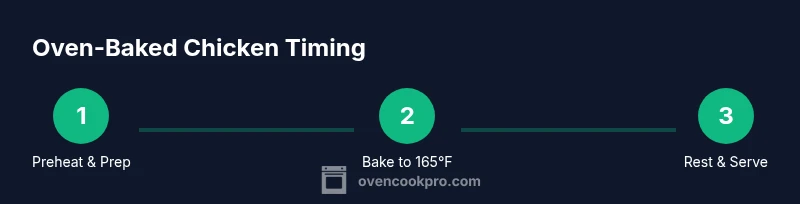
According to Oven Cook Pro, you can safely and evenly oven-bake chicken by picking the right temperature and monitoring doneness. For most cuts, preheat to 375–425°F (190–220°C) and bake until the thickest part reaches 165°F (74°C). Let it rest 5 minutes before serving. Using a thermometer eliminates guesswork and ensures juicy results.
Why Temperature Matters for Oven-Baked Chicken
Temperature is the single most important variable when you’re oven-baking chicken. The right heat ensures the meat cooks through without drying out, and it promotes browning that adds flavor and texture. Undercooked chicken raises safety concerns, while overcooked meat becomes tough and chewy. Oven Cook Pro emphasizes using a thermometer and a consistent preheat to minimize guesswork. Keep in mind that oven temperatures can vary by model and even by rack position, so confirmation with an internal temperature check is essential for reliable results.
Determining Target Temp by Cut
Different chicken cuts respond best to different approaches, but one rule stays constant: finish at a safe internal temperature. Boneless, skinless breasts cook quickly and benefit from a slightly lower target temperature to stay juicy, while bone-in pieces and thighs can handle longer cooking times and a bit more heat. The recommended final internal temperature for all poultry is 165°F (74°C), measured in the thickest part away from bone. If you’re braising or adding a glaze, start checking a little earlier to accommodate carryover heat. Oven Cook Pro recommends testing with a reliable thermometer rather than relying on time alone.
Common Oven Temperature Ranges for Oven-Baked Chicken
To accommodate different cuts and textures, most home bakers start in a mid-range and adjust as needed:
- Boneless, skinless breasts: 375–400°F (190–205°C) for swift, even cooking and good browning.
- Bone-in breasts or thighs: 385–425°F (196–218°C) to promote browning and maintain moisture.
- Whole chicken: 375°F (190°C) is a balanced choice that yields even cooking from cavity to thigh.
These ranges reflect common guidance from trusted sources and align with Oven Cook Pro’s approach: aim for a hot-enough oven to brown efficiently while allowing the meat to reach 165°F inside. If you prefer crisper skin, you can lean toward the higher end, but monitor closely to avoid drying.
How to Check Doneness Without Overcooking
Doneness is the most reliable signal for safety and quality. Use a digital meat thermometer and insert it into the thickest part of the meat, avoiding bone. The target is 165°F (74°C). If you’re cooking bone-in pieces, you may see a brief plateau as juices redistribute; don’t rely on color alone. After removing from the oven, let the chicken rest at least 5 minutes; carryover heat will bring an additional 5–10 degrees. Resting also helps retain juices, yielding a juicier slice.
Prepping Your Chicken for Even Baking
Good prep starts with dry, seasoned meat. Pat chicken dry with paper towels to promote browning and remove surface moisture. Lightly oil or brush with a thin coat of marinade, then season or rub with salt, pepper, and your favorite herbs. If marinating, keep time reasonable (1–4 hours for most cases) and avoid overly acidic marinades that could toughen tissue. Bring the meat closer to room temperature for 10–15 minutes before baking to promote even cooking.
Rack, Pan, and Position: Getting Even Heat
Airflow is key in the oven. Place chicken on a wire rack set over a rimmed baking sheet or use a lightly oiled, parchment-lined baking tray. Elevating the meat improves heat circulation and browning across the surface. Do not overcrowd; give each piece space for steam and air to move around. If you’re baking multiple pieces, rotate the pan halfway to avoid hot spots and ensure uniform doneness.
Cooking Times by Cut and Weight (General Guidelines)
There isn’t a single universal time for all chicken, because size, bone, and whether you’re using skin-on or skinless pieces affect the bake. Use these as starting points and confirm with a thermometer:
- Boneless breasts: check around 18–25 minutes at 375–400°F (190–205°C).
- Bone-in breasts or thighs: check around 25–40 minutes at 385–425°F (196–218°C).
- Whole chicken (about 3–4 lb): check around 75–105 minutes at 375°F (190°C).
Always rely on internal temperature rather than clock time. Carryover heat will continue cooking after removal, so remove when the thermometer hits 165°F (74°C) for safe, juicy results.
Using a Probe Thermometer vs. Oven Thermometer
A probe thermometer in the meat tells you when to pull the chicken, while an oven thermometer confirms your oven is actually reaching and maintaining the target temperature. Use both if possible: the probe for internal doneness and the oven thermometer to monitor air temperature and catch any hot spots or temperature drift. Calibrate or verify readings occasionally for best results.
Flavor and Moisture: Brining, Marinades, and Basting
A little moisture management goes a long way. Light brining can improve juiciness without overly salting; if you brine, rinse and pat dry before seasoning. Marinades add flavor but can add time; choose a simple blend of oil, acid, and herbs. Basting with pan drippings or a light glaze during the final 5–10 minutes can enhance surface browning, but avoid excessive moisture that would steam rather than roast.
Common Mistakes and How to Avoid Them
Common pitfalls include not preheating, overcrowding the pan, and relying on time instead of a thermometer. Opening the oven door too often causes temperature fluctuations and uneven cooking. Skipping rest time leads to juicier, less flavorful slices. Prepare a plan ahead: set up your sheet, thermometer, and rack before you start baking to minimize delays and mistakes.
Finishing Techniques: Resting, Carryover Heat, and Slicing
Resting is essential. After baking, tent the chicken loosely with foil and rest 5–10 minutes. This allows juices to redistribute and reduces the risk of a dry slice. Slice against the grain for breasts and thighs to maximize tenderness. If you want extra-crisp skin, run a quick broil for 1–2 minutes at the end, watching closely to prevent burning.
Quick Recipe Templates: How to Plan a Chicken Bake
Use simple templates to plan different meals. Template A focuses on easy herb-roasted breasts with a light glaze; Template B covers bone-in thighs with a savory marinade; Template C handles a whole chicken with citrus and garlic. Each template emphasizes consistent sizing, even spacing, temperature control, and a thorough internal temperature check for safety.
Tools & Materials
- Oven thermometer(Essential for confirming oven temperature matches the dial setting)
- Digital instant-read thermometer(Inserts into the thickest part; aim for 165°F (74°C))
- Rimmed baking sheet(Catch drips; helps with even browning when used with a rack)
- Oven-safe wire rack(Elevates chicken for better air circulation)
- Parchment paper or foil(Optional for easy cleanup and nonstick surface)
- Tongs(Useful for moving pieces without piercing meat)
Steps
Estimated time: 60-120 minutes
- 1
Preheat and prepare
Preheat the oven to your chosen temperature within the 375–425°F range. Position the rack in the middle, and line a baking sheet with parchment or foil if you aren’t using a rack. Gather all chicken pieces and knives or shears for tidying.
Tip: Let the oven come to temperature before loading food to promote even cooking. - 2
Pat dry and season
Pat the chicken dry with paper towels to maximize browning. Lightly oil the surface and apply your salt, pepper, and herbs or spices. If using a marinade, pat dry after marinating to avoid excess moisture.
Tip: Surface dryness helps achieve a crisp outer crust. - 3
Arrange pieces evenly
Place chicken pieces on the rack or sheet with space between each piece. Avoid overlapping to ensure heat circulates and browning occurs uniformly.
Tip: Spacing prevents steaming and uneven doneness. - 4
Insert thermometer if available
If using a probe thermometer, insert into the thickest part of the meat, avoiding bone. If not, be ready to check with a regular thermometer when time is near.
Tip: Probe placement is critical for an accurate reading. - 5
Bake and monitor
Bake at your target temperature. Resist the urge to open the door frequently; this can drop oven temperature and extend cooking time.
Tip: Consider setting a timer for mid-point checks. - 6
Check internal temperature
Near the expected finish, check the thickest part. Aim for 165°F (74°C). If you’re close but not there, continue cooking in short increments.
Tip: Don’t rely on color alone for doneness. - 7
Rotate for even browning
If baking multiple pieces, rotate the sheet or switch rack levels halfway through for even heat exposure.
Tip: Small shifts can prevent hot spots from undercooking some pieces. - 8
Remove and rest
Once 165°F is reached, remove the chicken from the oven and rest on a clean board for 5–10 minutes. Carryover heat will finish any slight remaining cooking.
Tip: Resting improves juiciness significantly. - 9
Finish with optional crisp
For crisper skin, broil on high for 1–2 minutes, watching closely to avoid burning. This step is optional.
Tip: Keep a close eye during broiling; it can go from perfect to burnt quickly. - 10
Make quick pan sauce
While resting, deglaze the pan with a little stock or wine and reduce to a glaze for extra flavor.
Tip: Even a small amount of glaze can elevate leftovers. - 11
Slice and serve
Slice against the grain for breasts and present with your preferred side dishes. Use a sharp knife to avoid tearing.
Tip: Resting and proper slicing preserve juiciness. - 12
Store leftovers
Cool promptly and refrigerate within two hours. Use sealed containers for up to 3–4 days, or freeze for longer storage.
Tip: Label with date for easy rotation.
Questions & Answers
What is the safe internal temperature for all chicken?
The safe internal temperature for chicken is 165°F (74°C) in the thickest part. Use a digital thermometer to verify. Let carryover heat finish any small rise after removing from the oven.
Chicken should reach 165 degrees Fahrenheit in the thickest part; use a thermometer for accuracy and let it rest briefly.
Can I bake chicken at 350°F?
Yes, 350°F is a common lower-temperature option that can yield juicy results with closer monitoring and longer cook times. Check the internal temperature and adjust time accordingly.
Yes, you can bake at 350, but you’ll need to monitor more closely for doneness.
Should I cover chicken while baking?
Covering can prevent browning and is not usually recommended if you want a crispy surface. If you’re worried about drying, a light tent with foil for the last 10–15 minutes can help.
Covering keeps moisture in, but it can reduce browning; uncover for crispness.
Is brining helpful for baked chicken?
Brining can improve moisture retention but adds steps. A light brine or dry brine with salt can enhance juiciness without extra marinade complexity.
Brining can help keep chicken juicy, especially for lean cuts.
Do bone-in pieces take longer to bake?
Bone-in pieces generally require more time and sometimes a higher heat to ensure the bone area reaches safe temperature while the meat remains tender.
Bone-in pieces need a bit more time, but use a thermometer to confirm.
Why rest chicken after baking?
Resting allows juices to redistribute, improving flavor and reducing the risk of a dry slice. This is especially important for thicker cuts.
Resting helps keep juices inside for juicier slices.
Watch Video
Main Points
- Know the safe internal temperature: 165°F (74°C).
- Choose the oven temperature based on cut and desired browning.
- Always rest meat after baking for juiciness.
- Use a thermometer for reliable doneness, not time alone.
- Space pieces and preheat for even cooking.