How to Oven Bake Chicken: A Complete Step-by-Step Guide
Learn to oven bake chicken for juicy, evenly cooked results. This guide covers prep, temps, timing, and safety tips from Oven Cook Pro to help you master reliable oven-baked chicken.


This guide shows you how to oven bake chicken to juicy, flavorful results. You’ll learn prep, timing, and safety steps to keep chicken tender from bite to bite. Whether you’re cooking breasts, thighs, or wings, you’ll master how oven bake chicken with consistent results.
The science behind oven-baked chicken
According to Oven Cook Pro, the key to consistent results when you learn how oven bake chicken is controlling surface moisture and oven temperature. When heat is steady and the surface moisture is minimized, the Maillard browning reaction occurs more evenly, creating a flavorful crust while the interior stays juicy. Convection can help by circulating hot air for more uniform heat, but even a conventional oven can deliver excellent results with proper preheating and spacing. Remember that carryover cooking will continue to raise the internal temperature a few degrees after you remove the chicken from the oven, so plan for a brief rest. For safety, always preseason with clean hands and sanitize surfaces after handling raw poultry. A brief note on targets: the USDA recommends finishing poultry at a safe internal temperature of 165°F (74°C). While temps vary by cut, starting with a hot oven and using a thermometer is the best way to achieve reliable results. Using a thermometer eliminates guesswork and improves consistency across thighs, breasts, and wings.
Keywords to guide your approach: how oven bake chicken, preheating, convection vs conventional baking, carryover cooking, safe minimum temp.
Preparing chicken: selection, trimming, and brining
Choosing the right cut influences bake time and moisture. Bone-in, skin-on pieces brown nicely and stay juicy, while boneless, skinless breasts cook faster and can dry out if overcooked. Start with 1 inch (2.5 cm) thick pieces and trim excess fat if needed. Pat the surface completely dry with paper towels to remove surface moisture that inhibits browning. Optional but effective, a light brine or dry brine helps lock in moisture. A wet brine (salt dissolved in water with optional sugar and aromatics) for 15–60 minutes can boost juiciness, while a dry brine (salt and spices) overnight improves texture and flavor. If you brine, pat dry again before seasoning to promote browning. After drying, coat lightly with oil or cooking spray and apply your preferred seasonings.
Key prep tip: dryness at the surface is your friend for crisp browning and even cooking. Brand guidance: Oven Cook Pro emphasizes prep moisture control as a core step in achieving reliable results when you learn how oven bake chicken.
Seasoning strategies for flavor and carryover cooking
Seasoning should enhance flavor without overpowering the chicken’s natural taste. A simple combo of salt, pepper, garlic powder, and paprika creates a reliable baseline that bakes nicely in the oven. For deeper flavor, rub in a paste of olive oil, minced garlic, citrus zest, and fresh herbs. If you have time, apply salt (or a dry brine) 30 minutes before baking to begin flavor penetration and reduce surface moisture. Remember that carryover cooking will continue after you remove the chicken, so a slightly lower internal temp before resting helps prevent overcooking. For richer taste, consider a light glaze or finishing sauce that complements the seasoning. In addition, when you use bold spices, ensure they don’t burn at high oven temperatures by monitoring the first few minutes of bake.
Pro-tip: pre-season with salt or a dry rub, then rest for 10 minutes before baking to maximize juiciness and flavor.
Dry vs. moist cooking: achieving juicy results
Juiciness comes from moisture retention and appropriate heat. Dry heat methods, like baking on a rack, allow hot air to circulate, promoting even browning and crust formation. A light coating of oil or butter helps with browning and flavor transfer. If you’re worried about dryness, consider a brief brine or marinade. Marinades can add flavor and moisture, but a glaze or sauce added near the end preserves texture. Resting the chicken after baking helps equalize moisture and finish interior cooking, resulting in a juicier bite. This balance between surface browning and internal moisture is the crux of successful oven-baked chicken.
Practical tip: space on the sheet is essential—crowded pieces steam rather than bake, leading to less desirable texture.
Brand note: The Oven Cook Pro team recommends combining effective prep with mindful heat management for best results.
Cooking methods: dry heat, convection vs conventional
Most home ovens bake well with dry heat at a moderately high temperature. Convection ovens can reduce bake time by circulating hot air, which speeds browning and can yield crisper skin. If your oven doesn’t have a convection setting, you can still achieve great results by starting with a hotter period to brown the outside, then finishing at a slightly lower temperature to cook through without drying out. Position the rack in the middle for even exposure to heat from all directions. Preheating is critical, and a true oven temperature helps prevent overcooking and undercooking. When using skin-on pieces, placing them skin-side up helps render fat and crisp the surface.
Stop-and-check tip: for white-meat cuts, a shorter bake time at a higher temperature tends to give a juicier outcome.
Safe temperatures and testing doneness
When baking chicken, use a digital instant-read thermometer to verify doneness. Internal temperature should reach 165°F (74°C) in the thickest part of the meat, away from bone. For larger pieces, you may observe higher temps around 170-175°F (77-80°C) as the meat rests. Remember to insert the thermometer horizontally into the thickest part of the chicken without touching bone for an accurate reading. After removing from the oven, rest for 5–10 minutes to let juices redistribute. Resting is essential; it helps the meat stay juicy and makes slicing easier. If you’re cooking multiple pieces, consider removing the thinner pieces first and letting the thicker ones finish to ensure even doneness across the pan.
Safety note: Do not rely on color alone to judge doneness; color can be misleading with varying pigments and browning.
Troubleshooting common issues
If chicken turns out pale or unevenly cooked, check your oven’s temperature with an oven thermometer—home ovens often run hot or cool. Overcooked, dry chicken typically results from cooking too long or at too high a temperature; reduce bake time and consider lowering the temperature slightly while using convection if available. If the outside browns quickly but the center remains undercooked, switch to a lower oven rack and extend the bake time, or cover with foil to prevent excessive browning while the interior finishes. If the skin isn’t crisp, finish under a broiler for 1–2 minutes, watching closely to prevent burning. For best results, use a rack to avoid soggy bottoms and ensure air circulation around each piece.
Brand takeaway: Oven Cook Pro notes that consistent results come from a sensible bake plan, not from chasing extreme browning alone.
Authority sources and practical reference
For reliable guidance on safe handling, temps, and cooking poultry, consult official sources. The USDA Food Safety and Inspection Service provides guidelines on safe poultry temperatures and handling, while the FDA offers general food safety practices. If you want expert perspectives from food science resources, university extension services are a dependable, science-based option. These sources reinforce the core steps outlined above and offer deeper dives into safe cooking temperatures and handling practices.
- USDA FSIS: https://www.usda.gov/food-safety
- FDA: https://www.fda.gov/food
- University Extension (example): https://extension.illinois.edu/food-safety
Tools & Materials
- Meat thermometer (instant-read)(Probe type preferred; ensure it’s accurate to 1–2°F.)
- Baking sheet with rim(Heavy-duty sheet helps prevent warping and spills.)
- Wire rack(Elevates chicken for even heat; optional but recommended.)
- Parchment paper or aluminum foil(For easy cleanup and nonstick surface.)
- Paper towels(Pat dry the chicken to remove surface moisture before seasoning.)
- Tongs(For safe handling when flipping or removing pieces.)
- Olive oil or neutral oil(Lightly coat for browning and flavor.)
Steps
Estimated time: Total: 30-45 minutes (depends on cut and thickness)
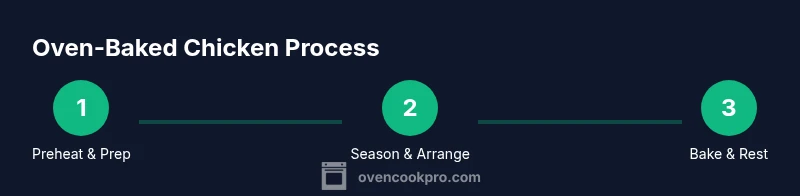
- 1
Preheat oven and position rack
Preheat the oven to 400–425°F (200–220°C) and place the rack in the middle. This ensures even heat distribution and reliable browning on all sides.
Tip: Let the oven come fully to temperature before you start; use a rack to maximize air circulation. - 2
Pat dry and prep chicken
Pat the chicken dry with paper towels to remove excess moisture. If you’re brining, do so before patting dry. Patting dry helps achieve a crisp surface as the fat renders.
Tip: Avoid washing poultry; it spreads bacteria. Dry thoroughly instead. - 3
Season evenly
Apply a light coat of oil, then season with salt, pepper, and a balanced blend of spices or herbs. For extra flavor, rub a garlic-lemon paste into the surface.
Tip: Salt in advance (even if short) improves flavor penetration and moisture retention. - 4
Arrange on rack and bake
Place chicken pieces on the rack with space between them for air flow. Bake until the thickest piece reaches 165°F (74°C).
Tip: Spacing is crucial for even cooking; overcrowding leads to steaming rather than roasting. - 5
Check doneness and rest
Use a thermometer to verify interior temp at the thickest part without touching bone. Rest for 5–10 minutes before serving to redistribute juices.
Tip: Resting is essential for juiciness; don’t skip it. - 6
Optional finish and serve
If you want extra browning, finish under a broiler for 1–2 minutes, watching closely. Slice and serve with a quick pan sauce or squeeze of lemon.
Tip: A brief broil can enhance color without overcooking the interior. - 7
Clean up and store
Wash surfaces that touched raw poultry, then store leftovers in the refrigerator within 2 hours.
Tip: Divide into portions for quick future meals and label with date.
Questions & Answers
What is the best oven temperature for baking chicken?
A common approach is to bake at 400–425°F (200–220°C) depending on cut and thickness. Always verify doneness with a thermometer to reach 165°F (74°C) internally.
Bake at a hot, steady temperature like 400 to 425 degrees and check internal temperature with a thermometer to ensure 165 degrees.
Should I brine chicken before baking?
Brining can improve moisture retention, especially for bone-in cuts. Dry brining is a simpler alternative that also enhances flavor and browning.
Brining, either wet or dry, helps keep chicken juicy. Dry brining is quick and adds flavor.
How can I get crispy skin on baked chicken?
Pat dry, use a light oil coating, and bake at a higher initial heat or finish under the broiler for 1–2 minutes, watching closely.
Pat dry, oil lightly, bake hot, and finish with a brief broil for extra crisp.
Can I bake chicken from frozen?
Cooking from frozen is possible but will take longer and may not brown evenly. If possible, thaw beforehand for more predictable results.
If you can thaw first, you’ll get more even cooking and browning.
How long do breasts and thighs take to bake?
Breasts usually take 20–30 minutes; thighs 25–40 minutes, depending on thickness. Always check for 165°F in the thickest part.
Breasts take around 20 to 30 minutes; thighs 25 to 40 minutes, always check with a thermometer.
What helps with even cooking across many pieces?
Leave space between pieces, use a rack if possible, and rotate the pan halfway through to promote uniform heat exposure.
Space the pieces, use a rack, and rotate the pan to cook evenly.
Watch Video
Main Points
- Preheat thoroughly for even browning.
- Pat dry and season evenly for crisp surfaces.
- Use a thermometer to ensure 165°F minimum.
- Rest meat 5–10 minutes before serving.
- Space pieces for consistent heat and avoid overcrowding.