What Oven Mode for Chicken: A Step-by-Step Guide
Learn the best oven mode for chicken and how to cook juicy, evenly browned poultry. This Oven Cook Pro guide compares bake, convection, roast modes and provides a practical, step-by-step method for breasts, thighs, and whole birds.


By the end of this guide, you’ll know the best oven mode for chicken based on cut and desired outcome, plus how to preheat, monitor doneness, and finish with crispy skin or tender juiciness. You’ll compare convection, conventional, and air fryer modes, learn rack placement, and apply safe temps for reliable results every time.
Understanding oven modes and why it matters for chicken
Cooking chicken successfully starts with how heat is delivered to the meat. Different oven modes create different heat patterns, browning, and moisture retention. According to Oven Cook Pro, the right mode can significantly influence tenderness and crust, especially for bone-in pieces or a whole bird. In this section we unpack the major modes you’ll encounter at home and how they affect texture, time, and safety. You’ll learn when radiative heat from the top coil matters, how fan-assisted heating changes airflow, and why rack placement matters for even cooking. The goal is to equip you with a mental map: for juicy interiors, choose modes that balance steady heat with airflow; for crispy skin, prioritize modes that promote surface browning without overcooking the inside. A quick note on safety: always preheat with a thermometer ready and avoid opening the door too often, which can drop oven temperature and extend cook time.
How convection affects chicken roasting vs baking
Convection circulation adds a fan-assisted heat layer that speeds up cooking and enhances browning. For chicken, convection can shorten bake times and give a crisper exterior—especially useful for skin-on cuts. The trade-off is that some cuts may dry if the cooking time is too long or temperatures are too high. If you’re roasting a whole bird, convection roast is typically preferred for even browning while maintaining juicy meat. If you’re aiming for a soft interior with minimal browning, bake or convection bake at a slightly lower temperature can help. Always verify oven venting and ensure your pan is not crowded to maximize airflow. When using convection, reduce the stated bake temperature by about 25°F (15°C) if you’re following a traditional recipe, and monitor doneness with a thermometer for best results.
Common modes explained: bake, convection bake, roast, convection roast, broil, air fry
Each mode has a distinct heat delivery pattern:
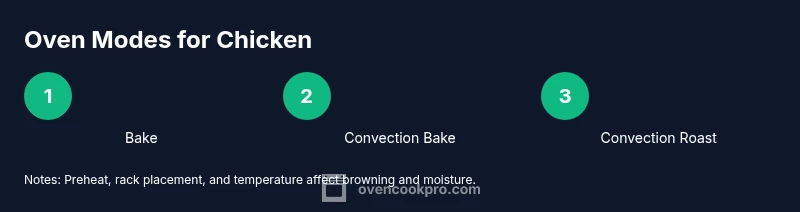
- Bake: steady bottom-heat heating that surrounds the food, great for even texture but slower browning.
- Convection bake: adds a fan to improve air movement, speeding cooking and promoting even browning on all sides.
- Roast: typically uses higher heat with some airflow for browning and a robust crust, good for larger cuts.
- Convection roast: combines higher heat with airflow for fast, even browning and juicy interiors.
- Broil: top-down radiant heat for finishing touches or crisping, not ideal for long cooks.
- Air fry: a high-heat, crisping approach, best for small pieces with a lot of surface area. Choosing the right mode depends on your goal: quicker browning, deeper crust, or gentler roasting to preserve moisture. Your oven’s manual will list its mode names; the practical rule is to use convection when you want a crusty exterior and even doneness, and bake when you want a more forgiving, uniform interior.
Choosing the best mode for whole chicken vs parts
Whole chickens benefit from modes that encourage uniform heat distribution and skin browning. Convection roast often yields quicker, even cooking with a crisp skin if you start at higher heat and finish with a slightly lower temperature. For bone-in parts like thighs or drumsticks, convection roast or convection bake can help render fat and brown surfaces without overcooking the center. For boneless breasts, bake or convection bake at a moderate temperature with monitoring to prevent drying, then finish with a brief broil if you crave extra color. If you’re short on time, a higher heat convection roast is a reliable default. Remember to adjust times based on thickness, bone presence, and your oven’s hot spots, which you’ll learn to map after a few cooks.
Prep and preheat best practices
Successful chicken cooking starts before the oven turns on. Preheating ensures the interior cooks promptly and the surface develops the desired texture. Use a reliable oven thermometer to verify actual temperatures, especially if your oven runs hot or cool. While you preheat to your target (commonly around 425°F/220°C for crispy skin or 350-375°F/175-190°C for gentler roasting), pat the chicken dry, season generously, and prepare your rack setup. A wire rack over a rimmed sheet pan promotes air circulation and even browning. Lightly oiling the skin aids color, but avoid heavy oil that can cause flare-ups or soggy skin. If you notice rapid browning, tent with foil briefly to let the interior catch up without burning the exterior.
Step-by-step cooking guide overview
This section provides a practical, repeated approach you can apply to different chicken cuts. Start by selecting a mode based on your goal, then apply consistent steps that you can adapt to bone-in thighs, breasts, or a whole bird. Consistency matters more than perfect timing, so use a thermometer to verify doneness rather than relying on time alone. The workflow below aligns with typical home ovens and can be adjusted to suit variations in rack height, pan type, and airflow. Regardless of the cut, ensure the interior reaches a safe temperature and the juices run clear when pierced near the bone. A steady preheat, proper rack setup, and attentive monitoring deliver reliable results.
Finishing techniques for crisp skin and juicy meat
Texture is king when it comes to chicken. If you want skin that’s crisp and flavorful, ensure the skin is dry, the surface is lightly oiled, and you’re using a hot oven with a convection option. Finishing under broil for 1–2 minutes can add extra color, but watch closely to avoid scorching. If you prefer a juicier interior with less browning, reduce the heat slightly, give the meat a moment to rest, and slice after a short rest period. Resting is essential: it lets juices redistribute, making the meat easier to slice and more flavorful. For leftovers, store in shallow containers to cool quickly and maintain moisture when reheated with a splash of broth or water to rehydrate.
Doneness checks and food safety
The gold standard for chicken is a safe internal temperature of 165°F (74°C) in the thickest part of the meat. Use a calibrated meat thermometer to verify without touching bone. If you’re cooking a whole bird, test in multiple areas, including the white and dark meat. Carryover cooking will continue for several minutes after removal from the oven, so you can pull the meat slightly early and allow the target temperature to finish. Always practice proper food handling: wash surfaces and utensils that contact raw poultry and refrigerate leftovers promptly to minimize bacterial growth.
Troubleshooting and adjustments for tricky ovens
Some ovens have hot spots or uneven heating that can lead to uneven browning or undercooked areas. If you notice this, rotate the pan halfway through baking or shift the rack to a more even position. If the skin browns too quickly, tent with foil and finish cooking at a lower temperature for even doneness. When convection seems too aggressive, drop the temperature by about 25°F (15°C) and extend the cook time slightly. If you’re not getting the desired texture, adjust the airflow by changing rack height or using a different pan material. Keep notes on your oven’s behavior to improve results with future batches.
Tools & Materials
- Oven thermometer(Shows actual oven temperature; place near the center rack)
- Meat thermometer(Insert into thickest part without touching bone)
- Baking sheet(Large, sturdy sheet to catch drips)
- Wire rack(Elevates chicken for even air circulation)
- Aluminum foil(For tenting if browning is rapid)
- Tongs(Safe handling and turning)
- Timer(Reliable timing helps track cook time)
- Oven mitts(Heat-resistant gloves for hot pans)
- Olive oil spray or brush(Light oil for crisp skin)
- Salt and pepper + optional spices(Basic seasoning builds flavor)
Steps
Estimated time: 1 hour 20 minutes
- 1
Preheat and prepare
Preheat the oven to your target temperature (commonly 425°F/220°C for crispy skin or 350-375°F/175-190°C for gentler roasting). Gather chicken, seasonings, and tools. Set up the rack on a baking sheet so air can circulate around the meat.
Tip: Verify actual oven temp with the thermometer and allow extra minutes if the oven runs cool. - 2
Pat dry and season
Pat the chicken thoroughly dry with paper towels to promote crisp skin. Rub with a light coating of oil and season generously with salt, pepper, and optional spices.
Tip: Dry skin is essential for browning; moisture prevents crispness. - 3
Rack and pan setup
Place a wire rack over a baking sheet to lift the chicken and improve air circulation. This setup promotes even cooking and browning on all sides.
Tip: If space is tight, a single sheet pan can work, but avoid crowding. - 4
Select the mode and load
Choose convection roast for quick browning and juicy interiors, or bake/convection bake for a gentler cook. Insert the tray into the center of the oven.
Tip: For bone-in pieces, convection roast usually gives best texture. - 5
Monitor and adjust as needed
Keep an eye on browning and internal temperature, rotating the pan if your oven has hotspots. If browning is ahead of doneness, tent with foil and lower the heat slightly.
Tip: Even a quick halfway rotation helps minimize cold spots. - 6
Check for doneness
Insert a meat thermometer into the thickest portion, avoiding bone. Target 165°F (74°C) for safety and juiciness.
Tip: Check multiple spots on larger pieces or mixed cuts. - 7
Rest before slicing
Let the chicken rest 5–10 minutes after removing from the oven to redistribute juices. Slice across the grain for tenderness.
Tip: Resting reduces juice loss and improves mouthfeel. - 8
Serve and store
Serve immediately or refrigerate leftovers in shallow containers using proper food-safety practices. Reheat with moisture-friendly methods to retain juiciness.
Tip: Label leftovers with date to track freshness.
Questions & Answers
What is the best oven mode for chicken?
The best mode depends on your goal: a crisp exterior with juicy interior is often achieved with convection roast, while a gentler roast or bake preserves moisture. Use convection for browning and even cooking, then rest before serving.
The best mode depends on your goal, but convection roast is a strong default for crispy skin and juicy meat. Always rest the chicken before slicing.
Should I preheat my oven before roasting chicken?
Yes. Preheating ensures the meat starts cooking immediately at the target temperature, improving browning and texture. It also helps you achieve consistent results across pieces.
Yes, preheating helps you lock in the right texture and color from the start.
Is convection mode better than bake for chicken?
Convection is generally better for quick, even browning and a crisper exterior. Bake is more forgiving and can prevent over-browning on sensitive cuts like chicken breasts.
Convection cooks faster and browns more evenly; bake is gentler and slower.
Can I cook chicken thighs in bake mode?
Yes, bake works well for thighs, especially when cooked to a high enough temperature with a bit of time. For crisper skin, finish with convection roast or a brief broil.
Yes, bake works for thighs, but you may get crisper skin by adding convection at the end.
How do I know when chicken is done without a thermometer?
While not as precise as a thermometer, you can check for clear juices and firm, opaque meat. However, a thermometer is the safest and most reliable method.
Check that the juices run clear and the meat is opaque, but use a thermometer for accuracy.
What rack position is ideal when roasting chicken?
A middle rack typically provides balanced heat exposure for even browning. If your oven has hot spots, adjusting rack height can help improve airflow and doneness.
Use the middle rack for even cooking, or adjust if you know your oven has hotspots.
Watch Video
Main Points
- Choose the mode to match the cut and goal
- Preheat, dry skin, and season well
- Use a rack for airflow and even browning
- Check internal temp to 165°F and rest before slicing
- Tweak mode and temp for your oven's quirks