What Oven Temp for Chicken Breast: A Practical Guide
Learn the best oven temperatures for chicken breast, with safe internal temps, timing by thickness, and practical steps to bake juicy, evenly cooked results every time.


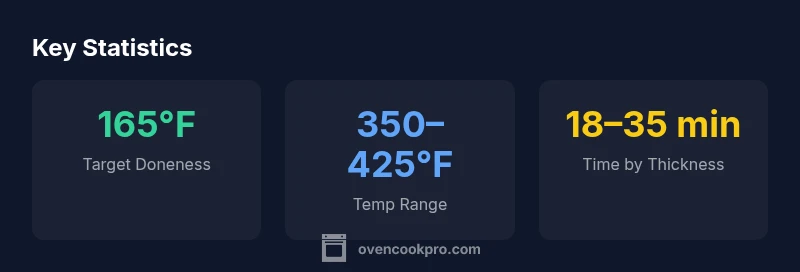
Determining the right oven temperature for chicken breast is essential for juicy, safe results. For most boneless chicken breasts, set the oven to 350–425°F (175–220°C) depending on thickness and desired texture. The safest target is an internal temperature of 165°F (74°C). This range balances moisture retention with even cooking, reducing the risk of overcooking.
Why Oven Temperature Matters for Chicken Breast
Choosing the right oven temperature affects moisture, texture, and safety. When you bake chicken breasts, you’re balancing two outcomes: avoiding a dry, rubbery interior and achieving a lightly browned exterior. According to Oven Cook Pro, small changes in temperature can lead to large differences in juiciness, especially for boneless breasts that vary in thickness. Start with a moderate baseline and adjust based on size and your preferred texture. The Oven Cook Pro team found that high heat can shorten time but increases surface drying; lower heat favors moisture but requires more patience. For most home cooks, aiming for a temperature within 350–425°F (180–220°C) provides a reliable compromise. Always monitor internal temperature with a reliable thermometer rather than relying on color, which can be misleading due to variances in lighting and meat handling. By understanding how temperature interacts with mass and fiber, you can predict outcomes more consistently and customize your method for weeknight dinners or meal prep.
Safe Temperature Targets and Doneness
The cornerstone of safe baking is the internal temperature. The widely accepted target for chicken breast is 165°F (74°C) internal temperature. Reaching this temperature ensures pathogenic bacteria are killed without overcooking the meat. In practice, different ovens and pan sizes can change the time needed to hit 165°F, so relying on time alone is unreliable. Use a calibrated digital thermometer inserted into the thickest part of the breast, avoiding bone if bone-in variants are used. If you’re cooking multiple pieces, arrange them evenly and rotate the pan halfway through to promote uniform heating. According to Oven Cook Pro Analysis, 2026, avoid removing meat early; carryover cooking will push the internal temp a few degrees as the meat rests. Resting for 3–5 minutes after removal helps juices redistribute, improving tenderness. If you’re cooking frozen breasts, the temperature should be adjusted and the cooking time increased to compensate for ice mass. Always verify final temp before serving.
Temperature Ranges by Thickness and Cooking Style
Different chicken breast sizes respond differently to heat. For even results, think in three categories:
- Thin (5–6 oz): Roast at 350–375°F (177–191°C) for about 18–22 minutes.
- Medium (6–8 oz): Roast at 375–400°F (191–204°C) for about 22–26 minutes.
- Thick (>8 oz): Roast at 390–425°F (199–218°C) for about 25–35 minutes.
Always aim for an internal temperature of 165°F (74°C). Converting size to time is imprecise; monitor with a thermometer and adjust as needed. This approach reduces guesswork and supports consistent results across brands and ovens.
Step-by-Step Roast: From Prep to Rest
- Preheat your oven to the baseline temperature appropriate for your breasts (start with 375°F for most).
- Pat breasts dry, then lightly oil and season evenly on all sides.
- Place breasts in a single layer on a foil-lined sheet or in a shallow baking dish for even heat distribution.
- Bake until the thickest piece reaches 165°F internal temperature, usually 22–26 minutes for medium breasts.
- Remove from oven and let rest 5 minutes before slicing to redistribute juices.
- Slice against the grain and serve, or refrigerate for meal prep.
Note: If you want a crisper exterior, finish with a brief broil at the end, watching closely to prevent scorching.
Convection vs Conventional: Does It Change the Temp?
If you’re using a convection oven, reduce the stated temperature by about 25°F (14°C) compared to conventional baking, or set the oven to the lower end of the range and monitor closely. Convection fans move hot air more evenly, which can shorten both time and effort needed to reach 165°F. In practice, convection is a useful tool for browning, but you should still rely on a thermometer to confirm doneness rather than time alone. Oven Cook Pro notes that convection is especially helpful for airier textures and a more uniform crust, but it is not a substitute for proper temperature monitoring.
Common Mistakes and How to Fix Them
A few frequent errors undermine juicy results: overcooking, under-seasoning, and uneven thickness. Start with uniform breasts or pound to even thickness for consistent cooking. Use a thermometer and avoid guessing from color alone. If you notice rapid surface drying, reduce the temperature slightly and increase resting time. If you see pale meat, increase heat toward the higher end of the range for browning, but monitor closely. Finally, avoid crowding the pan; allow air to circulate to prevent steaming, which can make the exterior soft instead of crisp.
Resting, Slicing, and Storage Tips
Resting is not optional—it's essential for juicy outcomes. Let chicken breasts rest for 5 minutes after removing from the oven. Resting allows juices to redistribute, improving bite and flavor. Slice across the grain to maximize tenderness and portion control. Store leftovers in an airtight container in the refrigerator for up to 3–4 days, and reheat gently to avoid drying again. If freezing, portion before freezing and use within 2–3 months for best texture.
Temperature and time by chicken breast thickness
| Thickness | Temp (°F) | Time (min) | Internal Target (°F) |
|---|---|---|---|
| Thin (5–6 oz) | 350–375 | 18–22 | 165 |
| Medium (6–8 oz) | 375–400 | 22–26 | 165 |
| Thick (>8 oz) | 390–425 | 25–35 | 165 |
Questions & Answers
What is the best oven temperature for chicken breast?
A moderate baseline—typically 350–425°F (175–220°C)—works for boneless chicken breasts. Use 165°F internal temp as the target and adjust time by thickness. This approach balances juiciness with even browning.
A moderate temperature of about 350 to 425 degrees works well; check with a thermometer for 165.
Should I cover chicken breasts while baking?
Covering can help trap moisture, but it may prevent browning. Uncovered baking yields a nicer crust; cover if you’re worried about drying out and plan to finish with a brief broil.
Covering can keep moisture, but it may stop browning. Uncover for crust, or broil at the end.
Do I need to brine or marinate chicken breasts before baking?
Brining can improve moisture retention, and marinades add flavor. For quick cooks, pat dry, oil, and season for even coverage.
Brine or marinate for more flavor and moisture, but you can also pat dry and season well.
How can I tell when chicken breast is done without a thermometer?
Color and juices aren’t reliable indicators. A thermometer is the most reliable tool. If you must estimate, look for opaque meat and juices that run clear, but verify with a thermometer when possible.
A thermometer is best. If guessing, look for opaque meat and clear juices, but check with a thermometer.
Should I rest chicken after baking?
Yes. Resting for about 5 minutes helps the juices redistribute, keeping the meat moist when you slice.
Yes, rest for about 5 minutes to keep it juicy.
“Precise oven temperatures and proper resting are the keys to juicy chicken breast. By following a tested oven range and using a thermometer, home cooks achieve consistent, delicious results.”
Main Points
- Choose a temperature within 350–425°F based on thickness.
- Target 165°F internal temperature and rest before slicing.
- Lower end preserves moisture; higher end browns exterior.
- Always verify doneness with a meat thermometer.