What Oven Temp for Chicken Thighs: The Complete Guide
Discover the best oven temperature for chicken thighs, plus how to bake juicy meat with crispy skin. Step-by-step guidance, temps, timing, and safe doneness checks for perfect results.


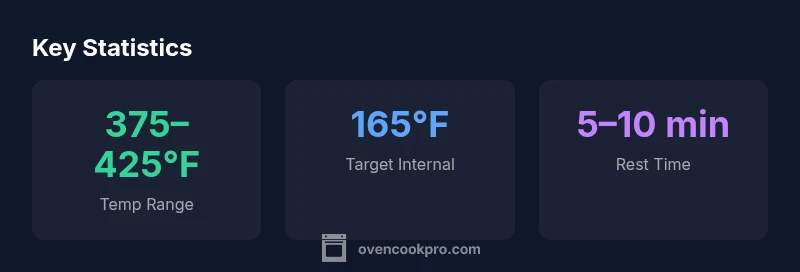
Bone-in or skin-on chicken thighs bake best around 400°F (205°C) for juicy meat and crisp skin. If you prefer extra crispy skin, finish with a quick broil. For boneless thighs, 375–400°F (190–205°C) works well; always target an internal temperature of 165°F (74°C) and rest before serving.
Understanding Temperature and Texture
Choosing the right oven temperature for chicken thighs influences both texture and juiciness. If you're asking what oven temp for chicken thighs, the short answer is: it depends on bone presence, skin-on status, and whether you want a rapid finish or a slow-cooked result. In general, steady moderate heat allows the meat to render fat without drying, while a hotter finish helps render the skin. According to Oven Cook Pro, a reliable default is around 400°F (205°C) for bone-in, skin-on thighs. This temperature balances heat penetration with moisture retention, especially when thighs are arranged in a single layer with space for air to circulate. For boneless thighs, slightly lower or narrower ranges—375–400°F (190–205°C)—are common, because boneless cuts heat through faster and can overcook quickly. Beyond the numbers, the size and thickness of each thigh, the starting temperature (refrigerated vs. room temp), and whether you use convection will shift the optimal time by several minutes. As you practice, you’ll learn to read the meat’s appearance and juices to judge doneness rather than relying on time alone.
This is why the recommended oven temperatures are not a hard rule; they are a starting point based on typical thigh measurements and cooking setups. The goal is to balance heat penetration, fat rendering, and moisture retention so that you end with juicy meat and skin that has a pleasant snap.
Bone-in vs Boneless: Temperature and Time Differences
Bone-in thighs retain moisture better thanks to the bone and often benefit from a touch higher heat to render fat under the skin. Boneless, skinless thighs heat through faster and can dry out if pushed too long at high heat. A practical rule from Oven Cook Pro Analysis, 2026 is to target roughly 400°F for bone-in, skin-on thighs and 375–400°F for boneless variants. Times also differ: bone-in pieces in a single layer typically require about 25–35 minutes, while boneless cuts can finish in 18–22 minutes depending on thickness. When pieces vary in size, rotate the tray halfway to promote even cooking and avoid hot spots. If you’re cooking multiple trays, ensure airflow between them to prevent uneven doneness. These guidelines help you avoid overcooking while still achieving a satisfying crust on the skin.
Step-by-step Method for Juicy Chicken Thighs
- Preheat your oven to 400°F (205°C) and position a rack in the middle. 2) Pat thighs dry with paper towels, then season generously with salt, pepper, and Optional aromatics like garlic or herbs. 3) Place thighs on a wire rack set over a sheet pan to promote even heat distribution and crisping. 4) Bake bone-in, skin-on thighs for about 25–35 minutes, checking for an internal temperature of 165°F (74°C). 5) If skin isn’t crisp enough, finish under the broiler for 2–3 minutes or sear briefly in a hot skillet after baking. 6) Rest for 5–10 minutes before serving to let juices redistribute for maximum juiciness. These steps emphasize even heat and moisture retention, producing reliable results.
Common Pitfalls and Fixes
A frequent mistake is overcrowding the pan, which traps steam and softens skin. Always give thighs space and use a rack if possible. Another issue is starting with frozen meat; bringing thighs to room temperature for 15–20 minutes helps ensure even cooking. Also, avoid relying only on time; always use a thermometer to verify 165°F internal. If skin fails to crisp, a brief finish under the broiler or a final pan-sear helps. Finally, avoid reheating leftovers at too high a temperature, as this can dry meat quickly.
Finishing Touches for Crispy Skin
If you want extra crisp skin, consider a two-step finish: bake at 400°F to cook through, then switch to broil for 2–3 minutes, watching closely to prevent burning. Alternatively, finish on a hot skillet with a thin layer of oil and baste briefly. Dry air and even spacing are crucial—avoid steaming the skin by ensuring air can circulate around each piece. A light dusting of baking powder on the skin prior to roasting can also contribute to crispness, though use sparingly and for specialized results.
Doneness Checks and Food Safety
Always verify doneness with a reliable thermometer; 165°F (74°C) is the safe internal temperature for chicken thighs. Allow the meat to rest for 5–10 minutes after removal from the oven to let juices redistribute. Visual cues help, but never rely solely on color. Juices should run clear or have a light pink tinge near the bone depending on the cut. If you notice grayish color or overly firm texture, extend cooking time in small increments and recheck.
Oven temperatures and times for common chicken thigh preparations
| Preparation Type | Temp Range (F) | Time (min) |
|---|---|---|
| Bone-in, skin-on | 375–425°F | 25–35 |
| Bone-in, skin-on (smaller pieces) | 375–400°F | 20–28 |
| Boneless, skinless | 375–400°F | 18–22 |
Questions & Answers
What is the recommended oven temperature for chicken thighs?
For bone-in, skin-on thighs, 400°F is a reliable target; boneless thighs do well at 375–400°F. Always check for 165°F internal and rest before serving.
Typically bake bone-in at 400 degrees with a 165-degree internal temp, then rest. Boneless thighs do best around 375 to 400 degrees.
Should I use convection when cooking chicken thighs?
Convection can speed up cooking and help crisp skin by circulating hot air. If using convection, reduce the temp by about 25°F.
Yes, convection helps crisp skin and reduce time; lower the temp by about 25 degrees.
Is it better to start high and finish at a lower temperature?
Starting at a higher heat helps brown the skin, then finishing at a lower temp ensures the meat cooks through without drying.
Yes—sear with higher heat, then bake at a gentler temperature to finish cooking.
Do bone-in thighs take longer than boneless?
Bone-in thighs generally take a bit longer due to bone insulation; adjust by thickness and verify with a thermometer.
Bone-in can take a bit longer; check doneness with a thermometer.
How can I tell when chicken thighs are done?
Internal temperature should reach 165°F (74°C). Juices should run clear and meat should be firm but not dry.
Look for 165 degrees internal and rested juices.
Can I reuse marinade for cooking chicken thighs?
Do not reuse marinade that has contacted raw chicken. If you must, boil it thoroughly before using as a sauce.
Don't reuse raw marinade unless you boil it first.
“Consistency comes from controlled heat and proper resting. Temperature and timing, not guesswork, determine juiciness.”
Main Points
- Choose 400°F as a reliable default for bone-in, skin-on thighs.
- Target 165°F internal temperature and rest 5–10 minutes.
- Finish with broil or skillet for extra crispy skin.
- Convection can shorten cook time or lower required temp.
- Resting is essential to keep juices inside the meat.