Steaks in Oven: A Step-by-Step Guide to Perfect Doneness
Learn how to cook steaks in the oven with a crisp crust and juicy center. This step-by-step guide from Oven Cook Pro covers prep, searing, oven finishing, resting, and serving for reliable, restaurant-quality results at home.


In this guide you will learn how to cook steaks in the oven to achieve a perfect crust and a juicy, even center. You’ll master preheating, seasoning, searing, oven finishing, and resting, using reliable times and temperatures that avoid overcooking. According to Oven Cook Pro, precise temperature control delivers consistent results with less babysitting.
Why Steaks in Oven Matter
Cooking steaks in the oven offers a reliable path to consistent doneness, especially when stovetop control is limited or you’re cooking thicker cuts. The oven’s even heat helps you avoid overcooking the exterior while letting the interior reach your target temperature. For home cooks, this method pairs well with a quick stovetop sear to develop a crust, then generous rest time to re-distribute juices. According to Oven Cook Pro, the combination of a hot finish and proper resting yields a superior texture and flavor profile, particularly for thicker ribeye, strip, or porterhouse steaks. Embrace the oven as a precision tool in your kitchen, not a last resort, and you’ll elevate weeknight steaks to a standout dish.
Choosing the Right Cut and Thickness
Thickness matters when you cook steaks in the oven. Thicker cuts (1 1/2 inches or more) benefit from a sear-and-finish approach, because the interior needs time to reach doneness without burning the exterior. Look for well-marbled cuts for flavor and moisture retention. For an even cook, aim for uniform thickness and trim excess silver skin. When you’re deciding between ribeye, New York strip, or filet, consider marbling and your preferred doneness. Oven Cook Pro notes that fat distribution plays a major role in juiciness and flavor during oven finishing, so choose a cut with enough intramuscular fat to stay juicy.
Tools and Prep: What You Need
A successful steaks-in-oven workflow starts with the right tools and preparation. You’ll want a heavy, oven-safe skillet (like cast iron) for the sear, plus a thermometer to monitor internal temperature. Preheat your oven to 450–500°F (230–260°C) and position the rack in the center. Dry the meat thoroughly to ensure crust formation, then season generously with salt and black pepper. If you like, add garlic, butter, and fresh herbs to finish for extra aroma and flavor. A wire rack over a baking sheet can help with air circulation if you don’t have a saute pan that’s oven-safe.
Temperature Strategy: Why Finish in the Oven
The oven finish standardizes doneness and gives the crust a final crisp without overcooking the interior. A hot oven ensures the exterior browns quickly, creating a Maillard reaction that enhances flavor. Finishing in the oven is especially helpful for thick steaks, which can stall at middle temperatures if only seared on the stovetop. After searing, transfer the pan to the oven and cook until your thermometer hits the target range for your preferred doneness. Resting afterwards helps reabsorb juices and keeps the meat juicy.
Step-By-Step Oven Method for a Perfect Crust
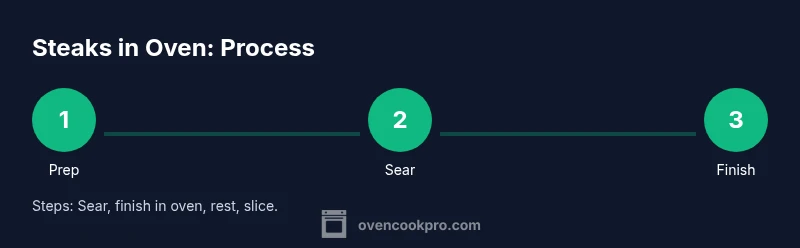
This method blends a quick sear with oven finishing for a robust crust and evenly cooked interior. Sear the seasoned steaks in a hot pan for 1–2 minutes per side until a deep brown crust forms. Move the pan to the oven and roast until the center reaches your desired doneness, using a meat thermometer to guide you. Remove from heat, add a pat of butter if desired, and let the steaks rest for 5–10 minutes before serving to lock in juices and soften the crust.
Resting and Serving for Maximum Juiciness
Resting is non-negotiable. After removing the steaks from the oven, tent loosely with foil and let them rest 5–10 minutes. This pause lets juices redistribute, resulting in a more uniform bite and a juicier overall experience. Slice against the grain to maximize tenderness and offer a range of doneness across portions. A light drizzle of finishing butter or herb oil adds aroma and gloss without weighing down the crust.
Common Mistakes and How to Avoid Them
Common issues include underseasoning, under- or over-searing, and cutting into the steak too early. Ensure you pat the meat dry and season generously before searing. Maintain a hot skillet for a crisp crust and monitor the internal temperature closely during the oven finish. Rest the meat long enough to retain juiciness and avoid a gummy texture caused by premature slicing. By controling timing and temperature, you’ll consistently produce steaks with a caramelized exterior and a tender center.
Variations: Pan Sear, Finish in Broil, or Use Different Ovens
If you don’t have a full oven, you can finish the steaks under a hot broiler after searing, though watch closely to prevent burning the crust. Some home cooks prefer a higher-heat, shorter-roast approach for very thin steaks, while others use a convection oven to speed cooking and improve crust formation. Regardless of your setup, the core principles remain: a hot surface to sear, an even heat environment to finish, and a proper rest to maximize juiciness. Adapt the method to your equipment, but keep the goal the same: flavorful, evenly cooked steaks in oven.
How to Adapt for Home Equipment and Alt-Kitchen Scenarios
If you lack a heavy skillet, a sturdy baking sheet with a wire rack can provide air circulation during the finish. For very thin steaks, reduce oven time and check internal temperature early to avoid overcooking. In compact kitchens, you can sear on a small skillet and then transfer the pan to a toaster-oven or countertop convection oven; the same rules apply, just monitor doneness more frequently. The key is to maintain a steady, high heat for the crust and a precise target temperature for the interior.
Tools & Materials
- Cast iron skillet or heavy oven-safe pan(Essential for a crust and even heating)
- Oven thermometer or meat thermometer(Monitor internal temps accurately)
- Tongs or spatula(Flip steaks without piercing the meat)
- Baking sheet and wire rack (optional)(Promotes air circulation for even crust)
- Salt and coarse black pepper(Season generously for crust and flavor)
- Oil with high smoke point (optional)(Prevent sticking and promote crust (neutral oil))
- Butter and fresh garlic/herbs (optional)(Finishing aromatics for extra flavor)
- Aluminum foil or resting board(Cover during resting if needed and keep hot)
Steps
Estimated time: 40-60 minutes
- 1
Preheat and prep
Preheat your oven to 450–500°F (230–260°C) and position the rack in the center. Pat steaks dry with paper towels to remove surface moisture, then season generously with salt and pepper. This step locks in flavor and helps form a crust when you sear.
Tip: Dry surfaces promote browning; moisture lowers crust formation. - 2
Season and temper
Let the steaks sit at room temperature for about 15–20 minutes if possible. This reduces temperature differentials and helps achieve even cooking. Apply a light coating of oil if using a lean cut to prevent sticking.
Tip: Room-temperature meat cooks more evenly; skip if you’re short on time. - 3
Sear for crust
Heat the skillet on high until shimmering. Sear the steaks 1–2 minutes per side until a deep brown crust forms. Do not move the steaks too frequently; let a crust develop for maximum Maillard reaction.
Tip: A crust is flavor; resist the urge to flip too soon. - 4
Finish in oven
Transfer the pan to the preheated oven and roast until the internal temperature reaches your target doneness (e.g., 125°F for rare, 135°F for medium-rare). Use a thermometer for accuracy and remove promptly when the target is near.
Tip: Check early; residual heat will continue cooking after removal. - 5
Rest before slicing
Remove steaks from the oven, tent loosely with foil, and rest 5–10 minutes. Resting allows juices to redistribute, ensuring slices stay moist.
Tip: Slice against the grain for tenderness. - 6
Finish and serve
Optional: top with a bit of butter or herbs for aroma. Slice and serve immediately to enjoy the crust and juicy interior while hot.
Tip: A final rest or slight carryover cooking can push doneness; plan accordingly.
Questions & Answers
Can I cook any steak in the oven?
Most common steak cuts cook well in the oven, especially thicker cuts like ribeye or New York strip. Leaner or very thin steaks may require less time and closer watch. Use a sear before oven finishing to build crust and flavor.
Yes, most standard cuts work, but thickness and marbling matter. Start with a hot sear and a short oven finish for thin steaks.
What thickness works best for oven finishing?
Steaks around 1 to 1.5 inches thick fare well with the sear-and-finish method. Thicker cuts benefit from longer oven time but require thermometer-guided checks to avoid overcooking.
Thicker steaks around one to one and a half inches do best with this method.
Do I need to preheat the oven before finishing the steak?
Yes. A hot oven ensures the crust finalizes quickly and interior reaches doneness without overcooking the outside. Always preheat for reliable results.
Yes, start with a hot oven to finish the crust and doneness.
Should I rest the steak after cooking?
Resting for 5–10 minutes after cooking allows juices to redistribute, improving flavor and juiciness. Slice after resting for best texture.
Yes, rest the steak briefly before slicing.
Can I use broil instead of oven finish?
Broiling can finish a crust quickly, but it’s easier to overshoot doneness. If you use broil, watch closely and remove as soon as the crust is deep brown.
Broil can work, but monitor closely to avoid burning.
How do I ensure even doneness across portions?
Choose steaks of similar thickness, use even searing, and monitor the internal temperature with a thermometer at multiple points if needed. Resting also helps distribute heat evenly.
Keep thickness uniform and check temps at several spots.
What if my pan isn’t oven-safe?
If your pan isn’t oven-safe, sear on the stovetop and transfer steaks to a preheated baking sheet in the oven for finishing. Use caution when transferring hot pans.
If not oven-safe, finish on a sheet pan in the oven.
How long does it take to reach medium-rare in the oven?
Time varies with thickness, but plan for a brief final roast and rely on a thermometer to hit about 130–135°F for medium-rare. Remove and rest to finish.
Typically a short roast after searing; verify with a thermometer.
Watch Video
Main Points
- Preheat hotly and season well for crust formation
- Sear first, then finish in a hot oven for even doneness
- Resting is essential to juiciness
- Use a thermometer to hit target doneness precisely
- Adjust timing for steak thickness and cut variation