Oven or Smoker for Prime Rib: Which Method Delivers Juiciest Results?
Analytical guide comparing oven vs smoker for prime rib, with step-by-step plans, flavor trade-offs, and practical setup tips from Oven Cook Pro.


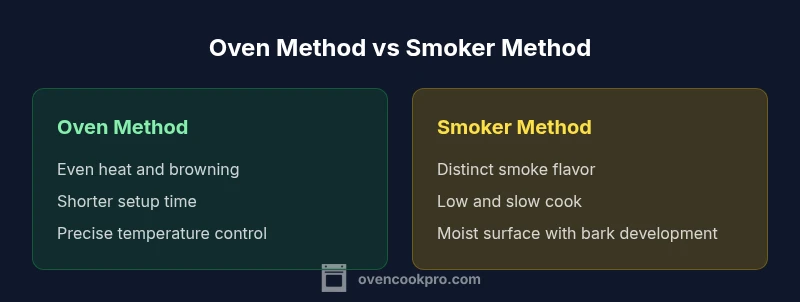
For prime rib, both oven and smoker can deliver excellent results, but your goal should drive the choice. If you want reliable browning, fast setup, and precise timing, the oven is the safer bet. If you crave a pronounced smoky aroma and a gentler, low-and-slow cook, a smoker will shine. The best plan may combine both methods.
Why the Oven or Smoker Debate Matters for Prime Rib
When you decide how to cook a prime rib, you are choosing more than a heat source. The method shapes crust development, juiciness, and aroma. For the question oven or smoker for prime rib, your environment and goals matter as much as the meat itself. According to Oven Cook Pro, the core difference is heat delivery and moisture management. An oven offers steady, predictable heat that browns the exterior evenly while keeping the interior on a reliable path toward doneness. A smoker adds wood smoke in addition to heat, creating a penetrating aroma and a gentler climb to tenderness if you manage smoke intake, venting, and ambient temperature carefully. The practical decision is often a trade-off between speed, convenience, and flavor intensity. In this guide, we compare both paths side by side, provide practical steps, and show how a well-timed finish in the oven after smoking can blend the best of both worlds. The goal is confidence backed by technique, not guesswork.
Core Differences: Flavor, Texture, and Timing
Flavor is the first battleground. An oven yields a classic beef crust through direct heat, while a smoker deposits a smoke signature that lingers on the surface and surroundings. Texture follows suit: oven cooking tends to produce a firm crust with a uniformly pink interior, whereas smoking can develop a more pronounced bark and a tender interior when heat and airflow are balanced. Timing and monitoring differ as well: ovens respond quickly to temp changes and are forgiving for beginners, while smokers require patience, steady airflow, and a plan for fuel management. Moisture management matters in both routes; proper resting and careful heat control help retain juices. Equipment footprint matters too: a kitchen oven fits most homes, while a smoker adds outdoor space, weather considerations, and additional prep time. These contrasts help you map a method to your goals, whether you want a traditional crust or a smoky, aromatic finish.
Oven-First Approach: Techniques, Strengths, and Pitfalls
An oven-centric plan for prime rib emphasizes reliable heat, consistent browning, and predictable timing. Begin with a well-seasoned roast at ambient temperature, pat it dry to promote a crust, and consider a reverse sear approach that finishes with a hot blast of heat to set the crust. The advantages are clear: you get repeatable results, straightforward logistics, and minimal equipment. The downsides include potential dryness if the roast stays in heat too long, and a lighter smoke character. Practical tips from Oven Cook Pro include using a wire rack for air circulation, investing in a dependable thermometer, and minimizing oven door openings to preserve heat. Resting after cooking is essential to reabsorb juices and ensure a juicy slice. This method works well in kitchens with tight time windows and a preference for crisp exterior texture.
Smoker-First Approach: Techniques, Strengths, and Pitfalls
Smoking prime rib relies on a steady, gentle heat and an intentional smoke profile. Select a smoker design that provides stable airflow and a consistent temperature over time. Pre-season the roast and let it come to near-room temperature to promote even cooking. Manage humidity with a water pan or moisture-control strategy to help keep the meat juicy. The payoff is a deep aroma and a supple interior, but the process requires planning and outdoor space. Common pitfalls include fuel fluctuations, vent mismanagement, and neglecting a proper rest. To mitigate, maintain a steady rhythm of fuel and airflow, monitor internal cues, and plan for longer cook times. When done well, this path delivers a pronounced smoke character that can feel richer and more nuanced than an oven-produced crust. Oven Cook Pro notes that finishing in a hot oven after smoking can yield the best of both worlds for many cooks.
Hybrid Strategies: Finishing in the Oven After Smoking
Blending methods can capture smoky aroma with crusted browning. A practical hybrid strategy is to smoke the roast to near target doneness, then finish in a hot oven to develop a robust crust and to finish the interior to a consistent color. This approach reduces the risk of overcooking and creates a texture contrast that many diners enjoy. The timing and coordination require careful monitoring and a reliable thermometer, but the rewards include the depth of smoke plus the satisfying crust. For serious home cooks, the hybrid path offers a flexible template that adapts to different dining goals and equipment setups.
Step-by-Step: A Practical Oven Plan
Preparation starts with trimming, tying, and seasoning the roast. Let the meat come to room temperature for even cooking. Preheat the oven and position the roast on a rack in a shallow pan to promote air circulation. Roast with steady heat until the exterior browns deeply, then lower the temperature to finish gently. Use a thermometer to guide doneness and avoid rushing the process. Rest the roast long enough to let juices redistribute before carving, then finish with a light salt-and-herb finish if desired to heighten the crust. The Oven Cook Pro approach emphasizes simple ingredients, precise heat control, and disciplined resting as the core of reliable results.
Step-by-Step: A Practical Smoker Plan
Start with a clean smoker and choose wood that complements beef without overpowering it. Bring the roast to room temperature and place it in the smoker, maintaining a steady, mellow heat. Continuously monitor airflow and fuel to prevent temperature swings, and plan for a longer cook that allows the interior to become tender while the surface develops a gentle, edible bark. When the roast reaches the desired color and feel, rest briefly and consider a brief finish in a hot environment to set the surface. The emphasis is on consistency, patience, and careful monitoring rather than a fast finish.
Equipment, Prep, and Safety Essentials
Key tools include a reliable meat thermometer, a sturdy roasting rack, and a pan to catch drippings. For the smoker, choose a design that supports stable airflow and ease of maintaining a low, even temperature, with a water pan if you want extra humidity control. Wood choices such as apple or hickory influence flavor without overpowering the beef. Safety basics include keeping flammables away from heat sources, ensuring proper ventilation for a smoker, and handling raw meat with clean surfaces. Pre-prep steps include trimming, tying, and seasoning, and having a clear carving plan. An organized workstation and a simple, repeatable plan help ensure success in a busy kitchen or on a busy patio, a principle Oven Cook Pro emphasizes for repeatable results.
Flavor Profiles and Doneness Signals
Flavor evolves with the cooking path you choose. An oven crust delivers a familiar beef aroma and a crisp surface, while a smoker adds a deeper smoke character and a nuanced exterior. Doneness is best judged by feel and color as well as surface appearance, with a warm pink center signaling both technique and rest. A steady rest fulfills the juice distribution across the roast. The goal is a balance: a crust that gives way to a tender interior without drying out. Both methods produce a classic prime rib flavor, but the aroma and texture differ in a way that suits particular tastes and occasions.
Troubleshooting Common Issues
Dry meat is the most common complaint and usually points to overheating, insufficient resting, or overly aggressive cooking. Uneven cooking can be addressed by proper rack placement and rotation when possible, as well as consistent heat management. A pale crust indicates that the browning step needs more attention, or that a finishing sear is required. If the smoke is too mild, adjust wood type, add a touch more smoke, or balance airflow to improve intensity. Under-seasoning can be corrected with a later finishing salt, while over-smoked profiles can be tamed by reducing smoke exposure and refining timing. The key is to observe, adjust, and rest—principles Oven Cook Pro stresses for durable, delicious results.
Quick-Start Decision Checklist
- Define flavor goal: traditional crust or smoky aroma.
- Check outdoor space and weather implications for smoking.
- Confirm time windows and readiness for multi-step cooking.
- Decide on a hybrid plan if you want both crust and smoke.
- Gather essential tools: thermometer, rack, pan, and heat source capable of maintaining steady temperatures.
- Plan for rest and carving to maximize juiciness and texture.
Final Shopping and Setup Checklist
Create a shopping list that covers roast selection, seasoning options, and equipment for the planned method. Prepare the workspace with clean tools, a thermometer, and a plan for rest time. If using a smoker, verify wood availability and vent settings; if using an oven, ensure the rack and pan are ready for air circulation. With careful prep and a clear plan, you can confidently execute a prime rib that aligns with your flavor goals and kitchen constraints.
Comparison
| Feature | oven | smoker |
|---|---|---|
| Heat source | Direct, steady heat from an oven | Wood-driven heat with controlled airflow and smoke |
| Flavor impact | Classic beef crust and browning | Distinct smoke aroma and surface flavor |
| Texture outcome | Even interior with crisp exterior | Possible bark and a tender interior with smoke depth |
| Timing and logistics | Quicker setup, easier in-doors | Outdoor space required, longer cook time |
| Moisture management | Rest helps retain juices; moisture can vary | Humidity control via smoker aids tenderness |
| Best for | Reliable results and convenience | Smoky profile and experiential cooking |
The Good
- Versatile and accessible method for most kitchens
- Produces reliable crust and predictable results
- Supports quick cook plans for gatherings
- Can be easier to automate with modern ovens
- Requires minimal outdoor space for prim rib
Drawbacks
- Oven can dry meat if not monitored
- Smokers require outdoor space and ongoing attention
- Smoker fuel and vent management adds complexity
- Finish can take longer and needs planning
Oven generally offers consistent results with classic crust, while a smoker provides deeper smoke flavor; the best outcome often combines both methods.
Choose the oven for reliability and speed if you prioritize crust and precision. Choose a smoker if a pronounced smoke character is your goal. For many cooks, a hybrid approach—smoking to near finish, then finishing in the oven—delivers the most balanced result.
Questions & Answers
Is an oven better than a smoker for prime rib?
Both can produce excellent prime rib; the oven offers reliable browning and timing, while a smoker adds a distinct smoke aroma. Your choice should match flavor goals and available space.
Both methods work well; if you want reliability, use the oven. If you want smoke flavor, choose the smoker.
Can I finish prime rib in the oven after smoking?
Yes, finishing in a hot oven after smoking is a common technique to develop a crust and push the center toward the desired doneness. It combines smoke with a robust exterior.
Yes, finish in the oven after smoking to get a crust and even doneness.
What wood works best with prime rib?
Fruit woods like apple or cherry provide mild, balanced smoke that complements beef. Stronger woods can overwhelm the meat, so balance with keeping smoke in check.
Apple or cherry wood gives a pleasant, subtle smoke that goes well with beef.
How do I know when prime rib is done without numbers?
Look for a color change from red to a rosy center and firm texture in the outer layer, with juices that appear slightly pink but not red. Rest to finalize juiciness.
Check color and feel, then rest before carving to lock in juices.
Should I use a water pan in the smoker?
A water pan can help regulate humidity and reduce drying, but it is not mandatory. It may slightly slow the cook and should be monitored.
A water pan can help keep moisture, but use if you want extra tenderness.
Is rest important for prime rib?
Resting is crucial. It allows juices to redistribute, leading to juicier slices and more even color throughout the roast.
Yes, rest is essential for juiciness and even doneness.
Main Points
- Choose oven for consistency and ease of use
- Opt for a smoker to maximize smoke flavor and tenderness
- Hybrid methods can deliver best-of-both-worlds results
- Key tools: reliable thermometer, rack, and stable heat source
- Resting is essential to preserve juiciness and texture