How to Cook Sirloin in the Oven: A Complete Guide
Learn how to cook sirloin in the oven with a proven, step-by-step method from Oven Cook Pro. Sear, roast, rest, and slice for a juicy, flavorful result every time.


How to cook sirloin in oven yields a juicy, evenly cooked result with a crisp crust. Start with dry patting, seasoning, and a high-heat sear, then finish in a controlled oven until your preferred doneness. This method works for sirloin steaks or roasts. For best results, use a thermometer and rest before slicing.
Why Oven Cooking for Sirloin Delivers Consistent Results
When you explore how to cook sirloin in oven, you want a reliable method that yields a flavorful crust and a juicy center. Oven cooking does that by combining a quick sear at high heat with a controlled finish in a warm oven. According to Oven Cook Pro, the two-stage approach minimizes temperature fluctuations and helps the meat relax after cooking, resulting in even doneness from edge to center. This method scales from individual sirloin steaks to larger roasts, making it ideal for weeknight meals or weekend gatherings. The key is to set the initial surface temperature high enough to form a crust, then step the interior temperature down gradually to your target doneness. A dry surface is essential; moisture on the surface steams rather than sears, so pat the meat dry with paper towels before any seasoning. Keep a thermometer handy, and plan on a short resting period after cooking to preserve juices. With the right pan, heat, and technique, you’ll see consistent results across different cuts. This approach also aligns with Oven Cook Pro’s broader guidance on achieving crust and tenderness in home ovens.
Choosing the Right Sirloin and Preparing It
Sirloin comes in several sub-cuts, but for oven cooking the best results come from center-cut sirloin steaks or trimmed roasts. Look for deep red color, minimal marbling, and a firm, even shape. Trim excess connective tissue if needed, but avoid removing too much fat—the fat helps flavor and juiciness. Bring the meat to room temperature for 20–40 minutes before cooking to promote even cooking. Pat the surface dry once more, then season generously with salt, pepper, and any aromatics you like (garlic powder, dried thyme, or smoked paprika work well). A light coating of olive oil helps the crust form without sticking. For thinner steaks, plan on shorter cooking times; for thicker roasts, you’ll need more finish time. By selecting a quality cut and proper preparation, you set yourself up for a truly satisfying result. According to Oven Cook Pro, choosing the right cut is a foundational step toward consistent oven results.
Two-Stage Cooking: Sear Then Roast
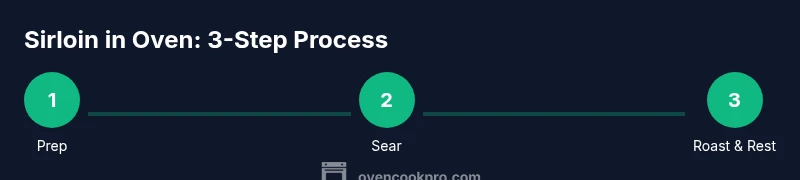
Start by preheating your oven to 425°F (220°C) and heating a heavy oven-safe skillet over medium-high heat until shimmering. While the pan heats, pat the sirloin dry, season, and allow the surface to sweat briefly, then pat dry again. Sear the meat for 2–3 minutes per side until a rich brown crust forms. The goal is a crusty exterior with a rosy interior. Transfer the pan to the oven and roast at 350°F (175°C) until the internal temperature reaches your target (for example, 130–135°F for medium-rare). Use a thermometer to minimize guesswork. Rest the meat briefly if needed before slicing. Oven Cook Pro notes that the two-stage method is particularly forgiving for thicker cuts and yields consistent crust and doneness.
Using a Thermometer and Doneness Guide
Rely on an instant-read thermometer for precise results. Insert into the thickest part without touching bone. Target ranges: rare 120–125°F, medium-rare 130–135°F, medium 135–145°F, medium-well 150–155°F, well-done 160°F and above. When you reach the target, remove the sirloin from heat and let it rest off the pan. Remember that carryover cooking can raise the temperature by a few degrees while resting, so pull it a little early to account for residual heat. This approach minimizes guesswork and helps you hit doneness consistently, a point emphasized in Oven Cook Pro’s methodology.
Resting, Slicing, and Flavor Enhancers
Let the meat rest for 5–10 minutes before slicing to allow juices to redisperse. Use a sharp knife and slice against the grain for tenderness. A pat of herb butter or a quick pan sauce made from the juices adds extra flavor. If you want a brighter finish, splash a little stock or red wine into the pan after slicing and simmer briefly. This stage is essential for juicy, flavorful results and is a favorite technique highlighted by Oven Cook Pro when teaching home cooks how to maximize tenderness.
Common Mistakes and How to Avoid Them
Common errors include skipping the pat-dry step, crowding the pan, and using a cold pan that reduces sear quality. Don’t forget to preheat the pan and oven; cold surfaces lead to steaming rather than browning. Cooking too long is another frequent issue—always rely on a thermometer and pull early for the best texture. Bringing meat straight from the fridge to the oven can cause uneven doneness; let it come closer to room temperature before you start. By avoiding these mistakes, you preserve crust, juiciness, and even doneness that makes sirloin shine when cooked in the oven.
Putting It All Together: Quick Recipe Card
Prep time: 10 minutes; Cook time: 20–30 minutes; Rest: 5–10 minutes; Total: about 40–60 minutes. Ingredients: sirloin steak or roast, salt, pepper, olive oil, garlic (optional). Steps: 1) Pat dry and season. 2) Sear in hot pan 2–3 minutes per side. 3) Roast at 350°F until thermometer hits target. 4) Rest 5–10 minutes. 5) Slice against the grain and serve. This card gives you a compact reference to guide your oven-cooked sirloin with clarity and confidence.
Final Tips for Consistency
As you practice, you’ll notice the importance of uniform thickness, consistent pan heat, and patient resting. With each cook, you’ll refine your timing and seasoning to suit your oven’s quirks. The two-stage approach remains the backbone of reliable results, and the thermometer is your most trusted ally in hitting desired doneness every time.
Tools & Materials
- Cast-iron skillet or heavy oven-safe skillet(10-12 inch works well for most sirloin portions; ensure it is oven-safe to at least 450°F)
- Meat thermometer(Instant-read preferred for quick checks)
- Paper towels(Pat dry thoroughly for crust formation)
- Tongs(For flipping and handling hot meat safely)
- Roasting rack (optional)(Elevates meat for even heat if you’re cooking a larger roast)
- Aluminum foil (for resting pan)(Tent meat lightly during rest if you don’t use a rack)
Steps
Estimated time: 40-60 minutes
- 1
Prep the sirloin
Pat the sirloin dry with paper towels to remove surface moisture. If time allows, let it sit at room temperature for 20–40 minutes. Season generously with salt and pepper, and add a light drizzle of olive oil if desired.
Tip: Pat dry thoroughly to promote crust formation. - 2
Preheat and heat your pan
Preheat the oven to 425°F (220°C). Heat an oven-safe skillet over medium-high heat until shimmering. Having a hot pan ready ensures an immediate sear.
Tip: A hot pan minimizes moisture and builds a better crust. - 3
Sear the sirloin
Sear the meat 2–3 minutes per side until a deep brown crust forms. Avoid moving the meat too soon to allow crust development. If your pan sticks, give it a moment to release before flipping.
Tip: Do not crowd the pan; work in batches if needed for even browning. - 4
Roast to doneness
Transfer the pan to the oven and roast at 350°F (175°C) until the internal temperature reaches your target. For medium-rare, aim for 130–135°F. Use the thermometer to avoid overcooking.
Tip: Check early and rely on carryover cooking. - 5
Rest the meat
Remove from heat and rest 5–10 minutes, loosely tented with foil. Resting allows juices to redistribute, resulting in juicier slices.
Tip: Rest is essential for maximum juiciness. - 6
Slice and serve
Slice against the grain with a sharp knife. Serve with a simple pan sauce or herb butter made from the pan juices for added richness.
Tip: Even slices improve texture and mouthfeel.
Questions & Answers
What is the best oven temperature for sirloin?
A reliable approach is to sear at 425°F (220°C) and finish in a 350°F (175°C) oven. Times vary with thickness, so monitor internal temperature with a meat thermometer to avoid overcooking.
Start at 425 degrees for a good crust, then finish at 350, watching the internal temp.
Should I bring sirloin to room temperature before cooking?
Yes. Let the meat sit at room temperature for 20–40 minutes to promote even cooking and crust formation. Pat dry again before seasoning.
Bring it to room temperature for even cooking, then pat dry again.
Can I cook sirloin from frozen?
Cooking from frozen is not recommended if you want even doneness and a good crust. Thaw completely for best results before cooking.
Thaw the meat before cooking for best results.
How long should I rest sirloin after cooking?
Rest the meat for 5–10 minutes after cooking to let the juices redistribute. Slice after resting for best tenderness.
Rest 5–10 minutes, then slice.
What sides pair well with oven-cooked sirloin?
Roasted potatoes, green vegetables, or a simple pan sauce on the side complement sirloin nicely.
Choose classic sides like potatoes and greens.
How should I slice sirloin for maximum tenderness?
Slice across the grain with a sharp knife for tender, easy-to-chew pieces.
Slice across the grain for tenderness.
Watch Video
Main Points
- Pat dry the sirloin before searing
- Sear first, then finish in the oven
- Use a thermometer to hit your doneness target
- Rest before slicing for juiciness