Chicken Breast Temperature in the Oven: Safe and Juicy Every Time
Discover exact oven temperatures for chicken breast, safe internal temps, preheating tips, timing, and rest periods. Oven Cook Pro guides you to juicy, safe results.


Achieve safe, juicy chicken breast by cooking to the recommended internal temperature in the oven, using a thermometer, and resting before slicing. You’ll learn exact temps, timing, and rest periods, plus how to choose the right oven setting. Tools like a digital thermometer and a sturdy baking dish are essential.
Why precise temperature matters for chicken breast
Chicken breast is lean and cooks quickly. Reaching the right temperature is the difference between a juicy, safe meal and a dry, undercooked interior. In this section we unpack why temperature control matters more for chicken breast than for darker cuts, how proteins unfold as heat rises, and why even thickness matters for consistent results. We also explore how oven heat distribution and carryover cooking after you remove the pan impact texture. Understanding these concepts helps you cook chicken breast that is safe, succulent, and evenly cooked across different ovens and pan sizes.
The safe temperature and rest concept
Food safety guidelines specify an internal temperature of 165°F (74°C) for chicken breast. Reaching this temp ensures pathogens are destroyed while preserving the meat’s structure. However, temperature continues to rise slightly after removal from heat—a phenomenon known as carryover cooking. For best results, pull the chicken from the oven when the thermometer reads about 160-162°F (71-72°C) and let it rest for 5-10 minutes under tented foil. Resting lets juices redistribute, creating a moister slice without overcooking.
Preheating and equipment you need
Preheating establishes a stable heat environment so every part of the chicken reaches doneness together. For most boneless breasts, preheating to 400°F (204°C) works well; convection ovens can reduce time and even heat, while traditional ovens may require slight adjustments. Essential gear includes a reliable digital thermometer, a rimmed baking sheet or shallow pan, parchment paper or a light oil coating to prevent sticking, a cutting board, a sharp knife, and oven mitts. Having everything ready before you start keeps steps flowing smoothly and reduces the temptation to guess time.
Choosing the right oven method: bake, roast, or convection
In this guide we focus on dry-heat oven methods that maximize browning and moisture retention. Baking uses a consistent oven environment; roasting can promote deeper browning on the surface; convection circulates hot air to accelerate cooking and promote even doneness. If you’re new to convection, set the oven to about 25°F lower than your standard bake setting and monitor temperature with your thermometer. Each method yields slightly different crust and texture, so your choice should match your preferred finish and time constraints.
Preparing the chicken: trimming, patting dry, seasoning for even cooking
Trim any visible fat and pat breasts dry to remove surface moisture. A dry surface promotes browning rather than steaming. Light oil helps heat transfer and seasoning adheres better; keep salt and pepper simple or add a touch of garlic powder, paprika, or dried herbs for color. If breasts vary in thickness, consider gently pounding to even thickness; evenness reduces the chance of overcooking the thinner end while the thicker part finishes. Portion sizes of 6-8 oz work well for quick meals.
Common mistakes and how to avoid them
The most common mistakes with oven-cooked chicken breast include under-seasoning, starting with cold meat, and measuring doneness by color alone. Use a reliable thermometer and trust the numbers rather than color. Avoid opening the oven door frequently; every opening costs heat and lengthens time. Don’t skip resting; temperatures continue to rise and moisture redistributes during the short rest. Finally, avoid overcrowding the pan; give each piece space for air to circulate to promote even cooking.
Putting it all together: a sample recipe and timing chart
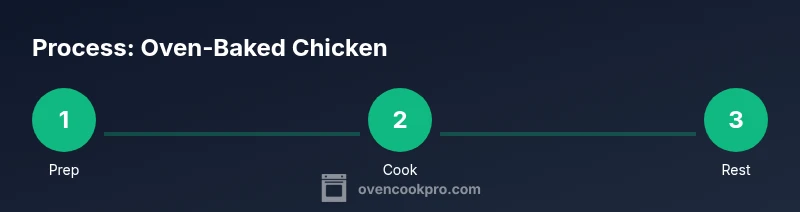
Here’s a practical route from start to finish. Preheat the oven to 400°F (204°C). Pat dry and season two 6-ounce chicken breasts. Place in a single layer on a parchment-lined baking sheet. Roast until internal temperature reaches 160-162°F (71-72°C), then rest for 5-10 minutes. Slice and serve with your favorite sides. Adjust time for thicker or thinner breasts by a few minutes, and always verify final temp at the thickest part for consistent results.
Tools & Materials
- Digital food thermometer(Instant-read preferred, probe type with thin tip)
- Oven-safe baking dish or sheet(Lightly oil or line with parchment)
- Oven mitts(Heat-resistant for handling hot pans)
- Cutting board(Non-slip surface)
- Sharp knife or kitchen shears(Trim excess fat and slice safely)
- Measuring tools (optional)(For precise seasoning if desired)
- Aluminum foil or foil tent (optional)(For resting if you prefer looser cover)
Steps
Estimated time: 25-40 minutes
- 1
Preheat oven and gather tools
Preheat the oven to 400°F (204°C) and assemble all tools and ingredients within easy reach. A hot oven ensures rapid, even cooking and reduces the temptation to open the door mid-cook.
Tip: Preheating stabilizes heat distribution for even browning. - 2
Pat dry and season
Pat chicken breasts dry with paper towels to remove surface moisture. Lightly oil and season with salt, pepper, and optional spices for color and flavor.
Tip: Dry surfaces promote browning rather than steaming. - 3
Arrange in a single layer
Place the breasts in a single layer on a parchment-lined baking sheet with space between pieces for air flow.
Tip: Crowding slows cooking and can lead to uneven doneness. - 4
Roast until target temp is near
Roast until the thickest part reaches 160-162°F (71-72°C). Remove from heat to rest; carryover cooking will bring it to 165°F (74°C).
Tip: Check early to avoid overshoot; temperatures continue to rise after removal. - 5
Rest before slicing
Loosely tent with foil and rest for 5-10 minutes to let juices redistribute.
Tip: Resting improves juiciness and slice quality. - 6
Slice and serve
Slice against the grain for tenderness and serve with sides or a light sauce.
Tip: Keep slices even for uniform bites.
Questions & Answers
What is the safe internal temperature for chicken breast?
The safe internal temperature for chicken breast is 165°F (74°C). Use a thermometer to verify at the thickest part.
The safe internal temperature is 165 degrees Fahrenheit, checked with a thermometer.
Convection vs. conventional oven: which is better for chicken breast?
Convection can cook more evenly and faster; reduce the oven temperature by about 25°F (14°C) if using convection, and monitor doneness closely.
Convection cooks faster; reduce the heat by about 25 degrees and watch the time.
Can I cook chicken breast from frozen in the oven?
Yes, but expect longer cooking times and verify doneness with a thermometer to reach 165°F.
Yes, but it takes longer; ensure it reaches 165 degrees safely.
How long does it take to bake chicken breast at 400°F?
Most boneless chicken breasts take about 18-25 minutes depending on thickness; always verify with a thermometer.
Usually 18-25 minutes, then check with a thermometer.
Why is my chicken dry after cooking?
Common causes are overcooking, not resting, and cooking from too cold a start. Use a thermometer and rest to maintain moisture.
Overcooking and skipping resting cause dryness; use a thermometer and rest.
Should I trim fat or use a marinade?
Trimming excess fat helps even cooking; marinades add flavor but can affect browning if too oil-heavy.
Trim fat for even cooking; marinades are fine but watch the oil content.
Watch Video
Main Points
- Preheat and prep to promote even cooking.
- Use a thermometer and rest the meat for juiciness.
- Do not overcook beyond 165°F (74°C).
- Arrange breasts in a single layer for even heat.
- Allow a short rest before slicing to seal in juices.