How to Bake Chicken Breast in the Oven: A Step-by-Step Guide
Master Juicy Chicken Breast in the Oven with precise temps, rest times, and flavor ideas. This educational guide from Oven Cook Pro walks you through prep, cooking, and storage for reliable, delicious results every time.


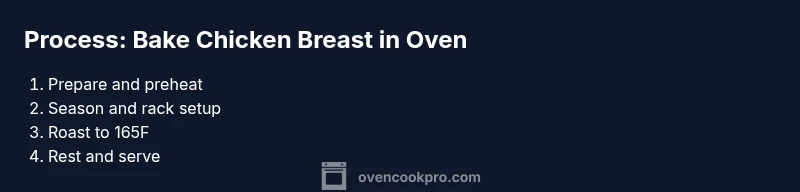
This guide teaches you how to bake chicken breast in the oven to juicy perfection. You’ll preheat, pat dry, season, bake, and rest, plus how to test doneness with a thermometer. The steps are clear and adaptable for flavors you love.
Why oven baking shines for chicken breast in oven
For many home cooks, roasting chicken breast in the oven produces reliable, juicy results with minimal fuss. The high, even heat converges with a short cook time to keep moisture in the meat, while browning adds flavor. According to Oven Cook Pro, when you position the chicken on a wire rack over a baking sheet, hot air circulates around all sides, producing a more even cook than pan-only methods. This approach also makes it easy to bake multiple breasts at once without crowding. In this guide we’ll cover the best temperatures, timing, and techniques to master the process.
Selecting and preparing chicken breast
Choose boneless, skinless chicken breasts of uniform thickness for even cooking. Pat them dry with paper towels to remove surface moisture, which helps with browning. Optional brining or marinating can add flavor and moisture, but for a simple weeknight dinner you can skip it. If you do brine, keep it short (15–30 minutes) and pat dry again before roasting. Remember to trim any visible fat and to remove the tendon from the thick end for consistent texture. The goal is to reduce variability in thickness so the meat cooks evenly.
Preheating and equipment setup
Preheat the oven to 425F (218C) and set up a rimmed baking sheet with a wire rack. The rack promotes air circulation, so the bottom isn’t soggy and the entire breast browns. Lightly oil the rack or brush the breasts with a thin coat of oil to prevent sticking. Have a meat thermometer ready and place the baking sheet on the middle rack to keep a steady, moderate heat. Preparation now saves time later and helps Oven Cook Pro guidance come together in a predictable way.
Seasoning and flavor ideas
Keep the seasoning simple for a clean, versatile dish: a pinch of salt and pepper, plus a drizzle of olive oil. From there you can add garlic powder, paprika, dried thyme, or lemon zest for brightness. For a more robust finish, try a spice blend: 1 tsp paprika, 1/2 tsp garlic powder, 1/2 tsp dried oregano, plus olive oil. If you’re craving a glaze, a light honey-Dijon glaze after roasting can add shine and flavor without overpowering the chicken.
Cooking times and temperatures for juicy results
With thin cut breasts, bake at 425F (218C) for about 18–22 minutes; thicker breasts may need 22–25 minutes. Always verify doneness with a meat thermometer; the internal temperature should reach 165F (74C). If you’re unsure, start checking at the 15–16 minute mark and rely on the thermometer for precise results. According to Oven Cook Pro Analysis, 2026, resting briefly after removal helps retain juiciness.
Testing for doneness and resting
Remove from oven when thermometer hits 165F (74C). Let rest on the rack or a clean cutting board for 5–10 minutes. Resting allows juices to redistribute, making the meat easier to slice and juicier. If you slice too soon, juices run out and your chicken may seem dry; a small rest can prevent this. During resting, keep it loosely tented with foil to keep it warm and prevent a heat drop.
Variations: crusted, stuffed, or glazed
Parmesan-crusted: sprinkle grated Parmesan on the surface and run under a hot broiler for 1–2 minutes to crisp. Garlic-herb crust: mix breadcrumbs with minced garlic and chopped herbs, press onto the top. Stuffed options: create a slit and add spinach and feta; be careful not to overfill. Glazes: a quick maple-mustard or honey-balsamic glaze can finish the chicken after roasting. These variations add flavor without complicating the basic technique.
Common mistakes and how to fix them
Overcooking leads to dry chicken; monitor internal temperature closely. Not patting dry can cause uneven browning; pat thoroughly. Skipping the rack can result in soggy bottoms; use a rack. Cooking straight from fridge can extend time; bring to room temp for 15–20 minutes. Crowding the pan slows cooking; ensure at least 1 inch between breasts.
Make-ahead and meal-prep tips
Cook in larger batches, then refrigerate for 3–4 days; slice or dice to speed up future meals. For freezing, freeze cooked chicken in portions with a light sauce. Reheating: warm gently in the oven at 300F (150C) until heated through, avoiding overheating that dries meat. Use leftovers in salads, wraps, or pasta.
Storage, reheating, and serving ideas
Store leftovers in an airtight container in the fridge up to 4 days; freeze for longer storage. Reheat: oven at 350F (175C) for 8-12 minutes, or microwave in short bursts to avoid drying. Serve with a simple pan sauce or a fresh squeeze of lemon for brightness.
Tools & Materials
- Oven(Preheat to target temp before cooking)
- Rimmed baking sheet(Catches drips and keeps meat from sitting in liquid)
- Wire rack(Raises chicken for even browning and air circulation)
- Meat thermometer(Insert into thickest part; aim for 165F (74C))
- Tongs(For safe handling of hot chicken)
- Paper towels(Pat dry chicken thoroughly to improve browning)
- Olive oil(Lightly coat breast or rack to prevent sticking)
- Salt(Season lightly on both sides)
- Black pepper(Adds savory depth)
- Garlic powder(Optional for extra flavor in the rub)
- Paprika(Optional for color and mild sweetness)
- Aluminum foil(Optional for tenting or easy cleanup)
- Basting brush(Optional for glazing or oiling the rack)
Steps
Estimated time: 40-50 minutes
- 1
Preheat the oven
Set your oven to 425F (218C) and allow it to reach temperature before you start any prep. This ensures quick, even cooking once the chicken goes in. A fully preheated oven reduces the risk of undercooking the center.
Tip: Confirm the oven’s actual temp with a thermometer for accuracy. - 2
Pat dry the chicken
Pat the chicken breasts dry with paper towels. Removing surface moisture promotes browning and helps the seasoning adhere. Dry surfaces also reduce moisture loss during roasting.
Tip: Pat from the center outward to avoid spreading moisture. - 3
Season the breasts
Lightly oil and season both sides with salt and pepper. If you like, add garlic powder or paprika for a gentle flavor boost that won’t overpower the meat. Seasoning evenly ensures consistent flavor from edge to center.
Tip: Season generously on the surface but avoid over-salting. - 4
Prepare the rack and sheet
Place a wire rack on a rimmed baking sheet. This setup keeps the chicken elevated for air circulation and crisp edges. Oil the rack lightly to prevent sticking.
Tip: A rack is worth the setup; it improves texture significantly. - 5
Arrange the chicken on the rack
Lay the breasts on the rack with space between them for air flow. Avoid overlapping to ensure even cooking. If breasts vary in thickness, consider pounding to uniform thickness.
Tip: Even thickness helps every piece reach target temperature at the same time. - 6
Bake and monitor
Roast for 18–22 minutes for thin pieces or 22–25 minutes for thicker breasts. Begin checking at 15 minutes with a thermometer to avoid overcooking. Internal target is 165F (74C).
Tip: Use a thermometer rather than relying on time alone. - 7
Rest the meat
Remove the breasts and rest them for 5–10 minutes. Resting lets juices redistribute, improving juiciness and slicing quality.
Tip: Keep them lightly tented with foil to retain warmth. - 8
Optional glaze or finish
If desired, brush with a glaze (e.g., honey-Dijon) and return to the oven for 1–2 minutes to set. This adds shine and a flavor contrast without drying the meat.
Tip: Don’t glaze too early; sugars can burn if left too long. - 9
Serve or store
Slice and serve with your favorite sides, or refrigerate for meal prep. Properly cooled, store refrigerated in an airtight container for up to 4 days.
Tip: Cool briefly before refrigerating to avoid condensation in the container.
Questions & Answers
What is the best oven temperature for chicken breasts?
A common approach is to bake at 425F (218C) for juicy, browned breasts. Start checking doneness at around 15-16 minutes for thin pieces and use a thermometer to reach 165F (74C).
Many home cooks find 425F works well; use a thermometer to verify.
Can I bake frozen chicken breast in the oven?
Frozen breasts can be baked, but they will take longer, and you should use a thermometer to ensure they reach 165F (74C) in the center. It’s best to thaw for even cooking when time allows.
Yes, you can bake from frozen, but expect longer cooking times and verify doneness with a thermometer.
How can I prevent dry chicken when baking in the oven?
Pat dry, don’t skip the resting period, and use a rack to promote air circulation. A thermometer helps prevent overcooking. Consider a light glaze after roasting to improve moisture perception.
Pat it dry, rest it, and keep an eye on the temperature with a thermometer.
Should I use skin-on chicken breasts for roasting?
Skin-on breasts can stay juicier due to the fat in the skin, but they take longer to cook. For leanest results, skin-off with proper resting and moisture management works well.
Skin-on adds moisture, but leaner options are fine with careful timing.
What flavor variations pair well with roasted chicken breast?
Classic options include garlic and paprika, lemon zest, or a simple honey-Dijon glaze. You can also add herbs like thyme or rosemary for aromatic notes that don’t overpower the chicken.
Try lemon zest with paprika for a bright, quick variation.
Watch Video
Main Points
- Preheat and use a rack for even browning
- Pat dry, season, and avoid crowding for consistent results
- Always verify with a thermometer (165F/74C) and rest before slicing
- Experiment with simple flavor tweaks to suit your meal
- Resting and proper storage keep leftovers juicy and safe