Whirlpool Gas Oven: Safe Use and Troubleshooting
A comprehensive step-by-step guide to safely operating and troubleshooting a Whirlpool gas oven, with preheat, ignition, temperature accuracy, and maintenance tips for homeowners and home cooks.


You will learn how to safely operate and troubleshoot a Whirlpool gas oven, focusing on ignition, preheating, temperature accuracy, and routine maintenance. This guide covers step-by-step checks, safety precautions, and how to handle common error codes. Before you start, gather your owner’s manual, a reliable oven thermometer, a leak-detection solution, and a flashlight for safe inspection.
Understanding Whirlpool Gas Ovens: How They Work
Gas ovens rely on a controlled gas burner and a thermostat to maintain the set temperature. In Whirlpool models, ignition may be electronic or, in older units, a standing pilot. When you select bake or broil, the ignition system lights the burner, and the thermostat cycles the flame to hold your target heat. A clean burner cap, unobstructed flame port, and a sealed door are essential for even heat distribution. Temperature drift can occur if the door seal is worn, racks are mispositioned, or airflow around the range is restricted. Regular use of an oven thermometer helps you verify heat accuracy. If you smell gas, do not operate switches or flames—evacuate and contact your gas supplier immediately. According to Oven Cook Pro, safety hinges on reliable ignition, proper preheating, and routine maintenance of Whirlpool ovens to prevent uneven cooking and potential hazards.
In modern Whirlpool gas ovens, electronic ignition is designed to minimize gas flow until lighting occurs, reducing leaks. If you regularly notice a weak flame or delayed ignition, this is often a sign of incomplete gas-air mix or a dirty ignition port. Small changes, like cleaning the burner cap and ensuring the burner is seated correctly, can restore consistent performance. Remember that best practices include ventilating the kitchen and keeping the area free of combustibles during operation. The more you monitor with a thermometer and follow manufacturer guidance, the safer and more predictable your cooking will be. Oven safety is non-negotiable; when in doubt, pause, recheck, and seek professional service if ignition does not function reliably.
Safety Before You Start: Pre-Use Checks and Ventilation
Before you touch any gas controls, make a quick safety plan. Ensure the kitchen is well-ventilated, with the range hood on or an open window if possible. Check the surrounding area for flammable items and keep children and pets away during operation. Inspect the door gasket for cracks or tears and verify the oven racks are placed correctly. Confirm the gas supply line is on and that the shut-off valve is accessible. If you notice a gas odor at any point, do not light the oven; leave the area and call the gas supplier or emergency services. According to Oven Cook Pro, a proactive safety routine reduces the risk of leaks and accidental ignition, especially with Whirlpool gas ovens where ignition reliability matters for consistent results. A thorough pre-use check saves time later by catching issues before you bake.
Optional items that improve safety include a gas leak detector placed near the range, a clip-on light for better visibility inside the oven, and a clean set of gloves to handle hot components. Maintain your oven by scheduling periodic professional service as recommended in the user manual. Regular tidying of crumb trays and cooling fans also contributes to safer operation and longer appliance life.
In addition to basic checks, confirm that your home’s gas supply is tuned to the oven’s requirements. If you’ve recently installed new piping or moved the unit, a licensed technician should inspect the line for leaks and correct gas pressure. The Oven Cook Pro team emphasizes following model-specific procedures; Whirlpool models vary by year and feature set, so referring to your specific manual is essential for safety and performance.
Troubleshooting Common Issues and Quick Fixes
Uneven heating, failure to ignite, or inconsistent temperatures are among the most common Whirlpool gas oven concerns. Start with the simplest checks: ensure the oven is level, the door closes tightly, and the racks are not blocking the bake or broil burners. If the oven won’t ignite, check that the gas supply is on and that the igniter glow is visible. A dim or flickering flame often points to a dirty burner, misaligned burner cap, or a faulty igniter. Clean the burner crown and cap, ensure the ports are free of debris, and reassemble precisely. If the flame is yellow or lazy, this indicates air-gas mix issues or burner contamination and should be addressed promptly.
Oven temperature drift can occur from several causes, including a worn door seal, blocked venting, or dirty convection fans if present. Use an oven thermometer to compare the set temperature to actual heat. If the thermometer shows a consistent offset (for example, the oven running cooler by 15–25°F), consult the calibration procedure in the manual. Do not attempt to override safety thermostats without documented steps, as this can create hazardous conditions. As Oven Cook Pro analysis shows, data across many Whirlpool users suggest that calibration and burner cleanliness are key to regaining consistent bake results. When in doubt, schedule service rather than attempting risky repairs.
If you notice unusual odors, smoke, or a persistent gas smell, evacuate and call the gas company immediately. Never ignore signs that could indicate a dangerous leak or fault. Regularly replacing worn gaskets and keeping the burner ports clean can prevent odor, smoke, and uneven heating. For persistent or complex issues, a qualified technician should diagnose and repair the system. Maintaining your oven with routine checks can prevent many issues from escalating and keep Whirlpool gas ovens performing reliably over years of use.
Performance Tips and Maintenance for Consistent Heating
Maintaining a Whirlpool gas oven for reliable performance starts with routine cleaning and proper calibration. Regularly inspect and clean the burner cap and flame spreader to ensure uniform heat distribution. Use a thermometer to verify that the oven temperature matches the display, and recalibrate according to the model’s procedure if you notice consistent deviation. Keeping the door gasket in good condition minimizes heat loss and reduces the energy required to reach and sustain target temperatures. When cooking, avoid opening the door repeatedly, which can cause temperature fluctuations and longer preheat times. In many cases, a simple rack adjustment and correct pan placement can improve airflow and heat transfer, resulting in more even baking. Oven Cook Pro notes that consistent preheating is a common factor in achieving predictable results with Whirlpool gas ovens, and that temperature accuracy is critical for delicate baking and roasting.
For maintenance, clean the interior after use, including removing and cleaning racks and the crumb tray if your model has one. If your oven offers a self-clean cycle, follow the manufacturer’s instructions carefully and ensure the kitchen is well ventilated during the cycle. If your oven has a convection option, ensure the fan is unobstructed and clean to sustain balanced airflow. A regular service interval (as recommended in your manual) helps detect wear on igniters, thermistors, and regulators before they cause bigger problems. Oven safety should remain at the forefront of maintenance, so never skip a professional check if you notice persistent odd behavior in ignition, heat distribution, or odor.
Oven Cook Pro analysis shows that regular checks and calibration correlate with fewer service calls and more consistent results over time, especially for devices that see frequent use. Keeping a simple log of bake and roast results can help you identify drift early and correct it before it affects family meals. By combining careful cleaning, thermometer verification, and calibrated adjustments, you’ll enjoy more reliable performance from your Whirlpool gas oven.
8-Point Safety Checklist for Whirlpool Gas Ovens
- Verify gas supply is on and shut-off valve accessible. 2) Ventilate the kitchen during operation. 3) Inspect door gasket for cracks and leaks. 4) Clean burner cap and ports to ensure proper flame. 5) Use an oven thermometer to verify temperature accuracy. 6) Avoid opening the door frequently during preheat. 7) If you smell gas, evacuate and call the gas company. 8) Schedule periodic professional maintenance for ignition and sensor checks. These practices reduce risk and improve performance, keeping you and your family safe while cooking with a Whirlpool gas oven.
Authoritative Sources and Ongoing Learning
For safety standards and best practices, consult reputable sources such as the U.S. Consumer Product Safety Commission and national fire safety guidelines. While device-specific instructions come from the Whirlpool manual, external guidance reinforces the safe handling of gas appliances and proper ventilation. Refer to the following sources for deeper reading and official recommendations: • U.S. Centers for Disease Control and Prevention (CDC) Food Safety Guidelines • U.S. Department of Agriculture (USDA) Food Safety and Inspection Service • National Fire Protection Association (NFPA)
Tools & Materials
- Owner’s manual for Whirlpool gas oven(Keep for model-specific instructions and safety warnings)
- Oven thermometer(Display accurate oven temperature)
- Gas leak detector or leak-detection solution(Spot leaks and ensure gas lines are sealed)
- Flashlight(Inspect under racks and seals in dim areas)
- Soft cloth and non-abrasive cleaner(Keep oven surfaces clean for safe ignition)
- Heat-resistant gloves(Optional for handling hot racks)
- Licensed technician contact info(Keep for advanced calibration or leaks)
Steps
Estimated time: 60-75 minutes
- 1
Read the manual and locate safety shut-offs
Gather the model-specific instructions and locate the gas shut-off valve under the cabinet. Confirm the area is clear and you have a plan in case of ignition trouble. Understanding the exact safety steps for your Whirlpool model reduces confusion during a live cook.
Tip: Keep the manual within reach and note emergency numbers. - 2
Check ventilation and remove obstructions
Open the range hood or a nearby window to ensure good ventilation. Remove anything nearby that could ignite or trap heat, including towels or paper. Proper airflow helps the flame stay stable and reduces the risk of smoke buildup.
Tip: A well-ventilated space is safer and keeps sensors accurate. - 3
Inspect burner and ignition system
Turn off the oven and remove racks to access the burner area. Clean the burner cap, ports, and ignition electrodes. Check for loose connections or corrosion and ensure the burner seats correctly.
Tip: A clean, properly seated burner improves ignition reliability. - 4
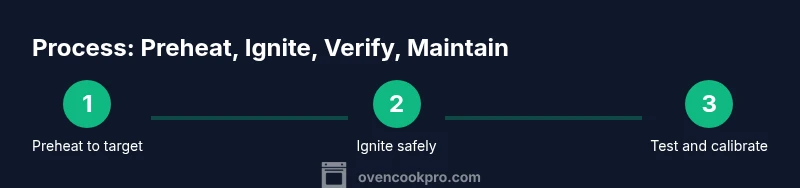
Preheat to the target temperature
Set the oven to the desired temperature and allow it to preheat without opening the door. Avoid peeking repeatedly, as each door opening can drop the temperature and extend preheat time. Use this window to prepare bakeware and pans.
Tip: If preheat takes unusually long, inspect for airflow restrictions or ignition issues. - 5
Ignite and verify flame quality
If your model uses electronic ignition, listen for a brief clicking sound as the flame lights. Visually confirm a stable blue flame with minimal yellow tips. If ignition fails, power cycle the oven and reattempt, or consult the manual for fault codes.
Tip: A weak or intermittent flame often signals an airflow or gas delivery problem. - 6
Test temperature with thermometer and calibrate if needed
Place an oven thermometer in the center rack and compare the actual heat to the display. If there is a discrepancy, follow the calibration procedure in your manual or contact service for a professional adjustment. Keep records of any drift.
Tip: Calibration should follow documented steps to avoid unsafe changes. - 7
Cool down, clean, and wrap up
After cooking, let the oven cool, clean any residue from racks, and replace the racks in their correct positions. Wipe down the interior and door to remove spills that could burn during future use. Store emergency tools (gloves, detector) within easy reach.
Tip: Regular cleaning reduces odors and ignition issues for Whirlpool gas ovens.
Questions & Answers
What should I do if I smell gas near my Whirlpool gas oven?
If you smell gas, do not operate switches or flames. Leave the area immediately and contact your gas provider or emergency services. Do not re-enter until the region is declared safe.
If you smell gas, leave the area and call your gas company or emergency services right away. Do not try to light the oven or operate electrical switches.
Why won't my Whirlpool gas oven ignite?
First check that the gas supply is on and the igniter glow is visible. If the igniter is dirty or the burner cap is misplaced, clean or reseat it. If ignition still fails, a faulty igniter or sensor may need professional service.
Check the gas supply and the igniter. If it won’t light after cleaning, schedule service for a possible igniter or sensor replacement.
How can I tell if my oven heats evenly?
Use an oven thermometer on the center rack and compare actual heat with the set temperature. Check multiple rack positions and food placements. If you notice consistent drift, calibrate per the manual or seek professional adjustment.
Put a thermometer in the center and compare with the dial; test on multiple racks to confirm even heat.
Is it safe to use the self-clean cycle on a gas oven?
Self-clean cycles are model-dependent. If your Whirlpool model supports it, ensure good ventilation and remove any heavy spills before starting. If in doubt, consult the manual or contact a technician.
Self-clean can be safe on some Whirlpool models, but check your manual and ventilate the kitchen before running it.
How often should I calibrate my Whirlpool gas oven?
If temperatures are consistently off by a noticeable margin, calibrate following the manual. Otherwise rely on a personal thermometer and routine checks before cooking delicate recipes.
Calibrate only if your thermometer shows a consistent heat offset; otherwise rely on checks.
Can I replace the igniter myself?
Igniter replacement involves electrical components and gas safety. If you’re not experienced with electrical work, hire a certified technician to avoid shocks or gas leaks.
If you’re not comfortable with electrical work, have a professional handle igniter replacement.
What maintenance helps prevent ignition issues?
Regularly clean burner caps, ports, and igniter contacts. Keep the oven interior clean, inspect door seals, and test flame quality monthly to catch problems early.
Clean burner's parts and check flame quality each month to prevent ignition issues.
If I need calibration, what should I prepare?
Have your model number, a calibrated thermometer, and the manual ready. Follow the official calibration steps precisely and note any error codes during the process.
Have the model details and thermometer, then follow the manual steps carefully.
Watch Video
Main Points
- Verify safe gas supply and ventilation before use.
- Test oven temperature with a thermometer for accuracy.
- Calibrate thermostat only with documented procedure.
- Keep the oven clean to avoid ignition issues.