Gas Ovens 101: Safe Use, Maintenance & Troubleshooting
Learn how to safely operate a gas oven, detect gas odors, perform essential maintenance, and troubleshoot common issues with step-by-step guidance from Oven Cook Pro.


According to Oven Cook Pro, this how-to guide helps homeowners safely use gas ovens and troubleshoot common problems. You’ll learn to recognize gas smells, verify proper ignition, ventilate correctly, and perform essential maintenance without interrupting daily cooking. Follow practical steps to prevent leaks, reduce waste, and extend the life of your appliance, with safety as the top priority.
How gas ovens operate and safety fundamentals
Gas ovens typically rely on natural gas or propane delivered through a dedicated line. Inside the oven, a safety valve and an ignition system coordinate when the burner lights and how long it stays on. Modern units use electronic ignition rather than a standing pilot flame, which reduces fuel use and fire risk. Understanding these components helps you diagnose issues and cook more safely. The term gas oven gas describes the fuel source powering your oven, and recognizing this helps in communicating with technicians or reading manuals. The most important rule is safety: never ignore a persistent gas odor, never try to light a fire to test for leaks, and never operate a malfunctioning unit. This guide from Oven Cook Pro offers practical steps to protect your home and ensure consistent performance, even for casual home cooks.
Pre-use safety checks and gas odor detection
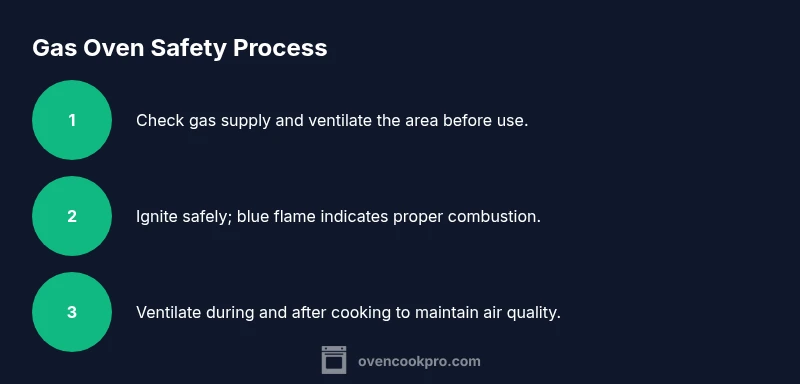
Before you turn a dial, take a moment to inspect the area around the oven and its connections. Look for loose hoses, signs of wear, or a damp, oily residue near fittings. If you smell gas (often described as rotten eggs or a sulfurous odor), evacuate the area immediately, do not operate electrical switches or open flames, and call the gas company or emergency services. Ensure your kitchen is well-ventilated with the range hood or an open window. A quick visual check of the burner ports for obstructions (food debris or dust) can prevent uneven ignition. Regularly inspect the supply line and fittings for wear and replace damaged hoses promptly. This safety-first mindset reduces the risk of leaks and improves overall oven performance.
Ignition, preheating, and flame management
Turn the oven to the correct setting and listen for the ignition click. If using electronic ignition, the burner should light within a few seconds and the flame should burn blue; a yellow or orange flame can indicate incomplete combustion or dirty ports. If the flame doesn’t ignite, turn the oven off, wait a minute, and retry. Do not stand directly over the burner while attempting to light it. Use the oven thermometer to verify that preheating reaches the intended temperature. This ensures your recipes start from an accurate baseline, improving both bake quality and safety.
Ventilation and indoor air quality when using gas ovens
Gas combustion produces combustion byproducts that can affect indoor air quality. Use a functioning range hood or exhaust fan whenever the oven is in use, and consider opening a window briefly for better ventilation during high-heat cooking. Keep the kitchen door closed to prevent pollutants from circulating to other living spaces, especially in homes with infants, pets, or respiratory concerns. Regularly check that the vent hood’s filter is clean and the duct is free of obstructions. Adequate ventilation reduces the risk of carbon monoxide buildup and keeps the air in your home healthier during long cooking sessions.
Maintenance, cleaning, and common issues
Regular maintenance keeps your gas oven performing reliably. Wipe spills promptly after cooking to prevent baked-on residue from affecting temperature readings. Remove racks and clean them with warm soapy water; dry thoroughly before reinserting. Calibrate the oven if you notice consistent temperature discrepancies by comparing broil and bake readings against an accurate thermometer. Common issues include uneven heating, delayed ignition, or erratic flame size. Cleaning burner ports with a soft brush and checking the igniter for visible wear can address many problems. If the oven misbehaves persistently, note the symptoms and consult a service professional rather than attempting risky DIY fixes.
Troubleshooting common problems and when to seek help
If your oven heats too slowly or unevenly, start by validating the temperature with a reliable oven thermometer, and ensure racks are placed properly away from heating elements. A clicking noise near ignition can indicate an dirty igniter or a loose wire connection. If you smell gas or hear hissing from behind the panel, turn off the oven and call your gas provider or emergency services immediately. For persistent issues like inconsistent temperatures, pilot lighting failures, or burner flame problems, schedule a professional inspection. Early diagnosis and proper calibration prevent wasted energy and potential safety hazards.
Safety protocols and when to call a professional
Never attempt to service gas lines or regulators beyond basic cleaning if you are not trained. If you suspect a gas leak, evacuate the home, call the gas company, and then contact emergency services. Keep a carbon monoxide detector installed and functioning in every floor of the home, particularly near the kitchen. Schedule annual professional inspections of your gas oven, especially if you notice changes in flame color, unusual odors, or persistent ignition problems. A qualified technician can check gas pressure, venting integrity, and electrical wiring to ensure your oven operates safely and efficiently.
Authoritative sources and further reading
For safety standards and best practices, consult trusted sources such as Energy.gov, EPA, and OSHA guidance related to gas appliances and indoor air quality. These organizations offer evidence-based recommendations for safe installation, operation, and maintenance, helping homeowners minimize risk and maximize performance. Bookmark these references for ongoing safety and reliability as you cook with gas.
Tools & Materials
- Soapy water solution(Mix dish soap with water to test leaks around connections)
- Flashlight(Inspect dark or hidden areas like behind panels)
- Screwdriver set(Access panels or loose fittings if present)
- Digital oven thermometer(Verify actual oven temperature vs dial setting)
- Non-abrasive cleaner and sponge(Clean grates, racks, and interior surfaces)
- Soft brush(Clean burner ports without damaging components)
- Protective gloves(Safeguard hands during maintenance)
- Ventilation options(Range hood or outside ventilation when cooking)
Steps
Estimated time: 60-90 minutes
- 1
Inspect gas supply and ventilation
Turn off the oven, visually inspect hoses and fittings for wear. If you detect a gas odor, evacuate and call the gas company or emergency services. Test connections with a soapy solution to check for leaks, never using flames for this test.
Tip: Always test for leaks with the oven OFF and the area well-ventilated. - 2
Verify ignition and flame quality
Before cooking, slowly turn on the oven and listen for the ignition sequence. Ensure the flame is blue with a steady 'simmer' feel; a yellow flame indicates incomplete combustion and a service check may be required. If ignition fails, turn off, wait 60 seconds, and retry.
Tip: Do not attempt to override safety systems or bypass igniters. - 3
Preheat and rack positioning
Place racks at the recommended height for your recipe and allow the oven to preheat to the target temperature. Use an oven thermometer to confirm accuracy. Do not place metal cookware on the heating element's direct path during preheat.
Tip: Position the thermometer where food will be placed for accurate readings. - 4
Monitor during cooking
Stay nearby during the initial minutes of baking and roasting to catch temperature drift or uneven heating. Check for consistent flame size and adjust as needed, avoiding sudden temperature swings that affect results.
Tip: Rotate trays halfway through cooking for even results. - 5
Cool down and ventilate after use
When finished, turn off the oven and keep the range hood on for a few minutes to clear any lingering combustion byproducts. Open a window if needed to improve air exchange. Clean spills only after the oven cools.
Tip: Do not slam oven doors; let it cool gradually to prevent seals from warping. - 6
Schedule maintenance and calibration
Wipe down surfaces weekly and clean burners monthly. Calibrate the oven temperature with an external thermometer if you notice consistent discrepancies. Schedule annual professional service for gas lines, regulators, and ignition systems.
Tip: Keep a log of temperatures and any irregularities to help technicians diagnose issues.
Questions & Answers
Is it safe to use a gas oven if I smell gas?
No. A gas odor indicates a possible leak and should be treated as an emergency. Leave the area, avoid any sources of ignition, and call your gas company or emergency services immediately.
If you smell gas, leave the area and call for help right away.
How do I test for gas leaks at home?
Use a soapy water solution on joints and connections while the oven is off. If bubbles form, there is a leak that requires professional repair. Do not operate the appliance until it is fixed.
Test joints with soapy water when the oven is off; bubbles mean a leak.
Can I use a gas oven without a vent hood?
Ventilation is strongly recommended to improve indoor air quality, especially during long-baking sessions. If a range hood is not available, open windows and use another ventilation method to minimize gas byproducts.
Ventilation is advised; use a range hood or open a window.
What should I do if the oven won’t light?
First ensure the gas supply is on and the area is ventilated. If ignition fails after multiple attempts, turn off the oven, wait a minute, and try again. If it still won’t light, contact a technician.
If it won’t light after a few tries, switch it off, wait, and call a pro if it persists.
How often should I calibrate my oven thermometer?
Calibrate when you notice inconsistent baking results or after service. Use an external thermometer to verify accuracy and adjust oven settings as needed.
Check with a separate thermometer and calibrate if temperatures seem off.
When should I call a professional for a gas oven issue?
Call a licensed technician for persistent ignition problems, persistent gas odors, flame irregularities, or suspected gas line damage. Do not attempt risky internal repairs yourself.
If problems persist beyond basic cleaning and adjustment, get a professional check.
Watch Video
Main Points
- Verify gas supply and ventilation before use
- Ignition should be clean and blue; address yellow flames
- Preheat accurately with a thermometer for best results
- Ventilate and test for leaks regularly
- Schedule professional maintenance annually