How to Use a Gas Oven: A Step-by-Step Guide
A thorough, expert guide on safely operating a gas oven with preheating, temperature control, tips for baking and roasting, maintenance, and safety considerations from Oven Cook Pro.


You will learn how to safely operate a gas oven, including preheating, temperature control, and essential safety steps. This guide covers proper ventilation, how to use racks and pans, broiling techniques, and maintenance tips to keep your oven performing reliably. Follow these steps to bake, roast, and broil with confidence, while preventing common safety risks.
Understanding Gas Ovens: How They Work
Gas ovens heat from below using a burner and rely on airflow to distribute heat. Unlike electric coils, gas ranges may use a thermostat or gas valve to regulate temperature, with the oven typically venting through an exhaust to regulate humidity and maintain even heat. Modern gas ovens can include convection fans that circulate hot air for more even baking, while traditional models rely on radiant heat. For home cooks, understanding this difference helps you choose the right rack position, pan type, and cooking methods. According to Oven Cook Pro, recognizing how the burner responds to temperature changes helps you predict hot spots and adjust cooking times accordingly. Use an oven thermometer to verify the set temperature, especially when following precise recipes.
- Expect hotter heat near the burner and cooler zones toward the door.
- Convection, when available, can reduce bake times by 10–15% and improve browning.
- A well-vented kitchen reduces indoor cooking odors and ensures safe operation.
Safety First: Gas Oven Safety Essentials
Gas ovens require careful safety practices due to the combination of flame, gas fuel, and hot surfaces. Ensure your kitchen is adequately ventilated by turning on a range hood or opening a window slightly when cooking. Install a working carbon monoxide detector near the kitchen and test it monthly. Check for the distinctive gas odor; if you smell gas, do not operate switches or appliances, leave the area immediately, and call your gas provider or emergency services. Regular maintenance by a qualified technician is recommended to keep burners clean and connections secure. Keeping the area around the oven clear of towels and paper prevents fire hazards. Oven Cook Pro emphasizes proactive safety checks as a cornerstone of reliable gas oven use.
- Always ventilate when cooking with gas.
- Do not ignore gas odors—evacuate and call for help.
- Schedule annual professional inspections for burner and vent integrity.
Preheating and Temperature Control
Preheating is essential for even cooking with gas ovens, but times vary by model and temperature. Close the door during preheat and use an oven thermometer placed in the center of the rack to verify true heat. Gas ovens can overshoot target temperatures or have slow cooldowns, so recalibrating or adjusting rack positions may be necessary. If your oven has a convection setting, preheat to a slightly lower temperature to account for faster air circulation. Oven Cook Pro notes that the most reliable results come from confirming the thermostat with a calibrated thermometer and making small adjustments next time you cook.
- Allow 10–15 minutes for typical preheating at 350°F (175°C).
- Use a center rack thermometer for accurate readings.
- If you notice large temperature swings, consider recalibrating with a professional or manufacturer guide.
Cooking Techniques in a Gas Oven
Use the right rack position to optimize air flow and browning. For most pastries and cookies, place the rack in the middle to avoid scorching on top or bottom. For roasting, start on the middle rack and adjust to a lower rack for longer, slower cooks. When using broil, monitor closely and adapt by lowering the rack and keeping a close eye on the surface to prevent burning. If your oven has a convection feature, you can reduce the heat by about 25°F (15°C) and shorten cooking times accordingly. A thermometer remains the most reliable tool for ensuring proper doneness. Oven Cook Pro recommends testing doneness with internal temperatures rather than relying solely on color or time.
- Bakeware: Use light-colored, heavy-gauge pans to prevent excessive browning.
- Do not crowd pans; air needs space to circulate.
- Rotate pans halfway through for even browning when not using convection.
Cleaning, Maintenance, and Troubleshooting
After cooking, turn off the oven and allow it to cool with the door closed to prevent rapid temperature shifts that can damage seals. Wipe the interior with a damp cloth once cooled, avoiding harsh cleaners that can damage enamel. Remove racks and soak them to remove baked-on residue, then scrub with a non-abrasive sponge. If you notice uneven heating, burner clogs, or yellow-tinted flames, consult a professional. Regular maintenance—clean burners, check flame quality, and ensure proper venting—extends oven life and keeps cooking consistent. Oven Cook Pro highlights that safe operation hinges on routine cleaning and timely servicing.
- Clean after use to prevent grease buildup.
- Inspect burners for clogs and flame quality.
- Schedule professional servicing if you detect persistent issues.
Authority Sources and Extra Tips
For safety best practices and guidelines on gas appliance use, consult trusted sources and manufacturers’ manuals. The U.S. Consumer Product Safety Commission and the U.S. Fire Administration provide general safety guidance for gas appliances, while university extension services offer practical how-to advice. References can help you understand safe clearance, venting requirements, and emergency steps. Oven Cook Pro’s approach combines practical, do-it-now steps with professional safety standards to help you cook confidently.
- Always ventilate and monitor for gas odors.
- Use an oven thermometer to verify temperature accuracy.
- Schedule regular professional inspections for gas appliances.
Authority Sources
- U.S. Consumer Product Safety Commission: https://www.cpsc.gov
- U.S. Fire Administration: https://www.usfa.fema.gov
- Oregon State University Extension: https://extension.oregonstate.edu/
Tools & Materials
- Oven thermometer(Place in center of rack for true oven temp)
- Heat-resistant gloves(Heat protection for racks and cookware)
- Baking sheets and oven-safe racks(For proper air circulation)
- Aluminum foil or parchment paper(Use for easy cleanup)
- Dish towel or silicone mat(Handle hot cookware safely)
- Ventilation option (range hood or window)(Improves air exchange while cooking)
Steps
Estimated time: 45-75 minutes
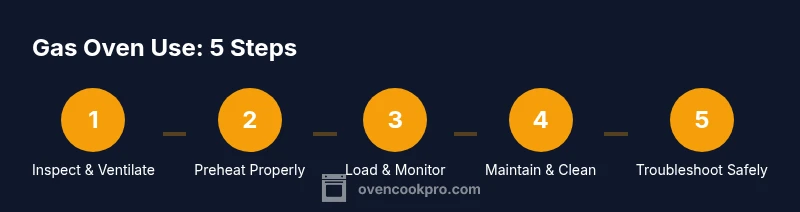
- 1
Inspect safety setup
Before turning on the oven, check for gas odors and ensure the kitchen is ventilated. Clear the area of flammable items and confirm the range hood is functional. If any gas smell is detected, evacuate and contact the gas provider immediately.
Tip: Keep a clear exit path and have a mobile phone ready to call for help. - 2
Preheat the oven
Close the door and set the temperature. Allow the oven to reach the target temperature, using an oven thermometer to verify accuracy. Do not open the door repeatedly during preheat, as this can cause heat fluctuations.
Tip: Avoid opening the door during preheat to maintain consistent heat. - 3
Position racks and cookware
Place the rack in the center or as required by the recipe. Arrange pans with space between them to promote air circulation. If using convection, reduce the recipe temperature by about 25°F (15°C) unless the recipe specifies otherwise.
Tip: Pre-position racks to avoid moving hot items after preheating. - 4
Load and monitor food
Insert food into preheated oven and monitor progress with a timer and thermometer. Rotate trays halfway for even browning when not using convection. Keep the oven door closed during cooking unless recipe calls for checking.
Tip: Use a meat thermometer to confirm doneness rather than relying solely on time. - 5
Finish and broil if needed
If a crisp top is desired, switch to a broil setting near the end and watch closely to prevent scorching. Remove dishes with oven-safe gloves and allow them to rest before serving.
Tip: Stay within arm’s reach when broiling to prevent burning. - 6
Cool, clean, and maintain
Turn off the oven and let it cool before cleaning. Wipe interior with a damp cloth and remove racks for soaking. Schedule routine checks for flame quality and vent integrity.
Tip: Regular cleaning prevents buildup that can affect heat distribution.
Questions & Answers
Is a gas oven better than an electric oven for baking?
Both have strengths; gas ovens often heat quickly and provide moist heat but can have uneven hotspots. Electric ovens typically offer steady heat and precise calibration. The choice depends on your recipes and comfort with oven calibration.
Gas ovens heat fast but may have hotspots; electric ovens offer steady heat. Your choice depends on recipes and your ability to balance heat with calibration.
How do I safely preheat a gas oven?
Close the door, set the desired temperature, and allow the oven to reach temperature while using a thermometer to confirm. Avoid opening the door often and ensure adequate ventilation.
Close the door, set the temp, wait for it to reach temperature, and verify with a thermometer. Keep the area ventilated.
Why are flames uneven in my gas oven?
Uneven flames can result from clogged burners or improper venting. Shut off the oven, inspect the burner ports, and clean if needed. If the flame remains irregular, contact a technician.
Flames can be uneven due to clogs or venting issues. Check and clean burners, and seek professional help if needed.
Can I use a gas oven without a vent hood?
Ventilation is strongly advised for safety and odor control, but not always mandatory. Use a window or range hood to improve air quality and reduce gas buildup indoors.
Ventilation is recommended to keep air clean; if you can, run a hood or open a window.
How do I calibrate the oven temperature?
Compare the dial temperature with a calibrated thermometer placed inside. If they differ, consult the manufacturer’s guidance or a technician to adjust the thermostat.
Check the thermometer against the dial; adjust or seek professional help if there’s a discrepancy.
What should I do if I smell gas during cooking?
If you smell gas, do not operate switches or appliances. Evacuate everyone, call the gas company or emergency services, and wait for professionals to inspect the area.
If you smell gas, leave quickly and call for help. Do not switch anything on or off.
Watch Video
Main Points
- Preheat with the door closed for even results
- Verify actual oven temperature with a thermometer
- Ventilate and prioritize safety when cooking with gas
- Position racks for optimal air flow and browning
- Regular cleaning prevents heat distribution problems