How to Start an Oven: A Step-by-Step Guide
A comprehensive, expert guide from Oven Cook Pro on safely powering up, preheating, and starting your oven for reliable baking, roasting, and broiling results.


To start your oven, verify power and control readiness, select the correct bake setting, set the target temperature, and allow the oven to preheat before loading food. Use a thermometer for accuracy, keep the door closed during preheat, and rely on the built-in indicators to confirm readiness. If start-up involves multiple dishes, stagger temperatures as needed and follow safety precautions. Always follow the recipe’s guidance.
How an oven starts: core concepts
In modern kitchens, starting an oven is more than just pressing a button. A reliable startup involves understanding how heat is produced, how the controls regulate that heat, and how to apply the right bake mode for the task at hand. The Oven Cook Pro team emphasizes that the core objective is to bring the oven to the target temperature and maintain stable heat throughout your cooking session. Stability matters because it reduces hot-spot issues, leading to more even browning and consistent results across dishes. Before you begin, ensure the door seals are intact, racks are clean, and cookware is suited for high heat. Power checks, clear control panels, and a well-ventilated workspace set the stage for a smooth start.
Note that preheating is not just about reaching a number; it’s about ensuring the oven walls and air within the cavity are ready for even heat transfer. When you understand these fundamentals, you’ll be better prepared to select bake modes, manage rack positions, and troubleshoot if the oven seems slow to respond.
Preheating fundamentals and when it matters
Preheating brings the oven up to the recipe’s target temperature and helps ensure even heat distribution from the moment food goes inside. Different foods benefit from different preheating behaviors: baked goods rely on steady, uniform heat to rise and set correctly, while roasting may tolerate a brief ramp for searing. If your oven has a convection option, preheating with that mode can produce darker bottoms and more even browning in some recipes. Always use the oven’s light or indicator while waiting for the preheat signal—don’t open the door frequently, as every interruption cools the cavity and extends total cooking time. For new ovens, observe how long the preheat indicator stays on and adjust your expectations accordingly as you gain experience.
Bake modes explained: conventional vs convection
Most ovens offer conventional bake and convection bake modes. Conventional bake heats from the top and bottom walls and relies on natural air movement, which is ideal for delicate pastries and recipes that require gentle airflow. Convection bake uses a fan to circulate hot air, reducing hot spots and often shortening cooking times. If you’re new to convection, start by lowering the temperature slightly and checking doneness with a timer or thermometer. Rack position matters too: place items in the center of the oven for balanced heat, and use the upper or lower rack when you need more browning on one side.
Understanding these modes helps you choose the right setting for cookies, roasts, or sheet-pan meals, ensuring consistent results across multiple dishes.
Temperature targets and accuracy
Temperature accuracy is a common source of disappointment in home baking. Your oven’s displayed set temperature may drift slightly from the actual temperature inside the cavity. An inexpensive oven thermometer can help you verify the true temperature and adjust accordingly. When you notice a consistent drift, consider calibration or professional service if your oven permits it. Always rely on the oven’s own indicators in combination with thermometer readings to determine readiness. If you’re baking delicate items like meringues or custards, precise temperature control becomes even more critical to avoid cracking or curdling.
Rack placement and airflow for even heating
Where you place racks and pans significantly affects heat distribution. For even browning, center your rack and avoid overcrowding. Heavy items should be positioned where air can circulate around them; light, quick-browning items can be placed higher to catch rising heat. If you’re using multiple racks, stagger them rather than aligning pans directly above one another. Rotating pans halfway through cooking helps compensate for any remaining hot spots. These practical adjustments often make the difference between uneven edges and uniformly cooked results across the spectrum of oven dishes.
Safety first: power, cords, and door handling
Safety starts long before you push the start button. Make sure cords are in good condition, the outlet is appropriate for your oven’s power needs, and the area around the oven is clear of flammable materials. Use heat-resistant oven mitts when handling hot racks and pans, and keep children and pets at a safe distance during startup and cooking. Open the door only when necessary, and avoid leaning on the door while it’s hot. If something smells abnormal or you hear unusual noises, stop and inspect rather than risking a hazardous situation. Finally, unplug the oven when it’s not in use to minimize the risk of electrical issues.
Step-by-step startup quick-reference
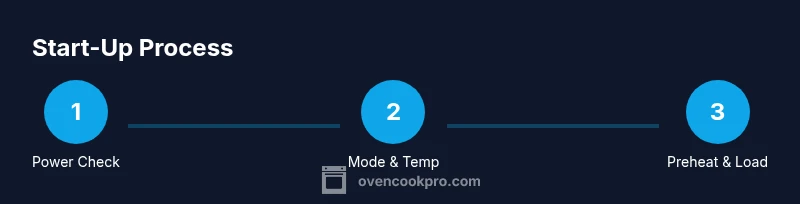
This section provides a consolidated guide you can print and keep near the kitchen. It complements the detailed step-by-step below and helps you prepare quickly on busy days. Gather your tools, verify power, select bake mode, set the temperature, preheat, and then proceed with your recipe. Remember to monitor with a thermometer and timer, and maintain a safe working area around the oven.
For visual learners, refer to the video guide linked in the resources section and use the printed checklist to stay organized during startup.
Calibration and maintenance for reliability
Regular maintenance keeps your oven starting reliably. Periodically inspect door seals for cracks or gaps, clean the convection fan area if your model has a fan, and check that racks slide smoothly. If you notice frequent temperature drift, you may need professional calibration. When in doubt, consult your oven’s manual for the safe range of adjustments and schedule service for complex issues or suspect electrical components. Routine maintenance reduces start-up friction and helps your oven perform as intended over time.
Authority sources and further reading
To deepen your understanding of safe and effective oven startup, consult reputable sources. For safety and operating principles, visit OSHA’s kitchen safety guidelines and the energy efficiency resources from the U.S. Department of Energy. You can also review university extension materials on oven basics and calibrated cooking techniques. These resources offer foundational knowledge that complements practical steps.
External references:
- https://www.osha.gov
- https://www.energy.gov
- https://extension.psu.edu/ovens
Tools & Materials
- Oven (electric or gas)(Ensure power connection and that the control panel responds to input)
- Oven mitts(Heat-resistant, suitable for handling hot pans up to high temperatures)
- Oven thermometer(Place in center of rack to monitor actual temperature)
- Baking sheet or pan(Durable metal or heat-safe glass, appropriate for your recipe)
- Cooling rack(Helpful for air circulation and even cooling after cooking)
- Timer or smartphone timer(Set alarms for preheat completion and cooking intervals)
- Parchment paper or silicone mat(Prevents sticking and eases cleanup)
Steps
Estimated time: 30-60 minutes
- 1
Check power and panel
Confirm the oven is plugged in, the outlet is functioning, and the control panel responds to input. Clear the vicinity of heat-sensitive objects and ensure the door seal looks intact. This pre-start check reduces the chance of miscommunication between you and the oven.
Tip: Have all ingredients prepped so you’re ready to load once the oven reaches temperature. - 2
Select bake mode
Choose the appropriate bake setting for your recipe, typically conventional bake for most pastries and roasting, or convection bake when your dish benefits from circulated air. If you’re unsure, start with conventional and switch later if needed.
Tip: If using convection, remember you may need to reduce recipe time or temperature slightly. - 3
Set the target temperature
Input the recipe’s temperature on the control panel, ensuring you select the correct scale (F or C) for your region. Double-check any recent changes to avoid overheating or underheating.
Tip: If unsure about a temperature, start low and monitor the progress—you can always continue cooking longer. - 4
Preheat and verify
Allow the oven to preheat until the built-in indicator signals readiness. Use an oven thermometer to verify the internal temperature matches the target, especially if you suspect drift.
Tip: Keep the door closed during preheat to avoid loss of heat and ensure consistent heating. - 5
Prepare rack and pan
Position racks as needed, place pans on the appropriate rack, and position any extra cookware to optimize heat exposure. Avoid stacking items directly on top of one another when possible.
Tip: Use a cooling rack beneath pans for better air circulation when appropriate. - 6
Load and monitor
Load your food once the oven signals it’s at temperature. Start timing here, and avoid opening the door too often, which can cause heat loss and uneven results.
Tip: Have everything ready at hand to minimize door openings. - 7
Adjust during cooking
If you notice uneven browning, consider rotating pans or moving them between racks. For long cooks, check doneness periodically with a thermometer or visual cues.
Tip: Use a timer and thermometer in tandem for reliable outcomes. - 8
Power down and cool
After cooking, turn off the oven and allow it to cool with the door closed for a short period if needed. Remove hot items with mitts and place them on a safe surface.
Tip: Wipe away spills once cooled to simplify future startup checks.
Questions & Answers
Do I need to preheat every time?
Not all recipes require preheating, but most baking and roasting benefits from a preheated oven for even heat and reliable results.
Most baking and roasting benefit from preheating for even heat and reliable results.
What should I do if my oven won’t heat to the set temperature?
Check the door seal, verify the control settings, test with an oven thermometer, and consult the manual or service if the drift persists.
Check the door seal and the thermometer readout, then consult the manual if the temperature stays off.
Is convection cooking always faster?
Convection can reduce cooking time and improve browning, but you may need to adjust temperature or time when following recipes.
Convection often browns more and can cook faster; adjust temperature and time accordingly.
Can I bake with the oven door open?
No. Opening the door disrupts heat distribution and can be dangerous and unsafe for long cooking sessions.
Avoid opening the door while the oven is on to keep the heat steady.
Should I calibrate my oven?
If you notice regular temp drift, check your oven’s calibration options or service manual and calibrate as recommended by the manufacturer.
If you notice drift, consider calibration per the manual or seek professional help.
How can I improve safety for kids around the oven?
Keep kids away from hot surfaces, use timers, and wear mitts when handling hot items. Establish a safe zone around the oven.
Create a safety zone, use timers, and always wear mitts around hot surfaces.
Watch Video
Main Points
- Preheat to ensure even heating.
- Choose bake mode appropriate for the dish.
- Verify temperature with a thermometer.
- Prioritize safety throughout startup.