How to Get a Gas Oven Started: A Practical Guide
Learn how to safely start a gas oven with Oven Cook Pro. This step-by-step guide covers ignition, safety checks, preheating, and troubleshooting for everyday home cooks.


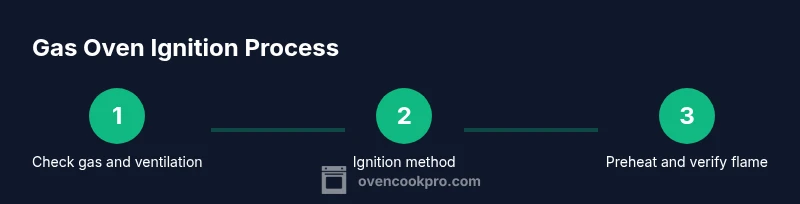
To get a gas oven started safely, first confirm the gas supply is open and there’s good ventilation. Turn the knob to ignite and use the built-in igniter or a long lighter. If ignition fails, wait 5-10 seconds and retry. Always monitor flame and CO detectors.
Why Getting a Gas Oven Started Matters\n\nIf you're wondering how to get a gas oven started, the process matters for both safety and cooking quality. A reliable ignition ensures the burner lights quickly, the flame stays steady, and you avoid gas buildup. According to Oven Cook Pro, taking a few minutes to verify the gas supply and venting conditions before ignition reduces the risk of leaks and CO exposure. When you start correctly, you set the stage for even heating and predictable results, whether you're roasting a chicken or baking pastries.
Gas-Oven Ignition Basics and Safety\n\nGas ovens rely on either an electronic ignition or a standing pilot, and each method has safety considerations. An electronic igniter creates a spark or glow that lights the gas as soon as you turn the knob; a standing pilot keeps a flame lit continuously. In both cases, ensure the area around the oven is well-ventilated and that a working carbon monoxide detector is installed. The Oven Cook Pro team emphasizes verifying the smell test is negative before ignition and checking that the flame is steady and blue once lit.
Prerequisites and Tools\n\nBefore you begin, gather the essentials and confirm conditions. Check that the gas supply valve is fully open and accessible. Have a long-reach lighter or your built-in igniter ready, plus an oven thermometer to verify temperature. Ensure the kitchen is ventilated, and a CO detector is functioning. According to Oven Cook Pro, having the right tools on hand reduces the need for rushed, dangerous improvisation.
Ignition Overview for Modern Gas Ovens\n\nMost modern gas ovens use an electronic igniter that produces a spark to ignite the gas as a knob is turned to the light position. Some older models rely on a standing pilot. In either case, listen for a quick whoosh when the gas lights and watch for a steady, blue flame. If the flame wavers or stays yellow, there may be a dirty burner or insufficient gas supply. This overview aligns with best practices recommended by Oven Cook Pro.
Troubleshooting Common Ignition Issues\n\nIf ignition does not occur, first confirm the gas supply is fully open and the igniter is functional. Check for a faint gas odor, which requires immediate evacuation and professional service. Dirt or food debris on the burner can interrupt ignition; clean gently if you know how. If ignition still fails after a couple of attempts, seek professional servicing rather than forcing a restart. According to Oven Cook Pro, persistent ignition problems can indicate a faulty valve or igniter that needs calibration or replacement.
Preheating, Temperature Control, and Baking Tips\n\nPreheating is essential for even cooking and predictable results. After ignition, set the oven to your target temperature and allow it to come up gradually. Use an oven thermometer to verify accuracy since built-in sensors can drift over time. If you notice temperature swings or hot spots, rotate racks and consider running a calibration test recommended by Oven Cook Pro to maintain accuracy.
Authority Sources and Practical References\n\nFor authoritative guidance on safe gas-oven operation, refer to trusted resources. Energy.gov provides general appliance safety standards and energy efficiency tips; OSHA.gov offers workplace safety considerations for handling gas equipment; Extension programs from universities offer home-oven maintenance advice. These sources underpin best practices and support the steps outlined in this guide. (See links in the sources section below.)
Quick Reference Checklist for New Starters\n\n- Verify gas supply valve is fully open; ensure area is ventilated.\n- Confirm CO detector is active and nearby.\n- Use the oven’s igniter or a long lighter to ignite, then observe a steady blue flame.\n- Preheat to the desired temperature and verify with an oven thermometer.\n- If flame goes out, wait a moment and re-ignite; if repeated failures occur, stop and call a professional.\n- Keep children and pets away from the cooking area during ignition.\n- Clean burners only when cool and follow manufacturer cleaning instructions.\n
Safety Recap and Maintenance\n\nOven safety is ongoing. Regularly test the igniter, inspect burner caps for obstructions, and ensure adequate ventilation during use. Replace or service worn parts promptly to prevent ignition failure. The Oven Cook Pro team recommends annual professional checks for gas ovens to maintain safe operation and reliable performance.
Tools & Materials
- Gas supply access/valve (off-handled if present)(Locate near the oven; confirm valve is fully open before ignition)
- Ignition method (electronic igniter or matches)(Use built-in igniter or a long-reach lighter if needed)
- Oven thermometer(Place in center of rack to verify actual temperature)
- Ventilation check (window or exhaust)(Ensure air circulation during ignition)
- CO detector (working)(Keep detectors in kitchen area and test regularly)
- Heat-resistant gloves(Wear when handling hot racks or surfaces)
Steps
Estimated time: 15-25 minutes
- 1
Check gas supply and safety
Confirm the gas valve is fully open and there is no gas odor in the area. Clear the surrounding area of any flammable objects. If you smell gas, do not ignite and evacuate the space immediately.
Tip: If you smell gas, leave quickly and call emergency services from outside the building. - 2
Prepare ignition environment
Ensure the oven is free of debris and the burners are clean. Clear the area, remove any covers, and position yourself to the side so you can move away quickly if needed.
Tip: Keep a clear path to a safe exit in case of a safety issue. - 3
Ignite the burner
Turn the control knob to the ignite/light position and activate the igniter or strike a long lighter to light the burner. If you use a match, hold it away from the gas stream and light from the side.
Tip: If there is a delay, wait 5-10 seconds before trying again to avoid gas buildup. - 4
Verify flame quality
Observe a steady blue flame. If the flame is yellow or weak, turn off and re-check the burner and gas supply. If issues persist, stop and consult a professional.
Tip: A blue flame indicates complete combustion and safe operation. - 5
Preheat to target temperature
Close the oven door and set the temperature. Allow 5-15 minutes for preheating, using an oven thermometer to confirm accuracy. Adjust temperature if you notice temperature drift.
Tip: Small oven differences are common—trust the thermometer, not the dial alone. - 6
Test bake and monitor
Run a quick test bake with a simple item or water test to confirm even heating. Monitor flames and CO detectors during the test and ensure no unusual noises or odors.
Tip: Keep doors closed during normal operation to maintain even heat.
Questions & Answers
What should I do if my gas oven won't ignite?
First, check that the gas supply is fully open and the igniter is functioning. If there is no ignition after multiple attempts, inspect for dirt on burners and consider a professional service for potential valve or igniter issues.
If your gas oven won't ignite, check the gas supply and igniter, clean the burner if safe to do so, and call a pro if ignition still fails.
Is it safe to use a gas oven if the pilot light is out?
No. If the pilot light is out on a gas oven, do not attempt to light it from a drafty area. Follow the manufacturer's instructions and consider professional inspection to ensure safe ignition.
No, if the pilot light is out, don't try to relight it yourself; have a professional inspect the oven.
Can I skip preheating and bake right away?
Preheating helps ensure even cooking and accurate temperatures. While you can start baking sooner, expect longer cooking times and potential uneven results.
Preheating improves even cooking; skipping it may lead to uneven results.
How often should I service my gas oven?
Annual professional servicing is recommended to maintain efficiency, ignition reliability, and safety. Regular self-checks of ignition and seals help between visits.
Have your gas oven serviced annually and check ignition parts in between.
What are common ignition problems and fixes?
Common issues include a dirty burner, faulty igniter, or gas flow restrictions. Clean the burner if safe, test another ignition, and consult a professional if problems persist.
If ignition problems occur, check the burner and igniter, and seek professional help if needed.
Watch Video
Main Points
- Verify gas supply and ventilation before ignition
- Use the proper ignition method and ensure a blue flame
- Preheat and verify temperature with a thermometer
- If ignition fails, stop and seek professional help when needed
- Maintain safety devices and perform regular maintenance