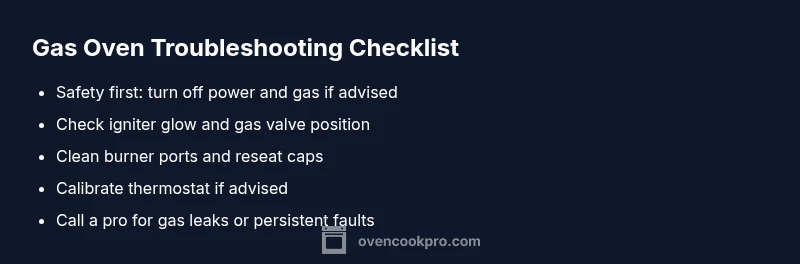
What is wrong with my gas oven? A practical troubleshooting guide
Diagnose and fix common gas oven problems with a practical, step-by-step troubleshooting guide. Safety first for homeowners and home cooks seeking urgent, reliable guidance.


If your gas oven isn’t heating properly or won’t ignite, start with safety checks and then move to simple tests: ensure the gas valve is open, confirm the igniter glows, and verify the bake/broil settings. If ignition or heat remains inconsistent, proceed to the diagnostic flow for precise causes and fixes.
What is wrong with my gas oven? Core issues and why they happen
When a gas oven behaves badly, the root causes usually fall into a few familiar categories: ignition problems, gas supply issues, thermostat or control faults, and dirty burners. The phrase what is wrong with my gas oven often points to an ignition or heat delivery problem rather than a mechanical failure. In many cases, a simple safety-first check reveals the culprit without requiring tools. This guide focuses on practical, actionable steps you can take to identify and fix common problems while keeping your family safe. Throughout, we reference the Oven Cook Pro approach to methodical troubleshooting and emphasize safety and prevention.
Key terms you'll encounter include ignition sensor, thermocouple, bake and broil igniters, and gas valve supply. Understanding these parts helps you interpret symptoms and decide whether a DIY fix is appropriate or if a licensed professional is needed. If you smell gas or suspect a gas leak, evacuate the area and call the gas company or emergency services immediately.
Quick safety checks before you start
Before digging into diagnostics, perform these quick safety checks to reduce risk and gather basic information:
- Ensure the area is well ventilated and there are no open flames nearby.
- If you smell gas, do not operate electrical switches or create sparks. Leave the area and call your gas provider.
- Disconnect power to the oven at the circuit breaker if you can do so safely; this protects you during inspections.
- Check the exterior gas supply valve to confirm it is fully open. A partially closed valve can cause weak or no flame.
- Inspect the oven door seal for damage, which can impair heat retention and even cooking.
If any of these checks show a clear issue, address it first. If not, you’re ready to move into symptom-based diagnostics.
How the gas-oven ignition and heat delivery work
Gas ovens rely on a controlled flow of gas and a reliable ignition source to start and sustain a flame. Most modern ovens use an electric igniter that must glow to ignite gas. If the igniter is weak or dirty, it may fail to ignite or delay ignition. The thermostat or electronic control board regulates temperature, so calibration faults can cause under-heating or uneven heat. Dirty burners or clogged ports can block gas flow, leading to delayed heating or uneven flame. Knowing these mechanisms helps you interpret symptoms, such as a soft glow instead of a bright ignition, or a burner that lights intermittently.
Common symptoms and what they usually mean
- No ignition or delayed ignition: likely igniter, thermocouple, or gas valve issue. Clean the igniter tip if accessible; test for continuity if you have the right tools. If ignition is absent, seek professional service to avoid gas hazards.
- Uneven heating or hot spots: possible thermostat calibration fault, warped burner, or airflow restriction. A calibration check and burner inspection can resolve this.
- Gas odor or hissing sound: potential gas leak or pressure issue; this is a high-risk sign requiring immediate attention from the gas supplier or emergency services.
- Oven won’t stay on or shuts off: control board or safety switch fault. An inspection of wiring and relays may be necessary.
These symptoms guide the next steps and help you decide whether DIY fixes are appropriate or if you should call a technician.
Diagnostic flow: symptom → potential causes → recommended actions
The diagnostic logic starts with the symptom and narrows down causes by checking simple, non-invasive items first. For example, if ignition is weak, you may suspect the igniter or thermocouple rather than the gas valve. If you hear gas but no flame, this points to an ignition or gas flow issue rather than a complete valve failure. The flow below outlines a practical path you can follow to identify problems safely and determine whether professional service is required.
- Symptom: Oven won’t ignite
- Likelihoods: Igniter glow failing (high), dirty burner ports (medium), gas valve issue (low)
- Action: Clean igniter tip if accessible; test burner ports with a toothpick or needle; if no glow or no ignition after cleaning, call a pro.
- Symptom: Oven lights slowly or goes out
- Likelihoods: Thermocouple misreading (high), control board fault (medium)
- Action: Recalibrate thermostat if you have the manual; consult a technician for board tests.
- Symptom: Heat is uneven
- Likelihoods: Calibrated thermostat drift (high), burner alignment (medium)
- Action: Check rack levels, recompute calibration, and inspect burner alignment.
Step-by-step: fix the most common ignition issue (easy to moderate)
- Safety check and power down: Turn off the oven, disconnect power at the breaker if safe, and ensure there’s no gas smell around.
- Access the igniter: Remove the burner cover or access panel according to the model’s manual. Observe whether the igniter glows when you attempt to ignite.
- Clean the igniter: If you see a dirty or oily igniter, gently clean the porcelain with a soft brush and a bit of isopropyl alcohol. Ensure it’s completely dry before retrying.
- Test ignition: Restore power and attempt to ignite. If the igniter glows but the flame doesn’t light, the problem could be gas flow or a weak igniter; consider replacement.
- Replace if needed: If the igniter does not glow or glow is weak after cleaning, it likely needs replacement. Use a model-specific part and follow safety instructions.
Tip: If data plates or parts aren’t clearly labeled, consult the manual or manufacturer’s site for the exact igniter type. If you’re uncomfortable with gas components, stop and contact a pro.
Estimated time: 45-60 minutes
Step-by-step: diagnosing uneven heat and calibration issues (medium)
- Calibrate vs. bake test: Compare actual bake temperature to the set temperature using an oven thermometer. If temperatures differ by more than a small margin, calibration may be needed.
- Check oven racks and airflow: Place racks at correct heights to promote even air and heat distribution. Remove any obstructions that could block gas ports or airflow.
- Inspect the thermostat sensor: For convection or older models, the sensor rod should be properly positioned; a displaced sensor can cause inaccurate readings.
- Burners and ports: Remove the burner cap and inspect ports for clogs. Use a soft brush and a pin to clear debris. Replace caps correctly.
- Professional calibration: If you cannot access calibration controls or if readings remain inconsistent, a technician can recalibrate or replace faulty control components.
Pro tip: Keep a simple log of temperatures against setpoints for a few meals to identify patterns and confirm improvements after adjustments.
Estimated time: 40-60 minutes
Step-by-step: handling gas smells and safety-critical issues (hard)
- Evacuate and call for help: If you smell gas, leave the area immediately and call the gas company or emergency services from a safe location.
- Do not operate electrical switches: Avoid lighting matches, switching outlets, or using phones inside the area. All electrical activity could ignite gas.
- Ventilate and inspect exterior components: If it’s safe, open doors and windows to ventilate while waiting for professionals. Do not attempt to seal or rebalance gas lines yourself.
- Verify shutoff valves: If you can do so safely after the initial danger is assessed, ensure main gas shutoff valves are accessible but do not force them.
- Schedule professional assessment: A licensed gas technician must inspect leaks, connections, and the ignition system with specialized tools.
Warning: Gas work is hazardous. Do not attempt complex repairs yourself; prioritize safety and professional guidance.
Estimated time: 60-90 minutes (excluding emergency response time)
Maintenance tips to prevent future gas oven problems
- Schedule periodic inspections: Have a technician check the ignition, valves, and thermostat on a regular cycle to catch wear before it fails.
- Keep burners clean: Regularly clean burners and ports to maintain proper gas flow and efficient ignition.
- Use proper cookware and rack placement: Ensure pans don’t block vents; correct rack height improves heat distribution and cooking results.
- Use a thermometer for calibration: A kitchen thermometer helps you verify air temperatures against setpoints, informing calibration needs.
- Document changes and settings: Note any changes in performance to help technicians diagnose future issues quickly.
Following these steps helps reduce the chances of sudden failures and keeps your gas oven operating safely.
When to call a licensed technician and what to expect
If you notice persistent ignition failures, regular gas smells, unstable flame, or unexplainable shutoffs, contact a licensed gas technician. Do not attempt to repair high-pressure gas components yourself. A pro will perform a gas leak test, inspect the ignition system, and verify the control board and sensors. After service, request a brief explanation of the fixes and any parts replaced so you can monitor performance going forward.
Steps
Estimated time: 45-60 minutes
- 1
Shut off power and gas if safe
Turn off the oven and switch off the electrical supply at the breaker panel. If you smell gas at any time, evacuate and contact the gas company or emergency services. This step protects you from sparks and leaks while you inspect basic issues.
Tip: Never poke at gas lines with metal objects. - 2
Inspect the igniter glow
Power the oven back on and observe whether the igniter glows brightly or stays dim. A dim glow often indicates a weak igniter or dirt on the element.
Tip: A clean, dry igniter responds more reliably than a dirty one. - 3
Clean or replace the igniter
If the igniter looks dirty, clean it with a soft brush and isopropyl alcohol. If the glow remains weak, consider replacing the igniter with an OEM or compatible part.
Tip: Follow model-specific replacement instructions and disconnect power before handling components. - 4
Check gas flow and valve
Ensure the gas shutoff valve is fully open and listen for a consistent gas flow when attempting to ignite. If you hear hissing or smell gas, stop and call the pros.
Tip: Don’t force valves; use the manufacturer’s guidance to avoid leaks. - 5
Calibrate or replace control components
If ignition is reliable but temperature is off, refer to the manual for calibration steps or have a technician test sensors and the control board.
Tip: Document the readings to show the technician.
Diagnosis: Gas oven won't ignite or maintains heat poorly
Possible Causes
- highIgniter or thermocouple wear or dirt
- mediumGas valve partially closed or obstructed gas supply
- mediumBurner ports clogged or misaligned burner cap
- lowThermostat calibration fault or control board issue
- lowElectrical supply issue or loose wiring
Fixes
- easyInspect and clean igniter tip; replace if glow is weak or absent
- easyVerify gas valve is fully open and gas supply is uninterrupted
- easyClean burner ports and re-seat burner caps; test ignition again
- mediumCalibrate thermostat or test control board with manufacturer guidance
- hardCheck wiring connections and replace faulty components; call a pro for gas-related wiring
Questions & Answers
Can a gas oven ignite but fail to heat evenly?
Yes. Uneven heating often points to thermostat calibration, burner misalignment, or airflow issues. Check calibration first and then inspect burner assembly for proper airflow.
Yes. Uneven heating often means calibration or burner alignment needs checking. Start with calibration and burner setup.
Is it safe to use a gas oven if I smell gas?
No. A gas smell is a potential leak. Leave the area, avoid switches, and call your gas provider or emergency services promptly.
Do not use the oven if you smell gas. Leave the area and call for help right away.
What should I do if the igniter glows but the flame does not start?
This usually indicates a gas flow issue or a weak igniter. Check valve position and consider replacing the igniter if it remains ineffective.
If the igniter glows but the flame won't start, check the gas valve and the igniter's condition.
When should I replace the control board or sensors?
If calibration attempts fail or temperatures remain inconsistent after checks, a professional should test sensors and the control board to determine replacement needs.
If calibration doesn't fix things, a technician should test sensors and the control board.
Can I fix a clogged burner port myself?
Yes, with caution. Remove the burner cap and clean ports with a soft brush or pin. Do not force parts or damage the burner.
You can try cleaning clogged ports, but avoid forcing parts and be careful with the burner.
When is it essential to call a pro for a gas oven problem?
If you smell gas, have no ignition, or suspect a leak, call a licensed technician immediately. For persistent ignition failures, professional service is recommended.
Call a licensed technician if you smell gas or can’t diagnose ignition problems safely.
Watch Video
Main Points
- Identify ignition or gas flow issues first
- Prioritize safety when gas is involved
- Clean, calibrate, and replace components as needed
- Call a licensed pro for leaks or high-risk faults