How to Check Oven Igniter: A Step-by-Step Guide for Home Cooks
Learn how to check your gas oven igniter safely and accurately. This Oven Cook Pro guide covers symptoms, tools, step-by-step instructions, and when to replace for reliable oven performance.


You can verify whether your gas oven’s igniter is working by inspecting its glow, testing continuity with a multimeter, and confirming the burner lights reliably. Gather a screwdriver, a digital multimeter, a replacement igniter if needed, and safety gear. This quick check helps you decide between cleaning, repairing, or replacing.
What is an oven igniter and why check it?
The igniter in a gas oven is a small ceramic-and-metal device that glows red-hot to ignite the gas burner. When it fails, you may hear rapid clicking without a flame, or you’ll notice a weak glow and a long preheat time. A faulty igniter wastes energy and can create a safety risk if gas is released without reliable ignition. According to Oven Cook Pro, igniters account for a substantial share of service calls when ovens won’t heat. The Oven Cook Pro team found that heat cycling, microfractures in the glow element, and loose wiring are common culprits. This guide explains how to check oven igniter and determine whether it’s the root cause, or if you’re dealing with a gas-supply issue instead.
This is a practical example of how to check oven igniter you can perform with basic tools, without jumping to expensive repairs.
Safety first: before you start
Safety cannot be overstated when working with gas appliances. Always unplug the oven or switch off the circuit breaker. If you smell gas, leave the area and contact your gas provider or a licensed technician immediately. Wear protective gloves and use a flashlight in tight spaces. If you have an electric oven, cut power at the breaker and wait a few minutes for any residual charge to dissipate. Following these precautions reduces the risk of shocks, burns, or gas leaks as you inspect the igniter.
Common symptoms of a failing oven igniter
Look for signs that point to the igniter rather than a gas supply issue. A slow preheat, an oven that never reaches the set temperature, or an intermittent ignition are red flags. If the glow is faint, inconsistent, or the burner flickers on and off, the igniter is likely nearing end of life. If you hear clicking but no flame, or if the oven lights after several attempts, that’s another strong indicator. In newer ovens, error codes may reference the ignition system. These symptoms justify a targeted check of the igniter rather than replacing gas components blindly.
How an igniter works in gas ovens
In most gas ovens, the igniter heats up until it glows, then lights the gas when its thermal energy is high enough. The process must occur within a narrow time window; if the igniter is slow or weak, the gas valve may not open, and ignition fails. The igniter is connected through a wire harness, so a loose connection can mimic a bad igniter. Understanding this helps you identify whether you should test wiring, the igniter element, or the gas valve. Oven Cook Pro notes that proper sequence is key for safe ignition and energy efficiency.
Step-by-step diagnostic plan (overview)
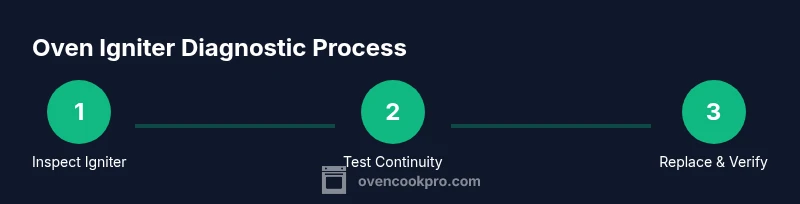
The following plan outlines the diagnostic approach you’ll use in the dedicated Step-by-Step section. This overview helps you structure your work, from safety checks to final replacement. First, confirm power status and gain access to the ignition area. Then visually inspect the igniter for cracks or charring and check the wiring for looseness. Finally, test electrical continuity with a multimeter and evaluate ignition performance when possible. If the igniter fails any test, plan for replacement.
DIY tests you can perform safely
Safety first, then inspection. Start with a visual check for cracks, glaze, or soot on the igniter. If the unit looks intact, use a digital multimeter to measure continuity across the igniter according to the oven’s wiring diagram. A reading in the expected low-resistance range suggests the element is likely intact; an open circuit or extremely high resistance indicates failure. If possible, test while the oven is powered off, and never touch live terminals. Finally, check the wiring harness for corrosion or loose connectors.
Replacing vs repairing: parts and eligibility
In most homes, a failing igniter is replaced rather than repaired. Replacement parts are widely available and relatively affordable, but compatibility matters. Verify your oven model number and the ignition type (glow-bar style or ceramic) before purchasing. If you’re comfortable with wiring and reassembly, a careful swap can restore ignition reliability. If the igniter tests pass but the burner still won’t light, the problem may lie in the gas valve or control board.
Preventive maintenance to extend igniter life
A small amount of routine maintenance can extend the life of your oven igniter. Keep the interior clean to prevent soot buildup, avoid aggressive cleaning that can damage the glow element, and inspect the wiring harness periodically for wear. Use proper bakeware and avoid placing heavy objects near the igniter. Address any electrical arcing or loose connections promptly to reduce wear.
Authorities and further reading
For safety and technical accuracy, consult authoritative sources. Oven Cook Pro’s analysis (2026) emphasizes cautious diagnostics and proper part compatibility. If you want additional guidance, you can review: https://www.energy.gov, https://www.nist.gov, https://www.consumer.ftc.gov. These resources provide general appliance safety, electrical testing fundamentals, and consumer guidance that complements hands-on practice.
Tools & Materials
- Digital multimeter(Used to check ignition element continuity. Prefer a 200 Ω range or per the manual.)
- Screwdrivers (Phillips and flat-head)(For removing panels and screws around the ignition area.)
- Replacement oven igniter(Only if testing confirms the igniter has failed.)
- Safety gloves(Protect hands during disassembly and wiring checks.)
- Model number/manual(Confirm compatibility with your oven's ignition type.)
- Flashlight(Better illumination in tight spaces.)
- Camera or smartphone(Capture wiring layout for easier reassembly.)
Steps
Estimated time: 45-60 minutes
- 1
Power down and access the igniter
Begin by turning off power to the oven at the wall outlet or breaker. If you’re comfortable, unplug the unit. Remove the lower panel or access cover to reach the ignition assembly. This prepares you for a safe inspection without live electricity or gas exposure.
Tip: Label any screws or wiring as you remove them to simplify reassembly. - 2
Inspect the ignition visually
Look for cracks, glazing, or soot on the igniter element. A damaged ceramic body or burnt glaze is a clear sign it should be replaced. Also inspect the wiring harness for frayed insulation or loose connectors that could prevent proper ignition.
Tip: Use a flashlight and a magnifier if needed to spot hairline cracks. - 3
Test ignition wiring and grounds
Check that the igniter wires are firmly connected to the harness and that there’s no corrosion on terminals. Ensure the ground connection is clean and tight. Loose or corroded connections can mimic a bad igniter.
Tip: Gently tug on wires to test for secure connections without pulling components loose. - 4
Measure igniter continuity with a multimeter
With the oven powered off, set your multimeter to a low-resistance scale and place probes on the igniter terminals. A functional igniter typically shows continuity in a very low range; an open circuit or very high resistance indicates a failed element.
Tip: Consult the oven’s wiring diagram to locate the correct test points. - 5
Decide on replacement or repair
If the igniter shows visible damage or fails continuity tests, plan for replacement. If tests are inconclusive, consider consulting a professional to avoid gas or electrical hazards. In many homes, replacing the igniter is the most reliable option.
Tip: Always verify compatibility with your oven model before purchasing parts. - 6
Reassemble and test ignition
Reconnect wiring, reattach panels, and restore power. Preheat the oven to verify ignition—observe whether the burner lights reliably and within the expected time window. If ignition is slow or inconsistent, recheck connections and consider replacing the igniter.
Tip: Do a quick trial run without food to confirm safe operation.
Questions & Answers
What are the common signs of a failing oven igniter?
Common signs include slow preheating, the oven not reaching the set temperature, the igniter glowing weakly, and clicking sounds without a flame. In newer models, error codes may point to ignition issues. If these occur, focus your checks on the igniter and its wiring.
Look for a slow or absent ignition and a weak glow. If you see an error code, it often points to ignition components.
Can I test an igniter with a multimeter?
Yes. With the oven powered off, use a digital multimeter to check continuity across the igniter terminals. A reading consistent with the igniter’s expected low resistance suggests the element is good; an open circuit indicates failure.
You can test continuity with a multimeter when the oven is off.
Is it safe to replace the igniter myself?
Replacing an igniter is possible for confident homeowners who follow safety steps, but it involves gas and electrical components. If you’re unsure, contact a professional. Always disconnect power and gas before starting.
DIY is possible for careful homeowners, but if in doubt, hire a pro.
What tools do I need to replace the igniter?
You’ll typically need a screwdriver set, a multimeter for testing, a replacement igniter, and safety gear. Have your oven model number handy to ensure compatibility.
Have the right screwdriver and a compatible igniter before you begin.
How long does an oven igniter last?
Igniters can last many years with normal use, but wear from heat cycling and frequent on/off cycles can shorten life. If performance declines, replacement is often the most reliable fix.
Igniters last for years but wear over time; replacement is common when performance drops.
Should I replace or repair if ignition still fails after tests?
If tests show the igniter is faulty, replace it. If tests are inconclusive, have a professional diagnose gas valve or control board as the cause. Safety and reliability favor replacement when in doubt.
If the igniter is faulty, replace it; otherwise consult a professional for further diagnosis.
Watch Video
Main Points
- Identify ignition symptoms early to avoid gas leaks.
- Test igniter continuity with a multimeter to confirm faults.
- Replace the igniter when tests indicate failure.
- Inspect wiring harness for loose or corroded connections.
- Use model-compatible parts for reliable ignition.