How to Fix Oven Igniter: A Step-by-Step Guide
Learn to diagnose, test, and replace an oven igniter safely with our comprehensive, step-by-step guide. Covers gas and electric ovens, common symptoms, required tools, and maintenance tips for lasting ignition reliability.


This guide walks you through diagnosing whether your oven igniter is failing, testing it safely, and replacing it when needed. You’ll learn the signs of a weak or non-glowing igniter, the tools required, and how to avoid common mistakes. By the end, you can restore reliable oven ignition using standard parts and safe practices.
Understanding how the oven igniter works and why it fails
An oven igniter is a small, ceramic device that heats up until it glows and ignites the gas in a gas-powered oven or activates an electric heating element in an electric oven. When the igniter functions correctly, it glows bright orange within a few seconds of selecting bake and ignites the burner or heating element quickly. Over time, the igniter can deteriorate due to normal wear, corrosion at the terminal connections, or exposure to heat and cooking grease. In many repairs, the igniter is the primary culprit behind slow or failed ignition, but wiring harness faults or a failing control board can mimic igniter problems. According to Oven Cook Pro analysis, ignition components are among the most frequently serviced parts when ovens show ignition issues. Recognizing the signs early—delayed ignition, a weak or flickering glow, or a stubborn “click, click, click” with no flame—helps you decide whether to replace the igniter or inspect related components.
Key takeaway: if your oven struggles to ignite, start with the igniter but verify wiring and control circuits before replacing. This aligns with best practices for safe DIY oven maintenance, as emphasized in Oven Cook Pro’s guidance for 2026." ,
Tools & Materials
- Safety equipment (eye protection and gloves)(Nitrile gloves and safety glasses to protect from hot surfaces and sharp edges)
- Multimeter or voltage tester(For continuity check and basic electrical testing)
- Replacement oven igniter compatible with your model(Check model number and wiring harness before purchase)
- Screwdrivers (Phillips #2 and flathead)(For removing panels and securing igniter)
- Socket or nut driver set(Needed to remove mounting screws in some designs)
Steps
Estimated time: 45-75 minutes
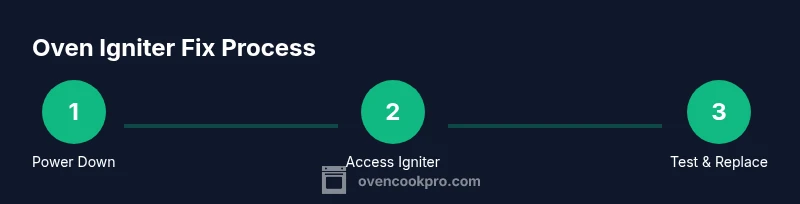
- 1
Power down and prep the area
Unplug the oven from the wall outlet and, if you have a gas oven, shut off the gas supply to reduce any risk of leaks. Clear the area of clutter and have a flashlight ready. This initial safety step protects you as you access electrical connections and the igniter. If you smell gas or hear a strong leak, stop and call a professional.
Tip: Always verify power is off by attempting a quick plug-in test or using a non-contact tester before touching any components. - 2
Access the igniter cavity
Remove the back panel or lower oven panel according to your model’s service manual. You’re looking for the thin ceramic igniter near the burner or gas valve. Gently disconnect the wiring harness, noting how the wires connect to the igniter. Some models require removing a mounting clip or screw to free the igniter.
Tip: Take a photo of the connector before disconnecting; it makes reassembly easier and reduces the risk of wiring mix-ups. - 3
Test igniter continuity
With the igniter removed or accessible, use a multimeter to check continuity across the igniter terminals. A healthy igniter should show a relatively low resistance when tested; if the reading is open or extremely high, the igniter is likely failing. If your model uses a separate flame sensor, test that circuit as well.
Tip: If you’re unsure about interpreting the readings, compare with the manufacturer’s specifications for your model. - 4
Inspect wiring and connectors
Look for frayed insulation, loose connections, or corroded terminals at the harness. Damaged wiring can prevent current from reaching the igniter even if the igniter itself is fine. Tighten loose connectors and replace any burnt or corroded parts. Clean any surface corrosion with a dry brush.
Tip: Clean dry connections prevent resistance that can cause misfires or delayed ignition. - 5
Replace the igniter
Install the new igniter by reversing the removal steps. Secure mounting screws, reconnect the harness, and ensure the connector is snug but not overtightened. Reattach any panels you removed and restore power to the unit. For some models, you may need to recalibrate the ignition timing after replacement.
Tip: Handle the new igniter carefully; it can be fragile and susceptible to cracking if dropped. - 6
Test ignition and verify operation
Turn the oven to bake and observe ignition. The igniter should glow and ignite within a few seconds. If ignition fails again, recheck wiring, or consider testing the control board as a separate fault. If the odor of gas is present and ignition does not occur, stop and call a professional.
Tip: Give the system a full post-repair test by running multiple ignition cycles to confirm reliability.
Questions & Answers
What are the most common signs of a failing oven igniter?
Common signs include delayed ignition, a dim or flickering glow, frequent clicking without ignition, or the oven not heating at all. If you notice any of these, inspect the igniter and related components.
If you see slow or no ignition, start by checking the igniter and wiring, then consider replacing the igniter if the glow is weak or absent.
Can I replace the igniter myself, or do I need a technician?
Replacing an igniter is a common DIY repair for many homeowners, provided you follow safety steps. If you’re uncomfortable with electrical work or gas work, hire a technician.
DIY is possible if you’re comfortable with basic electrical work and gas safety; otherwise, a professional is the safer choice.
Will replacing the igniter fix all ignition problems?
Replacing the igniter often resolves ignition issues, but problems with the control board, wiring, or gas valve can also prevent ignition. If ignition continues after replacement, inspect other components.
If replacement doesn’t solve ignition, other components like the control board or gas valve may be at fault.
How do I know I bought the correct igniter for my oven?
Check your oven’s model number and purchase an igniter that’s explicitly listed as compatible. Cross-reference connector type, mounting method, and insulation.
Match the model and connector so the igniter fits securely and functions correctly.
Are there safety precautions I should follow when working with gas ovens?
Yes. Shut off the gas supply, avoid open flames, ensure good ventilation, and inspect for gas leaks after reassembly using a soapy water test.
Gas safety is critical—shut off gas, ventilate, and check for leaks after any repair.
What if the oven still won’t ignite after replacement?
If ignition still fails, the issue may be the control board, gas valve, or wiring. Consult a professional to diagnose electrical or gas-safety problems.
If replacement doesn’t fix it, another component could be at fault; it’s time to call in a pro.
Watch Video
Main Points
- Inspect igniter and wiring before replacement
- Use a multimeter to verify continuity
- Replace with the correct part for your model
- Always prioritize safety when working with gas appliances