Installing a Gas Oven: A Safe Step-by-Step Guide for Homes
Learn how to install a gas oven safely with our detailed, step-by-step guide. We cover planning, venting, gas and electrical connections, permits, testing, and maintenance to ensure a compliant, kitchen-safe installation in 2026.


Installing a gas oven requires safety-sensitive steps: verify compliance with local codes, ensure proper venting, and arrange for a licensed gas technician to perform final connections. Before you start, shut off the gas supply, disconnect the power, and check room clearances and ventilation. This guide walks you through the process.
Overview: What installing a gas oven entails
Installing a gas oven is a high-stakes task that combines appliance installation with gas line work and venting. For homeowners, the most important principles are safety, compliance with local codes, and clearances around the unit to prevent heat damage and fire hazards. According to Oven Cook Pro, the most reliable installations begin with a clear plan, accurate measurements, and a professional assessment of your home’s gas and venting readiness. You’ll want to review the manufacturer’s installation manual in detail, identify any cabinet requirements, and confirm whether the space needs improvements to meet clearance and ventilation standards. The process also involves coordinating with your gas utility provider or licensed professional for final connections. While you can prepare the space and learn the steps, never bypass licensed gas work, as improper gas connections can lead to leaks, fires, or carbon monoxide risks. This block lays the groundwork for a safe, compliant installation of a gas oven in a residential kitchen.
Planning and regulatory considerations
Before you lift a single tool, map out the regulatory requirements in your area. Many jurisdictions require a licensed gas professional to perform the final gas hookup and to obtain permits or schedule inspections. The Oven Cook Pro team emphasizes that following local building codes, venting guidelines, and appliance manufacturer instructions is essential. Check if a permit is needed, arrange for a professional assessment of your existing gas line capacity, and verify that your kitchen layout allows for the oven’s ventilation clearances. If you’re renting, coordinate with the landlord or management company to ensure compliance and avoid tenancy issues. It’s also smart to review energy efficiency labels and any required venting accessories that come with your oven model. This phase reduces surprises during the install and helps you plan the supporting tasks, such as electrical work, if required by the model.
Preparing space, ventilation, and utilities
Create a clear, unobstructed work zone around the installation site. You should have sufficient space for safe handling, cable access, and venting routes. Ensure that the ventilation hood or exhaust system is adequate for the oven’s exhaust requirements and that there’s a properly installed vent or ducting to the exterior. The gas supply line should be accessible without bending, and the shutoff valve must be in a reachable location outside the cabinet if possible. A CO detector should be installed in or near the kitchen to provide early warning of combustion byproducts. Prepare the room by removing combustibles within the manufacturer’s specified clearance zone and protecting nearby surfaces with heat-resistant materials. These measures help prevent heat damage and ensure safer operation after installation.
Selecting the right appliance and matching venting
Choose an oven model that fits your cabinet opening with proper clearance to walls, cabinetry, and flooring as specified by the manufacturer. The venting requirements are not optional; inadequate venting can lead to carbon monoxide buildup and poor appliance performance. If your kitchen uses a roof or wall vent, ensure it aligns with the oven’s exhaust outlet and that any elbows or connectors are rated for high-temperature use. Do not substitute different vent sizes or unapproved adapters, as this can create backdrafts and leakage. The oven should come with installation instructions detailing gas connection type (CSST or rigid piping), approved sealants, and torque specifications for fittings. When in doubt, refer to the manufacturer’s manual and your local code official for guidance before purchasing components.
Safety protocols and personal protective equipment
Gas appliance work demands PPE and safe handling practices. Wear safety glasses, heat-resistant gloves, and long-sleeve clothing to protect against sharp edges and hot surfaces. Keep a fire extinguisher within easy reach and ensure combustible materials are kept away from the work area. Do not attempt to modify gas lines or use tools that could damage piping. Maintain good ventilation to avoid gas accumulations during any work near the appliance. If you smell gas or suspect a leak, leave the area immediately and contact your gas utility or emergency services. Taking these precautions reduces injury risk and supports a compliant installation.
High-level installation workflow and checks
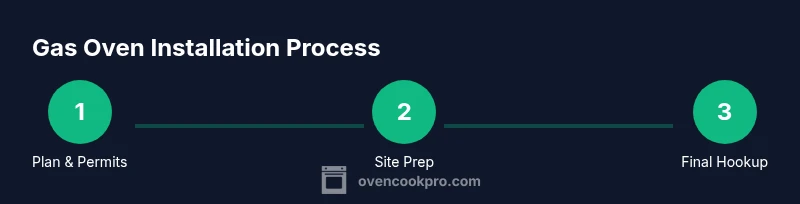
The installation workflow typically includes final gas hookup by a licensed professional, securing the oven in the cabinet opening, connecting the gas supply with approved fittings, routing ventilation, and performing leak tests. A quick visual inspection should verify there are no gas leaks at joints and that the vent path is unobstructed. After the connection is made, a leak test should be performed using soapy water or a commercial leak-detection solution around all connections; bubbles indicate a leak that must be repaired before powering the oven. Confirm that the oven’s gas shut-off valve is accessible and that the appliance is properly supported to prevent tipping. This block describes the critical steps homeowners should understand before the professional arrives.
Post-install testing and commissioning
Once the gas connections are made, the professional will perform a gas leak test and verify burner ignition, oven operation, and safety interlocks. A CO detector should be tested and placed according to the manufacturer’s guidelines, with fresh batteries and a visible alarm in the kitchen. Ensure the exhaust system functions correctly and that there is no backdraft. The commissioning phase also includes verifying that the appliance’s controls respond appropriately, the clock or display is functioning, and the appliance is level. Document any changes or notes for future reference or warranty requirements, and keep the installation manual for service visits.
Long-term maintenance and common hazards
After installation, routine maintenance reduces the risk of gas leaks and ensures safe operation. Schedule annual inspections of gas lines and venting components, check for corrosion, and replace worn seals promptly. Keep the area around the oven clean and free from grease buildup that could ignite. If you ever notice a gas smell, unusual hissing sounds, or pilot flame issues, shut off the gas at the source and call a licensed professional. Regular testing of your CO detector and ensuring proper ventilation will help maintain a safe kitchen environment for years to come. With careful planning and ongoing attention, installing a gas oven can be a safe, reliable addition to your home.
Tools & Materials
- gas-rated flexible connector (CSST or approved steel braided)(Length should match the gap between oven and shut-off valve; do not exceed the connector’s rated length)
- adjustable wrench(For tightening fittings; avoid over-tightening to prevent leaks)
- gas-rated pipe sealant or thread tape(Apply per manufacturer guidance; ensure compatibility with gas systems)
- soapy water or gas leak detector solution(Use to test all connections after installation)
- screwdrivers (flathead and Phillips)(For mounting screws and wiring covers)
- gas shut-off wrench(Essential to reach and operate the shut-off valve safely)
- CO detector(Install in the kitchen per local code; test regularly)
- ventilation hood or exhaust duct kit(Ensure compatibility with exhaust outlet and ceiling height)
- personal protective equipment (gloves, safety glasses)(Protect hands and eyes during handling of hot surfaces and sharp edges)
- multimeter or electrical tester(Only if the oven requires electrical connections or control wiring)
- levels and measuring tape(Confirm cabinet opening dimensions and oven fit)
- flashlight or headlamp(Helpful for dark cabinet spaces)
Steps
Estimated time: Estimated total time: 2-4 hours
- 1
Consult a licensed professional
Begin by contacting a licensed gas technician to assess site readiness, confirm gas capacity, and review venting needs. This step ensures you meet local codes and avoid improper gas connections. See manufacturer guidelines and local permit requirements before proceeding.
Tip: Ask for a written estimate and a scope of work that includes leak testing and inspection. - 2
Shut off gas and electricity to the area
Turn off the main gas supply and disconnect power to the installation area to prevent accidental ignition or electrical shock. Verify that other appliances are not sharing the same shut-off to avoid partial loss of service. Keep the area ventilated during this step.
Tip: Label the shut-off valve and ensure access remains unobstructed for the pros. - 3
Prepare the cabinet opening and venting path
Measure the oven opening to ensure a proper fit with the cabinet and; plan the vent route to the exterior. Clear combustibles, install heat shields if required, and verify that the vent diameter matches the oven’s exhaust specification.
Tip: Review the installation manual for required clearance values around the oven. - 4
Position oven and secure mounting
Slide the oven into the cabinet opening and align it with tolerances specified by the manufacturer. Secure with mounting screws or brackets as directed. Ensure the oven is level to prevent improper door operation and heat distribution.
Tip: Use shims if needed to achieve a perfectly level installation. - 5
Connect gas supply using approved fittings
Attach the gas connector to the oven’s inlet and the house supply using approved fittings and thread sealant or PTFE tape rated for gas. Tighten to the manufacturer’s torque specification and check for cross-threading. Perform an initial leak test after all connections are made.
Tip: Wipe away excess sealant and verify all connections are clean before testing. - 6
Connect electrical supply (if required) and control wiring
If your model requires electricity for igniters or electronics, connect per the appliance manual and local electrical codes. Use a dedicated circuit if possible and ensure a proper grounding path. Avoid sharing circuits with heat-producing appliances.
Tip: Verify that the circuit breaker is sized for the oven’s electrical load. - 7
Test for leaks and verify venting
With the gas on, apply soapy solution to all joints and fittings; look for bubbles indicating a leak. Confirm proper venting by observing exhaust flow and ensuring no backdraft. Check CO detector readings to verify air quality levels are safe.
Tip: If you detect a leak, shut off the gas immediately and contact the pro. - 8
Finalize inspection and documentation
Obtain any required inspections and keep all documentation, including permits, manufacturers’ manuals, and testing results. Confirm that the oven operates correctly on both bake and broil settings and maintain the recommended clearance for future service.
Tip: Store manuals and inspection records in a known location for warranty purposes.
Questions & Answers
Is professional installation required for a gas oven?
Yes. Gas ovens involve gas lines and combustion. A licensed technician should perform the final connections and inspections to ensure safety and code compliance.
Yes, professional installation is required for gas ovens to ensure safe gas connections and proper venting.
Do I need permits for gas oven installation?
Permit requirements vary by location. Check with your local building department; a licensed installer can help determine and obtain any necessary permits.
Permit requirements vary by area; consult your local building department and your installer.
What safety checks should be done after installation?
Perform a leak test on all gas connections, verify proper venting, and ensure a working CO detector is installed and tested.
Do a leak test, verify venting, and check your CO detector after installation.
Can I install a gas oven in a cabinet?
Yes, but you must meet clearance specifications, venting requirements, and manufacturer instructions. Improper cabinet installation can cause heat damage and leaks.
Cabinet installation is possible if you follow clearance and venting guidelines.
What tools are essential for installation?
Gas-rated connectors, wrenches, sealant or tape, a soap solution, CO detector, screwdriver set, and PPE are essential.
You’ll need gas fittings, wrenches, sealant, leak test solution, CO detector, and PPE.
What maintenance is needed after installation?
Regularly inspect gas connections, test for leaks, and keep vents clear. Replace CO detector batteries and review manuals annually.
Inspect for leaks, keep vents clear, and test CO detector yearly.
Watch Video
Main Points
- Hire a licensed professional for final gas hookup
- Follow manufacturer instructions and local codes
- Test for leaks and verify ventilation
- Keep safety devices and manuals accessible