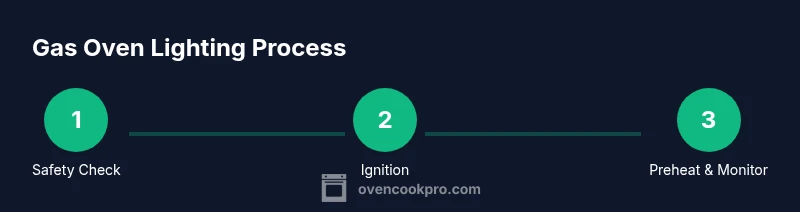
How to Light and Use a Gas Oven Safely: A Step-by-Step Guide
Learn how to operate a gas oven safely with clear, step-by-step instructions, safety tips, and troubleshooting. Ideal for homeowners and home cooks seeking reliable oven guidance from Oven Cook Pro.


To operate a gas oven safely, identify the ignition method, ensure gas supply, and preheat to the desired temperature. If your model uses a manual ignition, follow the safe lighting steps; if it has an electronic ignition, initiate the heat setting and listen for ignition. Always ventilate the kitchen and check for gas odors before cooking.
How to Light and Use a Gas Oven: Safety-First Overview
When you’re learning how to on oven gas, the first priority is safety. According to Oven Cook Pro, understanding your specific model’s ignition method, maintaining proper ventilation, and performing a quick pre-use check dramatically reduce common risks. This guide walks you through the essentials—how gas ovens ignite, how to preheat correctly, and how to verify temperatures—so you can cook with confidence and consistency.
Essential Safety Principles Before Ignition
Before touching any controls, clear the area around the oven, ensure there is adequate ventilation, and verify there are no strong gas odors. If you smell gas, do not ignite the oven. Instead, leave the area, avoid flames or sparks, and contact your utility provider or emergency services. Regular maintenance and situational awareness are the backbone of safe operation, especially in busy kitchens where multiple appliances are in use. Oven Cook Pro emphasizes documenting any recurring ignition issues so you can address them promptly with professional help.
The Ignition Methods for Gas Ovens
Gas ovens typically ignite via an electronic igniter or a standing pilot light, depending on the model. Electronic ignition is common in newer ovens and often uses a spark that lights the burner when you turn the control knob. If your oven has a standing pilot light, you may need to manually introduce a flame or follow a specific reset procedure. Always consult your user manual for the exact ignition method and never improvise beyond the manufacturer’s instructions. The main goal is a quick, controlled flame that stays lit for steady heat.
Temperature Control and Preheating Best Practices
Once the oven is lit, set the dial to your target temperature and allow the oven to preheat fully before loading food. Preheating helps stabilize heat and improves overall cooking results. Use an oven thermometer placed in the center of the oven to confirm accuracy, especially if your model’s built-in display is unreliable. If you notice persistent hot spots, rotate pans partway through cooking to ensure even browning.
Troubleshooting Ignition Issues and Common Myths
If ignition does not occur, double-check that the oven’s gas supply valve is open and that the knob is in the correct position for ignition. For electronic ignitions, listen for clicking sounds indicating the spark; a silent unit may indicate a power issue or a failed igniter. Do not attempt to light the oven with makeshift tools or flames. If the odor of gas is strong or persistent, evacuate and contact professionals.
Maintenance, Ventilation, and Long-Term Care
Regularly inspect door seals, knobs, and gaskets for wear, and replace them if necessary. Use the range hood or a vent fan to maintain air quality while operating the oven, especially in smaller kitchens. Schedule periodic professional checkups if you notice inconsistent temperatures, unusual odors, or unresponsive ignition."
Tools & Materials
- Gas supply valve (main)(Ensure the valve is fully open and verify there is no gas smell before ignition.)
- Long-reach lighter or match (if model supports manual ignition)(Only use if your oven requires manual ignition and it is safe to do so.)
- Oven-safe thermometer(Place in the center of the oven to monitor true temperature.)
- Heat-resistant gloves(Useful for handling hot racks or pans.)
- Ventilation nearby (range hood/open window)(Ventilation helps clear any combustion byproducts during ignition.)
Steps
Estimated time: 30-45 minutes
- 1
Check safety and readiness
Inspect the area around the oven for clutter, ensure ventilation is available, and confirm there are no strong gas odors. If you detect gas smell, do not ignite the oven and contact your gas provider. This step prevents accidents and sets a safe baseline for operation.
Tip: Create a clear space around the oven to avoid accidental ignition of nearby items. - 2
Identify ignition method
Consult your user manual to determine whether your model uses electronic ignition or a pilot light. Understanding the exact method prevents missteps and reduces the risk of delayed ignition. If in doubt, pause and verify with manufacturer guidance.
Tip: Never improvise ignition if you’re unsure of the method. - 3
Turn on the gas supply to the oven
With safety confirmed, open the appropriate gas valve or control knob to prepare for ignition. Do not force ignition if the flame does not catch immediately. If you hear a strong gas odor after opening the valve, stop and ventilate the area.
Tip: If you smell gas, leave the area and call the utility provider. - 4
Ignite the oven (manual or electronic)
For electronic ignition, turn the knob to the preheat setting or the ignition position and wait for the ignition to light. For manual ignition, carefully light the burner with a long-reach lighter following the manufacturer’s instructions.
Tip: Keep your face and body away from the oven opening during ignition. - 5
Preheat to the desired temperature
Set the temperature as your recipe calls for and allow the oven to reach that temperature before placing food inside. Preheating ensures consistent cooking results and reduces cooking time variability.
Tip: Use the oven thermometer to confirm when the target temp is reached. - 6
Verify temperature accuracy
Check the oven’s internal temperature with a thermometer in the center of the rack. If readings are consistently off, note the variance and adjust cooking times accordingly or schedule a service check.
Tip: Document any recurring discrepancies for future reference. - 7
Prepare racks and cookware
Arrange racks and pans as needed, ensuring clearance for air flow and even heat distribution. Avoid overcrowding, which can hinder air circulation and lead to uneven cooking.
Tip: Place items in the center of the oven for balanced heat exposure. - 8
Return to cooking and monitor
Once preheated, place your dish inside and monitor progress as your recipe requires. Always practice safety by avoiding accidental contact with hot surfaces and using mitts when handling racks.
Tip: Set timers and visually check food periodically to prevent overcooking.
Questions & Answers
Is it safe to use a gas oven indoors?
Gas ovens are generally designed for indoor use when installed properly and ventilated. Always follow the manufacturer’s instructions and ensure proper kitchen ventilation. If you detect a gas odor or unusual hissing, stop use and contact your gas provider.
Gas ovens are safe indoors when installed correctly and used with good ventilation. If you smell gas, leave the area and call for help.
What should I do if the oven won’t ignite?
First, confirm the gas supply is open and the ignition method matches your model. If there’s no ignition and no odor, reset as directed in the manual or try again after a brief cooling period. If it still fails, contact a service technician.
Check the gas supply and ignition method first. If ignition still fails, get professional help.
Can I light a gas oven with a match?
Some older models with manual ignition permit a long-reach match. Many modern ovens rely on electronic ignition and do not require a match. Always follow your manual to avoid equipment damage or injury.
Only use a match if your oven’s instructions explicitly allow it.
How long should I preheat a gas oven?
Preheating times vary by model and recipe. A typical preheat is several minutes until the oven reaches the set temperature. Use a thermometer to confirm accuracy for best results.
Preheat a few minutes until your target temperature is reached; verify with a thermometer.
What are signs of a gas leak?
Common signs include a strong gas odor, hissing sounds, or pilot flame that goes out unexpectedly. If you suspect a leak, evacuate and call your gas provider or emergency services immediately.
If you smell gas, leave the area and seek help right away.
Watch Video
Main Points
- Verify safety before lighting
- Know your ignition method
- Preheat and verify temperature with a thermometer
- Maintain ventilation and perform regular maintenance