How to Stop an Oven: Safe Shutoff Guide
Learn how to stop an oven safely, prevent overheating, and handle common malfunctions with practical steps, tools, and safety tips from Oven Cook Pro.


You will learn how to safely stop an oven, prevent overheating, and respond to common issues like a stuck keypad or malfunctioning thermostat. This guide covers immediate actions to cut power, when to unplug or trip a breaker, how to verify the oven is fully off, and steps to reset safely.
Understanding Why Ovens Run On
Ovens are designed to heat until a sensor or control system says the desired temperature is reached. Occasionally, a fault in the thermostat, control relay, or bake/ broil circuit can keep the heater energized even after you press the off button. Electric ovens rely on relays and temperature sensors, while gas ovens rely on gas valves and electronic controls. When a runaway heat condition occurs, the risk of burns, fires, or damaged wiring increases. Regular maintenance and mindful operation reduce these risks, and knowing exactly how to stop an oven quickly helps you act decisively in an emergency. According to Oven Cook Pro analysis, the most common causes of runaway heat are a sticky keypad, a stuck relay, or a failed temperature sensor. Recognizing these signs early lets you apply the correct shutoff method and prevent escalation.
In any kitchen, the goal is to halt heat safely, avoid opening hot doors if possible, and protect household members from injury. If you notice persistent heat after you’ve attempted to stop the oven, treat the situation as a potential hazard and follow the steps in this guide. This approach aligns with general kitchen-safety practices and is endorsed by the Oven Cook Pro Team.
Immediate Actions to Stop an Oven Safely
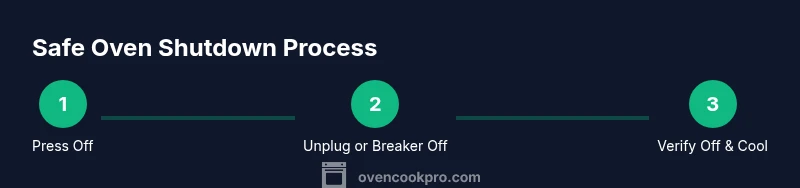
When you need to stop an oven quickly, start with the simplest, most controlled method. If the control panel responds, press the Off or Cancel button and wait for the display to reset. If the oven remains hot or keeps heating, unplug the unit from the wall outlet if it is within reach. If you cannot unplug it, shut off power at the circuit breaker that serves the kitchen. Keep your hands protected with heat-resistant gloves if you need to reach the control area. Do not touch live components inside a powered oven. For gas ovens, turning the knob to Off is essential; if you smell gas or suspect a gas line issue, evacuate and call emergency services or your gas utility immediately. Do not use water on an electrical fire and do not leave the oven unattended while a heat source remains active.
After cutting power, allow the oven to cool before inspecting or moving it. If the unit resumes heating after power restoration, contact a trained technician to diagnose the control system.
When to Unplug vs. Breaker Off
Unplugging is the simplest way to guarantee the oven loses power, but many wall ovens are hard-wired and not easily unplugged. In those cases, switch off the circuit breaker feeding the oven. If you must use a breaker, flip it fully to Off, wait 10 seconds, then back to On to reset the circuit—but do not reset repeatedly without first consulting a professional. In both cases, verify that no power is flowing to the oven by attempting to re-enable the touch panel or display. If you’re unsure about the breaker location, consult your home’s electrical panel diagram or a licensed electrician for safety. Never bypass safety features or tape over controls to “disable” the device; this can create hidden hazards.
Verifying That the Oven Is Off
Verification is crucial after a shutdown. Check the display to ensure it is inactive and shows no temperature reading. Observe indicator lights and any status icons to confirm the unit is not warming. If the display remains dimly lit or shows partial power, allow a cooling period (at least 15–20 minutes) and re-check. For gas ovens, ensure the gas knob remains in the Off position and listen for any hissing sounds that may indicate a gas flow. If you suspect ongoing heat or a faulty relay, assume the device is not off and seek professional service. Keeping a log of shutdown attempts can help a technician diagnose the root cause more quickly.
Handling Specific Scenarios
Some common scenarios require tailored actions. If the keypad is stuck, do not press multiple buttons in rapid succession—this can aggravate the fault. If the display shows error codes, refer to the user manual for code meanings and follow recommended steps. A non-responsive control board or a continuous bake cycle may indicate a failed relay or sensor; in these cases, avoid attempting a DIY repair beyond basic power-cycling. For gas ovens, never attempt to overrule the safety valve; if heat continues after Off, evacuate and contact the gas utility. Always call a professional if you are unsure about the fault or if the oven overheats or smells of gas.
Preventing Future Run-On Issues
Regular maintenance reduces the chance of runaway heat. Keep the control panel clean, avoiding moisture near the electronics, and ensure keypad buttons are not sticky or jammed by spilled food or grease. Periodically test the Off button by powering down and back on in a controlled setting to ensure it responds properly. If your oven has a self-cleaning feature, use it only as directed and avoid initiating cycles when the unit is hot. A loose door seal or warped door can also lead to heat retention; inspect the door gaskets and hinge alignment and replace worn parts as needed. Document recurring issues and share them with a technician during service visits to address root causes.
Quick Safety Checklist for Power Shutdown
- Know where the circuit breakers are and how to switch them off quickly.
- Keep a fire extinguisher rated for electrical fires within easy reach in the kitchen.
- Never spray water on an electrical oven fire—use a suitable extinguisher instead.
- Do not bypass safety features or disassemble live components.
- If in doubt, contact a certified appliance technician for diagnosis and repair.
Tools & Materials
- Access to a nearby power outlet or the kitchen circuit breaker(Essential for power-down actions; know where to reach safely)
- Circuit breaker panel access(Needed when unplugging is not possible; ensure you can identify the oven’s breaker)
- Heat-resistant gloves(Wear when handling hot oven surfaces after shutdown)
- Non-conductive flashlight(Helpful for inspecting the oven interior if the area is dim)
- Fire extinguisher (electrical fires)(Keep within reach in the kitchen; know how to use it)
- Voltage tester (optional)(Can confirm power is cut before service work)
Steps
Estimated time: 8-15 minutes
- 1
Press Off on the control panel
If the panel responds, press the Off or Cancel button to stop heating and wait for the display to reset. Do not assume the oven is off if the display remains active or shows a temperature setpoint.
Tip: If the screen freezes, move to the power-down method only after ensuring personal safety. - 2
Unplug if accessible
Carefully unplug the oven from the wall outlet if it’s reachable without standing on a chair or reaching over hot surfaces.
Tip: Use a non-slip mat under your feet and keep hands away from hot edges. - 3
Shut off the circuit breaker
If unplugging isn’t possible, switch the oven’s dedicated circuit breaker to Off, wait 10 seconds, then back to On to reset. This interrupts all power to the unit.
Tip: Do not repeatedly flip the breaker in quick succession; if it trips, call a professional. - 4
Confirm power is cut
Attempt to interact with the control panel again. If it remains off or shows no sign of life after power-down, the unit has been de-energized.
Tip: If you still smell gas or hear hissing, evacuate and contact emergency services. - 5
For gas ovens: ensure gas valve is Off
If you use a gas-powered oven, ensure the gas valve or knob is turned to Off and that there is no gas odor in the kitchen.
Tip: If you smell gas, leave the area immediately and call the gas utility. - 6
Cool and inspect safely
Let the oven cool completely before inspecting or moving it. Do not touch live components or attempt internal repairs unless you are trained.
Tip: Have a flashlight ready to inspect the interior from a safe distance. - 7
Test a controlled re-power
After a cooldown, restore power and observe whether the oven remains off. If the unit re-ignites or behaves abnormally, arrange service.
Tip: Document any codes or symptoms to share with the technician. - 8
Schedule professional service
If the runaway heat recurs or you cannot determine the fault, contact a licensed appliance technician to diagnose the relay, sensor, or gas valve.
Tip: Avoid DIY fixes that involve opening electrical panels.
Questions & Answers
What should I do first if my oven won't stop heating?
Press Off on the control panel, then unplug if possible. If it continues to heat, switch Off at the circuit breaker and call a technician for diagnosis.
First press Off, then unplug or switch off the circuit breaker. If it keeps heating, contact a technician for a safe repair.
Is it safe to unplug an oven?
Electric ovens can usually be unplugged if the outlet is accessible. If the oven is hard-wired, use the circuit breaker. Gas ovens require turning the knob to Off and ensuring no gas smell.
Yes, unplug if the outlet is accessible; otherwise, switch off the breaker. For gas ovens, set the knob to Off and leave if you smell gas.
What if the display shows error codes after shutdown?
Refer to the user manual for code meanings and recommended steps. If codes persist after a shutdown, arrange service with a qualified tech.
Check the manual for the codes and seek professional service if they persist after shutdown.
Can I fix a runaway oven myself?
Most runaway ovens require professional diagnosis. Basic power-down steps are safe, but internal repairs should be left to a technician.
It's best to avoid DIY repairs for runaway ovens; power-down and call a professional for safety.
When should I call a professional?
Call a professional if the oven overheats after shutdown, if the relay or sensor seems faulty, or if gas odors persist after shutting off.
Call a professional whenever you suspect a faulty control system or persistent gas issue.
What safety steps are essential during a potential electrical fire?
Evacuate if flames are present, call emergency services, and use an appropriate fire extinguisher only if safe to do so. Do not use water.
If there is fire, evacuate and call emergency services; use a suitable extinguisher only if safe.
Watch Video
Main Points
- Cut power quickly using Off, unplug, or the breaker when needed.
- Gas ovens require shutting off the gas supply and evacuating if there's a leak.
- Verify the oven is truly off by checking the display and indicators.
- Address recurring issues with a licensed technician; safety first.
- Regular maintenance reduces runaway heat and improves reliability.