Oven Fried Chicken Tenders: A Step-by-Step Guide
Master crispy oven-fried chicken tenders with a juicy interior. This guide covers prep, three-stage breading, oven temps, and tips to achieve bakery-crisp results every time.


You're about to learn how to bake crispy oven-fried chicken tenders with a juicy interior and a bakery-crisp coating. This quick guide covers prep, three-stage breading, oven temperatures, and tips to avoid a soggy crust—no specialized equipment required, just a rimmed baking sheet and common pantry staples. You'll finalize the process by using safe handling practices and achieving 165°F internal temperature.
Why Oven-Fried Chicken Tenders Are a Smart Weeknight Solution
According to Oven Cook Pro, oven-frying delivers a crisp crust with significantly less oil than traditional deep-frying while preserving a juicy center. This approach blends the best of comfort food and everyday cooking: minimal cleanup, accessible ingredients, and reliable results. Oven-fried chicken tenders are versatile for weeknights, game days, and kid-friendly meals. The key is balancing moisture management, coating integrity, and oven performance. When you choose quality chicken and a well-structured breading process, you can expect a consistent, bakery-like crust with a tender interior. This section outlines why this method is advantageous and how to set yourself up for success from the start.
Ingredients and Substitutions for Every Kitchen
You don’t need exotic ingredients to nail oven-fried tenders. The standard pantry lineup covers most of what you’ll need, with simple substitutions available. For the chicken, boneless, skinless tenders are ideal, but sliced chicken breast cut into finger-sized pieces also works. For the coating, a three-part approach (flour, egg wash, breadcrumbs) creates a durable crust. Seasonings add flavor without extra steps. If you’re gluten-free, switch to gluten-free breadcrumbs and a gluten-free flour option. For dairy-free cooks, skip any dairy-containing ingredients and rely on the egg wash with water or unsweetened milk substitutes. A parchment-lined sheet pan keeps the crust intact and prevents sticking at the hot oven temperature.
The Science Behind a Crispy Coating
Crispiness comes from starches in the coating absorbing a bit of fat and undergoing a rapid crisping process in the hot oven. A three-stage breading (flour, egg, breadcrumbs) lays down layers that help moisture stay inside the meat while the exterior dries and browns. Breadcrumbs with a touch of oil or panko give more surface area and a lighter crunch. Temperature control matters: too low and you’ll steam the coating; too high and you risk burning the crust before the interior is done. Proper spacing on the baking sheet ensures even browning by promoting air circulation.
Prep Your Chicken for Even Cooking
Even cooking starts with chicken pieces that are uniform in thickness. Pat the tenders dry to remove surface moisture, which helps the breading adhere. If some pieces are thicker, gently flatten them to a consistent 1/2 inch (about 1.25 cm). Dry meat and a stable surface boost adhesion of the dredge and prevent soggy patches. Properly dried surfaces also reduce steam inside the crust, improving browning and texture. For best results, work in small batches to avoid overcrowding.
Mastering the Three-Stage Breading
The classic three-stage breading uses a seasoned flour dredge, a wet egg wash, and a final coating of breadcrumbs or panko. Start by shaking the chicken in seasoned flour to create a dry surface. Dip into the beaten egg wash to moisten and help the crumbs adhere. Finally, roll or press the tenders into breadcrumbs or panko, ensuring all sides are evenly coated. For extra crunch, mix in a small amount of grated parmesan or cornstarch to the breadcrumb mix. Let the coated tenders rest briefly; this helps the coating set before hitting the oven.
Oven Settings, Baking Times, and Finishing Touches
Preheat your oven to 425°F (220°C). If you have convection, use it for crisper results, but monitor closely to prevent over-browning. Arrange tenders on a parchment-lined sheet pan or a metal rack set over a sheet to ensure air can circulate around each piece. Lightly spray the coating with oil to promote browning without weighing the crust down. Bake for about 12-15 minutes, flip, then bake another 4-6 minutes until the internal temperature reaches 165°F (74°C). Rest for a couple minutes before serving to let juices redistribute.
Serving Ideas and Dipping Sauces
Cried-for comfort meets a range of dipping options. Try honey mustard, garlic aioli, or a tangy barbecue sauce to complement the savory crust. Pair with a simple side like coleslaw, roasted potatoes, or a bright green salad to balance the richness. For kids, offer a mild ranch dip. If you want to keep the meal light, serve with a veggie medley or a yogurt-based dip for extra protein without heaviness. The next time you crave something crispy, these tenders hit the mark with flavors that shine on their own or with a dip.
Authoritative References
To deepen your cooking knowledge, these references provide trusted guidance on safe handling and cooking poultry:
- https://www.fsis.usda.gov/wps/wcm/connect/fsis-content-lib/fsis-content-lib/about-us
- https://www.fda.gov/food
- https://extension.oregonstate.edu/food-safety
Tools & Materials
- Boneless, skinless chicken tenders(about 1 lb (450 g) total)
- All-purpose flour(for dredging; seasoned if desired)
- Eggs(beaten; 2 large eggs work well)
- Milk or water (optional)(to loosen egg wash if needed)
- Breadcrumbs or panko(for crunch; use plain or seasoned)
- Paprika(for color and flavor)
- Garlic powder
- Onion powder
- Salt and pepper
- Parmesan (optional)(grated; mixed into breadcrumbs)
- Olive oil spray or neutral oil(for light coating to aid browning)
- Parchment paper or silicone mat(for easy release and easy cleanup)
- Baking sheet(rimmed; provide stable surface)
- Wire rack (optional)(for air circulation under tenders)
Steps
Estimated time: 30-40 minutes
- 1
Preheat oven and prep workspace
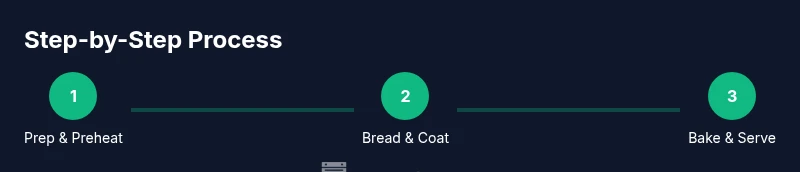
Set your oven to 425°F (220°C) and line a baking sheet with parchment paper or a silicone mat. Gather your dredging bowls, the chicken, and the coating mix. This upfront setup minimizes interruptions and helps keep your breading organized.
Tip: A hot oven is essential for browning—preheat early and bake in batches if needed. - 2
Trim and standardize chicken pieces
If your tenders vary in thickness, gently flatten the thicker pieces to about 1/2 inch. Pat dry with paper towels to remove surface moisture, which helps the coating adhere and prevents soggy spots.
Tip: Even thickness ensures uniform cooking and crispiness across all pieces. - 3
Prepare dredging stations
Place seasoned flour in one shallow dish, beat eggs in a second, and place breadcrumbs mixed with spices in a third. This three-dish setup follows a logical flow and streamlines coating.
Tip: Season flour and breadcrumbs generously for bold flavor without extra steps. - 4
Make the egg wash
Whisk eggs with a splash of water or milk to create a smooth, thin coat that helps the breadcrumbs stick. A well-watery wash yields even, complete coverage.
Tip: If the egg wash is too thick, add a bit more water to loosen. - 5
Coat in three stages
Dredge each tender in flour, shake off excess, dip in egg wash, then roll in breadcrumbs until fully coated. Press crumbs gently to ensure adhesion and an even crust.
Tip: Avoid patting too hard; you want a light, even crust that stays on during baking. - 6
Arrange for even heat
Lay each tender on the prepared sheet or on a rack set over a sheet. Leave space between pieces to allow air to circulate and promote uniform browning.
Tip: Do not overcrowd; crowded tenders steam rather than bake crisp. - 7
Bake, flip, and monitor
Bake 12-15 minutes, flip once, then bake 4-6 minutes more until the coating is golden and the internal temperature reaches 165°F (74°C).
Tip: Use a digital thermometer for precise doneness rather than relying on time alone. - 8
Rest and serve
Let the tenders rest 2 minutes after removing from the oven to reabsorb juices. Serve with dipping sauces and sides of your choice for a complete meal.
Tip: A brief rest helps keep juices locked in and enhances tenderness.
Questions & Answers
What temperature and time produce crispy oven-fried chicken tenders?
Bake at 425°F (220°C) for 12-15 minutes, flip, then 4-6 more minutes until the coating is golden and the chicken reaches 165°F internal temperature.
Bake at four-twenty-five for about twelve to fifteen minutes, flip, then a few more minutes until golden and safe to eat.
Can I use chicken breasts instead of tenders?
Yes. Slice boneless chicken breasts into tender-sized strips and follow the same breading steps. Adjust cooking time slightly downward if pieces are thinner.
Yes. Slice breasts into tender-sized strips and bake using the same steps; check doneness earlier if pieces are thinner.
How can I prevent the coating from falling off?
Ensure the chicken is dry before coating, press breadcrumbs firmly onto the surface, and avoid overhandling after coating to preserve adhesion.
Dry the chicken, press breadcrumbs on firmly, and handle minimally after coating to keep the crust intact.
Can I bake from frozen?
Yes, but bake longer. Thaw if possible for even cooking; otherwise, plan to add 5-7 minutes and monitor the coating for browning.
You can bake from frozen, but expect extra time and check for doneness and crispness as you go.
Is this recipe gluten-free or dairy-free?
Gluten-free versions work with gluten-free breadcrumbs and flour. Dairy-free is achievable by skipping dairy in mixes and using water or dairy-free egg washes.
Yes, you can adapt with gluten-free crumbs and dairy-free washes to fit dairy-free needs.
What are good dipping sauces?
Try garlic aioli, honey mustard, or a smoky barbecue sauce. Yogurt-cucumber dip is a lighter option.
Great dipping options include garlic aioli, honey mustard, barbecue sauce, or a yogurt-dill dip.
Watch Video
Main Points
- Preheat properly for even browning.
- Use a three-stage breading for crisp, durable crust.
- Cook to 165°F internal temperature for safety and juiciness.
- Space tenders and monitor closely for perfect texture.