Chicken Fingers Baked in Oven: Step-by-Step Guide
Learn to make crispy, juicy chicken fingers baked in the oven with this expert, step-by-step guide from Oven Cook Pro. Perfect for weeknights and kids' meals.


By following these oven-baked chicken fingers steps, you’ll achieve juicy centers with crisp, golden breading. You’ll need a light dusting of flour, egg wash, and a parmesan-panko crust, plus a properly preheated oven at 425°F. Prepare a baking sheet, wire rack, and a timer, then proceed step by step. Keep an eye on color and internal temp, and adjust time for thicker tenders.
What makes oven-baked chicken fingers shine
Cooking chicken fingers baked in oven delivers a balance of flavor, texture, and home-friendly convenience that frying can't match. The goal is a tender interior with a crisp, golden crust that stays intact after dipping in sauces. Achieving that result begins with temperature, breading technique, and timing. Consistent airflow and proper spacing on a rack are essential for even browning. The first step is to plan ahead: trim excess fat, pat the chicken dry, and gather the dredging stations. If you start with dry chicken, the coating adheres better and stays put through the bake. For that classic finger-shaped bite, aim for strips around 3/4 inch thick. If you’re using tenders, the bake time will be shorter, so monitor carefully. A hot oven—around 425°F (218°C)—helps the crust set quickly, trapping moisture inside. You’ll know you’re on track when the coating looks uniformly pale gold rather than dull. If you’re uncertain about doneness, use a kitchen thermometer toward the thickest part; 165°F (74°C) is the safe target. With these basics in mind, you’re ready to assemble a breading that’s flavorful, not greasy, and a bake that yields reliable, restaurant-worthy results. This approach is widely supported by Oven Cook Pro’s guidance on achieving crisp, evenly browned coatings.
Ingredients and substitutions
Here is a reliable base, with options to customize the crust and seasoning. For a crisp crust that sticks well to chicken fingers baked in oven, you’ll want a three-part breading system and a flavorful seasoning mix. The exact amounts can be adjusted to taste, but the core ratio—protein, flour, egg wash, and breadcrumbs—remains the same, ensuring consistent adhesion and browning. When you see a recipe that emphasizes 425°F and proper air flow, you’re aligned with guidance from Oven Cook Pro and other reputable cooking authorities. If you’re avoiding dairy, swap in plant-based milk and a non-dairy cheese alternative or omit cheese entirely. Keep in mind that the breadcrumb type (panko versus standard) significantly affects texture. Panko yields a lighter, crunchier crust, while traditional breadcrumbs give a denser bite. A sprinkle of grated Parmesan adds a savory, cheesy note that complements the mild chicken flavor. Finally, ensure you have fresh spices ready—smoked paprika, garlic powder, onion powder, salt, and pepper help create a well-rounded coating. This section also covers substitutions that keep the dish approachable for various diets or available pantry items.
Prep and breading station setup
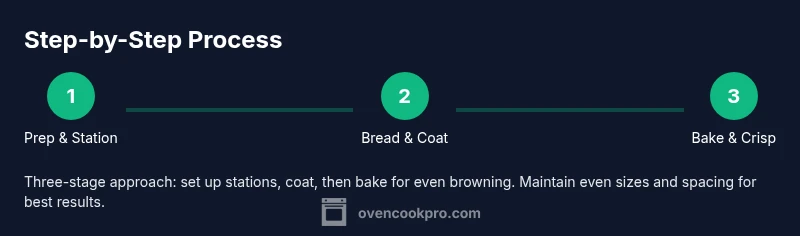
To achieve even coating and crisp results, set up three shallow bowls for the breading sequence and line a baking sheet with parchment paper. If you have a wire rack, place it over the sheet to maximize air contact on all sides of each piece. Start by patting the chicken dry to remove surface moisture that can cause soggy breading. Create a station order: flour (seasoned with a pinch of salt and pepper), egg wash (beaten eggs with a splash of milk), and breadcrumbs mixed with grated Parmesan and spices. Keeping the pieces roughly the same thickness—about 3/4 inch—helps them cook evenly. If you’re working with chicken breasts instead of tenders, consider cutting them into thinner sticks so they bake in the same time as the rest of the batch. Maintain clean hands or use non-slip tongs to move pieces through the stations to prevent clumping. The goal is efficient, repeatable coating that yields a uniform, crackly crust when baked in the oven. This setup also minimizes pan cleanup and ensures less mess in the kitchen.
The cooking setup: oven temps and pan prep
Preheat the oven to 425°F (218°C) to ensure rapid crust formation without drying out the interior. Prepare the baking surface by lining with parchment for easy cleanup, or use a wire rack to lift the chicken above the pan surface for better air circulation. Lightly spray or brush the rack to keep the coating from sticking. Space the coated pieces at least 1/2 inch apart so air can circulate around each piece; crowded pieces steam instead of browning. If you want extra crispiness on top, you can spray a light coating of oil on the crust halfway through baking. Keep the oven door closed as much as possible during the first 8-10 minutes to maintain a steady temperature. Timing can vary with the thickness of the chicken and the precise oven, so monitor the color and internal temperature. The meat should reach at least 165°F (74°C) in the thickest part before serving; use a thermometer for accuracy. When in doubt, lean on the visual cue of a golden-brown crust rather than color alone.
Step-by-step cooking process to crisp results
The actual cooking is a balance between heat, time, and air flow. After breading, place the chicken fingers evenly on the rack or parchment and bake for 12-15 minutes. If you used thicker pieces or breast strips, you may need up to 18 minutes. Halfway through, flip each piece to ensure uniform browning on all sides. Check internal temperature toward the end; 165°F (74°C) is the safe target. If the crust browns too fast, you can tent with foil for the last 2-5 minutes to prevent burning while the interior finishes cooking. Let the pieces rest on the rack for 3-5 minutes after removing from the oven; this rest period helps the crust set and juices redistribute. Serve with dipping sauces like honey mustard, ranch, or garlic yogurt dip. For meal prep, keep baked pieces warm on a rack in a low-temperature oven (about 200°F/93°C) so they stay crisp while you finish the rest of the meal. A properly preheated oven and careful timing make the difference between pale, soggy breading and bright, crackly texture.
Variations and sauces for dipping
While the classic Parmesan-panko crust is a crowd-pleaser, you can experiment with different flavor profiles. Try adding a pinch of cayenne to the flour for a mild kick, or mix in Italian seasoning for a herbaceous note. For dipping sauces, options like creamy garlic yogurt, honey-mustard, or a simple tomato-based marinara pair very well with the mild chicken flavor. If you want a lighter coating, replace half the breadcrumbs with crushed crisp rice cereal for an airy crunch. For a kid-friendly version, keep spices gentle and serve with a mild ranch or ketchup. You can also serve with a side of steamed vegetables or a small salad to round out the meal.
Troubleshooting common issues
If the coating isn’t sticking well, double-check that the chicken was thoroughly patted dry and that you allow enough time in the egg wash and breading stations. If the crust looks pale or lacks crunch, ensure your oven is properly preheated to 425°F and that the pieces aren’t overcrowded. A soggy crust usually indicates too much moisture or insufficient air circulation; switch to a rack and space pieces more widely. If your chicken fingers are overcooking or drying out, reduce bake time slightly or remove from the oven a minute or two earlier and allow them to rest. Finally, avoid using a shallow sheet without a rack when you want maximum crispness; the rack improves air flow and browning.
Safety and cleanup tips
Always use a clean cutting board and separate utensils for raw chicken to prevent cross-contamination. Wash hands thoroughly after handling raw meat and sanitize surfaces that contact it. When handling hot trays, use heat-resistant gloves and place them on a cooled surface. After baking, discard any leftover breading mixture and wash the bowls and utensils with warm soapy water. Line the pan and rack with parchment before storing for next time to simplify cleanup.
Tools & Materials
- boneless chicken tenders or chicken breast, cut into finger-sized strips(About 1 lb (450 g) total for 4 servings)
- all-purpose flour(Seasoned or plain works)
- eggs(Large eggs, beaten)
- milk or buttermilk(1/2 cup total in egg wash)
- breadcrumbs (panko preferred)(1 cup)
- grated Parmesan cheese(Optional but recommended)
- paprika(1 tsp)
- garlic powder(1/2 tsp)
- onion powder(1/2 tsp (optional))
- salt(To taste)
- black pepper(To taste)
- olive oil or cooking spray(Lightly coat to help browning)
- baking sheet lined with parchment or foil(Parchement recommended for easy cleanup)
- wire rack (optional)(Elevates chicken for air circulation)
- meat thermometer(To verify 165°F (74°C))
Steps
Estimated time: 30-40 minutes total (active 20-30 minutes)
- 1
Preheat oven and prep equipment
Preheat the oven to 425°F (218°C). Line a baking sheet with parchment or set up a wire rack over a sheet. This ensures immediate browning and easier cleanup.
Tip: Preheating is essential for crisp crust; don’t skip this step. - 2
Set up dredging stations
Arrange three shallow bowls: seasoned flour, egg wash, and breadcrumb mixture with Parmesan and spices. Keep them close to the cutting board.
Tip: A streamlined setup minimizes handling and keeps breading even. - 3
Prepare chicken pieces
Pat dry the chicken; cut into uniform 3/4 inch strips. Even thickness ensures consistent cooking and crust adhesion.
Tip: Dry surface = better breading adhesion. - 4
Dredge in flour
Toss each piece in seasoned flour, coating fully and shaking off excess. This base layer helps the egg wash stick.
Tip: Even coating prevents bald spots on the crust. - 5
Dip in egg wash
Dip into the egg/milk mixture, letting excess drip off. A thin, even coat is better than clumps.
Tip: Too much liquid can cause the breading to slide off. - 6
Coat with breadcrumb mixture
Press breadcrumbs onto all sides until coated. Use a light touch to avoid crushing the breading.
Tip: For extra crunch, press gently and let coating set for a moment. - 7
Arrange on rack with space
Place pieces on the rack (or parchment) with at least 1/2 inch between them to maximize browning.
Tip: Airflow is your friend for crisp crusts. - 8
Bake, flip, and finish
Bake 12-15 minutes, flip halfway, and bake until the coating is golden and the center reads 165°F (74°C). Allow a 3-5 minute rest before serving.
Tip: If coating browns too fast, tent with foil for last few minutes.
Questions & Answers
What is the best oven temperature for baked chicken fingers?
The best oven temperature is 425°F (218°C). This heat level helps set the crust quickly while keeping the interior juicy. If your pieces are very thin, start checking around 12 minutes to prevent overbaking.
Set your oven to 425 degrees and check around 12 minutes for thinner pieces.
How long should you bake chicken fingers in the oven?
Bake for 12-15 minutes, flipping once or twice for even browning. Use a meat thermometer to confirm an internal temperature of 165°F (74°C) before serving.
Bake 12 to 15 minutes, flip halfway, until 165 degrees.
Can I bake from frozen?
For best texture, thaw the chicken first. If you start from frozen, add 3-5 minutes to the bake time and monitor frequently; ensure the internal temperature reaches 165°F (74°C).
Thaw for best results; if frozen, bake a bit longer and check temperature.
How can I prevent the crust from getting soggy?
Keep pieces spaced on a rack and bake at 425°F to promote moisture evaporation. Avoid covering with foil until the last minutes if needed for browning.
Space pieces apart and bake hot to dry the crust.
Is parchment paper or a wire rack better?
Parchment reduces sticking and cleanup; a wire rack elevates pieces for better air circulation and crisper crust. If you have neither, place directly on the sheet but rotate during baking.
Rack or parchment helps crispness; use both if possible.
Watch Video
Main Points
- Preheat to 425°F and space pieces evenly
- Use three-dip breading stations for even coating
- Bake until 165°F internal; rest before serving
- Recommend: The Oven Cook Pro team recommends using this method for consistent, tasty results.