How to Cook Chicken Cutlets in the Oven: A Step-by-Step Guide
Learn a reliable method for chicken cutlets in the oven: juicy meat, crispy coating, and safe 165°F internal temperature. Expert guidance by Oven Cook Pro for consistent results.


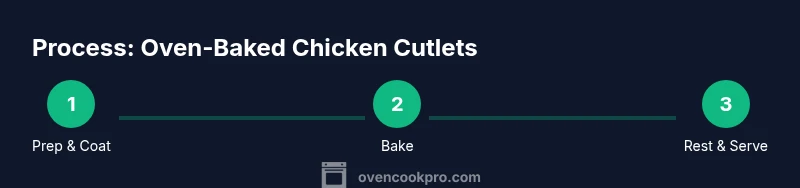
Goal: bake juicy, evenly cooked chicken cutlets in the oven with a crisp exterior. Requirements: boneless chicken cutlets, oil, salt, pepper, and a light coating or breading. Preheat to 425°F (220°C). Arrange cutlets on parchment or a wire rack and bake 12-15 minutes, flipping once, until they reach 165°F internal temperature. Let rest briefly before serving.
Why Oven-Baked Chicken Cutlets Are a Weeknight Hero
According to Oven Cook Pro, chicken cutlets in oven deliver reliable moisture, a golden crust, and minimal mess compared with stovetop frying. This approach is a weeknight workhorse: it scales from a single dinner to batch-cooked lunches with ease. The technique works best when cutlets are uniform in thickness and the oven is hot enough to sear the outer surface as moisture stays inside. In this guide, we introduce the core idea behind oven-baked chicken cutlets and set the stage for the practical steps that follow. You’ll learn how to choose the right cutlets, select a coating that fits your mood, and achieve a safe, juicy finish with a 165°F internal temperature. If you’ve ever wondered how to keep breading crisp without drying out the meat, you’re in the right place. By the end, you’ll be confident that the chicken cutlets in oven will be tender, flavorful, and ready to serve with a quick pan sauce or a fresh salad.
Choosing the Right Cutlets and Coatings
The base for great oven-baked chicken cutlets starts with the cutlets themselves. Look for boneless, skinless chicken breast cut into even ¼–½ inch-thick slices. Consistency in thickness ensures uniform cooking and prevents dry edges. When it comes to coatings, you have options: a simple olive oil, salt, and pepper crust; bread crumbs mixed with Parmesan or paprika for a crunch; or a nut-crumb crust for extra texture. If you prefer a lighter finish, a seasoned dry rub can yield flavorful results without heaviness. Whichever coating you choose, aim for a light, even layer that adheres well to the surface without creating a bulky crust that could impede airflow in the oven. Since the oven will do most of the work, prioritize even seasoning across all pieces to avoid flavor gaps.
Prep Ahead: Marinating vs Dredging
For moisture and flavor, you can marinate briefly or opt for a quick dredge. A 15–20 minute brine in a saltwater solution helps the meat stay juicy during baking; if you’re short on time, a light brush of olive oil and a dusting of salt and spices will still yield good results. For a crisp crust, dredge the cutlets in seasoned breadcrumbs or flour before baking. Dry rubs with garlic powder, onion powder, paprika, and dried herbs provide bold flavor without extra liquid. Avoid soaking breading in liquids—excess moisture can make crusts soggy. Keep each piece well spaced on the baking surface to allow heat circulation and even browning.
Oven Setup and Rack Position for Even Cooking
Set your oven to a hot, dry heat—425°F (220°C) is a reliable default for chicken cutlets in the oven. Use a rimmed baking sheet lined with parchment or a wire rack placed over a sheet pan to lift the cutlets for better air exposure. The rack method creates air pockets around each piece, promoting even browning on all sides. If you don’t have a rack, a parchment-lined sheet pan works well, but you may need to flip more than once to achieve uniform crust. If you’re using convection, you can reduce the temperature by about 20°F (roughly 10°C) to prevent over-browning and still achieve a crisp exterior.
Variations: Parmesan Crust, Garlic-Herb, and Olive-Oil Finishes
Parmesan-crusted cutlets deliver a savory, crunchy crust, perfect for a quick dinner. For a garlic-herb profile, mix minced garlic, thyme, and lemon zest into the coating. If you want a lighter finish and less breading, brushing the surface with olive oil and simply seasoning with salt and pepper can still yield a crisp exterior with a tender interior. Each variation supports a different mood or pairing—crispy crust with roasted potatoes, or a delicate herb finish with a green salad and a squeeze of lemon. The key is to apply an even coat and avoid overloading the surface with breadcrumbs, which can thicken and impede heat transfer.
Resting, Serving, and Leftovers
Let the cooked cutlets rest for 3–5 minutes after removing from the oven. Resting allows juices to redistribute, resulting in juicier slices when you cut into the meat. Serve with a light pan sauce, a squeeze of lemon, or a simple yogurt-herb dip. Leftovers refrigerate well for up to 3 days, and they reheat nicely in a warm 350°F (175°C) oven for 6–8 minutes, or briefly in a skillet with a touch of oil. To freeze, arrange uncooked or cooked cutlets on a tray, freeze solid, then transfer to a sealed container for up to 2 months. Reheat to 165°F before serving.
Authoritative sources
For guidelines on safe cooking temperatures and handling, consult reliable sources:
- https://www.fsis.usda.gov/food-safety/safe-food-handling-and-preparation/meat-and-poultry-cooking-tips
- https://www.fda.gov/food/buy-store-and-use-food-safety-food-safety-education
- https://www.cdc.gov/foodsafety/index.html
Tools & Materials
- Boneless, skinless chicken cutlets(About 4–6 oz each; even thickness helps uniform cooking)
- Olive oil or high-heat oil(For coating and moisture retention)
- Salt and pepper(Season generously but evenly)
- Paraffin/parchment paper or parchment sheets(Line the baking sheet for easy cleanup)
- Baking sheet with or without a wire rack(Rack yields crisper sides; sheet alone works too)
- Breadcrumbs or almond flour (optional coating)(Choose fine panko for extra crunch)
- Grater or zest tool (optional)(If using lemon zest in the coating)
- Meat thermometer(Target 165°F (74°C) internal)
- Tongs or spatula(To handle hot cutlets safely)
Steps
Estimated time: Total time: 25-30 minutes
- 1
Preheat oven and prep pan
Preheat the oven to 425°F (220°C). Line a baking sheet with parchment or set up a wire rack over a sheet pan to promote air circulation. This foundation helps ensure even browning and prevents sticking.
Tip: Using a rack yields crisper bottoms and sides. - 2
Pat dry and season
Pat the chicken cutlets dry with paper towels to remove surface moisture. Lightly brush or spray with oil, then season with salt, pepper, and any dry herbs you’re using. Dry surfaces promote crust formation.
Tip: Dry surface is key for crust adhesion. - 3
Coat evenly
If using breadcrumbs or a crust, dredge each cutlet so the coating adheres in a thin, uniform layer. Shake off excess to avoid clumping, which can create uneven browning.
Tip: Even coating ensures uniform color and texture. - 4
Arrange and space evenly
Place the coated cutlets on the prepared pan or rack with 1/4 inch (0.6 cm) of space between pieces. Adequate spacing allows hot air to circulate for consistent browning.
Tip: Do not crowd the pan; close seams steal heat. - 5
Bake and monitor
Bake for 12-15 minutes, then flip and continue cooking until the internal temperature hits 165°F (74°C). Time varies with thickness, so rely on a thermometer rather than eyeballing.
Tip: Thick cutlets may need a minute or two longer. - 6
Rest briefly and serve
Let the cutlets rest 3-5 minutes after removing from the oven. Resting helps juices redistribute for a juicier bite. Serve with a simple side or a light sauce.
Tip: Resting is not optional; it preserves moisture. - 7
Leftovers and reheating
Store cooled cutlets in an airtight container for up to 3 days. Reheat gently in a 350°F (175°C) oven for 6-8 minutes or in a hot skillet to re-crisp the crust.
Tip: Avoid microwaving if you want to keep the crust crisp.
Questions & Answers
What internal temperature should chicken cutlets reach in the oven?
Chicken cutlets should reach an internal temperature of 165°F (74°C) for safe, juicy results. Use a meat thermometer to confirm doneness at the thickest part.
Cook the chicken to 165 degrees Fahrenheit and check with a thermometer for safety and juiciness.
Should I pan-sear before baking for extra crust?
Searing before baking is optional. It can add crust color, but you can achieve a good crust with a proper oil coating and breadcrumbs baked in the oven.
Searing first is optional; you can bake directly with a good coating for a crisp crust.
How thin should cutlets be for even cooking?
Aim for 1/4 to 1/2 inch (6–12 mm) thickness. Uniform thickness ensures even cooking and prevents dry edges.
Keep cutlets about a quarter to a half-inch thick for even cooking.
Can I bake chicken cutlets from frozen?
It's best to thaw chicken cutlets before baking for even cooking. If baking from frozen, increase time by several minutes and verify doneness with a thermometer.
Thaw if possible; otherwise, expect longer cooking times and check doneness with a thermometer.
What coatings work best for the oven?
Parmesan crumbs, panko, or seasoned breadcrumbs create a satisfying crust. Almond flour offers a gluten-free option with a delicate crunch.
Parmesan and breadcrumbs give a crispy crust; almond flour is another tasty option.
How can I store and reheat leftovers?
Cool promptly, refrigerate in an airtight container for up to 3 days. Reheat in a 350°F oven to preserve crispiness or in a skillet.
Cool and store for up to 3 days; reheat in a warm oven to keep crust crispy.
Watch Video
Main Points
- Preheat to 425°F (220°C) for best crust.
- Keep cutlets evenly sized for uniform cooking.
- Use a rack for crisper sides and even browning.
- Always verify 165°F internal temperature before serving.