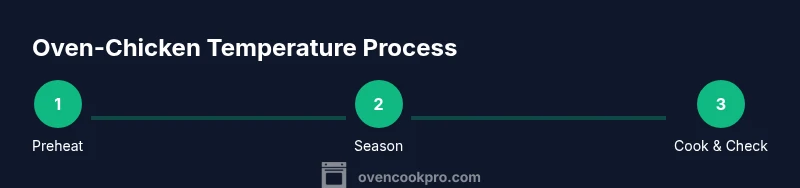
Temperature Cook Chicken in the Oven: A Practical Guide
Learn how to cook chicken in the oven at the right temperature for safe, juicy results. This step-by-step guide covers safe temperatures, preheating, thermometer use, resting, and common mistakes to ensure perfect oven-cooked chicken.


You will learn how to cook chicken in the oven to a safe internal temperature with juiciness intact. Start with a properly preheated oven, select the appropriate temperature for your cut, and use a reliable thermometer to verify doneness. Target an internal temperature of 165°F (74°C) for safe consumption, then rest before serving.
Why Temperature Matters for Oven-Cooked Chicken
Achieving the right temperature is the single most important factor in producing juicy, safe chicken. Ovens distribute heat unevenly, so understanding how temperature affects browning, moisture retention, and pathogen control helps you choose the correct settings for each cut. A consistent oven temperature also reduces overcooking on the outside while the inside remains undercooked. By focusing on target internal temperature rather than time alone, you can forecast results more reliably and adapt for different oven types or batch sizes. According to Oven Cook Pro analysis (2026), a precise approach to temperature minimizes dry edges and ensures safe, succulent meat in typical home ovens.
- Preheating to the right baseline ensures the surface starts browning immediately.
- Uniform heat distribution prevents hot spots that overcook portions.
- Temperature-guided cooking supports both quick weeknight meals and longer roasts.
Safe Internal Temperature: 165°F (74°C) and Why
The universally accepted safe internal temperature for chicken is 165°F (74°C). Reaching this temperature destroys harmful bacteria and ensures the meat is safe to eat. Although the value seems straightforward, the way you measure it matters as much as the number itself. Place the thermometer in the thickest part of the meat, avoiding bone, fat, or the pan edge, and insert it deep enough to measure core temperature. Resting briefly after removal allows carryover heat to finish cooking and helps juices redistribute, improving moistness. Oven Cook Pro's 2026 analysis reinforces that thermometer-based checks yield consistent results across cuts—breasts, thighs, and whole birds alike.
- Do not rely solely on color or the juices running clear.
- Bone-in portions may heat differently than boneless.
- Always wipe the thermometer between uses to avoid cross-contamination.
Preheating and Oven Setup for Even Cooking
Preheating is essential for predictable cooking. An oven that isn’t fully hot when you start will deliver uneven doneness and longer total cook times. Set your oven to the appropriate temperature before you begin prep, then let it come to temperature for a full cycle. Use a baking rack over a sheet pan for air circulation, especially with chicken skin on. If you’re cooking multiple pieces, arrange them in a single layer with space between pieces so air can flow. For a crispy skin or well-browned exterior, finish with a brief high-heat burst or broil—watch closely to prevent burning. Consistency in rack height and placement reduces hot spots.
- Use a convection setting if your oven has one for more even browning, but adjust time if your recipe doesn’t account for it.
- Place the pan in the middle of the oven to maximize heat exposure on all sides.
Choosing the Right Oven Temperature by Cut
Different cuts require different temperatures to balance texture and moisture. Bone-in parts tend to stay juicier at slightly lower temperatures, while boneless breasts benefit from a gentle roast to avoid drying out. A common approach is 375-425°F (190-218°C) for most chicken pieces, with whole chickens often roasted around 375-400°F (190-204°C). For a crisper skin on thighs or drumsticks, you can start lower and finish with a higher heat blast for 5-10 minutes. When in doubt, thin-cut pieces cook faster; larger, bone-in portions need longer. Always verify doneness with a thermometer.
- 165°F (74°C) internal temperature is the target, regardless of cut.
- Adjust times by 5-10 minutes for bone-in vs boneless and for breast vs dark meat.
Techniques to Achieve Juicy, Safe Meat
Juiciness comes from moisture retention and proper resting. Start with pat-dry chicken to promote crisp skin and even browning. Lightly oil or butter the surface, then season generously for flavor that penetrates during cooking. Elevate the meat on a rack so air circulates around it, producing uniform heat exposure. For extra juiciness, consider a dry brine: salt seasoned on the skin and flesh, left uncovered for 20-60 minutes before cooking. A quick marinade can add flavor without drying out. If you’re cooking a whole bird, stuff it with aromatics and avoid overcrowding the cavity. These steps help improve texture while maintaining a safe internal temperature.
- Use skin-on cuts when you want crispier exterior.
- A dry brine helps retain moisture without added sugar or water from marinades.
Using a Meat Thermometer: How to Read and Verify
A reliable instant-read thermometer is essential. Insert the probe into the thickest part of the meat, staying away from bones. For a whole chicken, insert into the breast meat or thigh to confirm all parts are near 165°F. Some thermometers offer dual probes or a continuous readout; use BFS (back-of-pan) methods to avoid heat interference. If your thermometer reads near 165°F in one area but much lower elsewhere, continue cooking and test again after a few minutes. Keep the thermometer clean to prevent cross-contamination.
- Calibrate if your thermometer reads inconsistently.
- Don’t rely on a single reading from a small area.
- Consider a probe that stays in the meat during roasting for continuous feedback.
Resting and Carryover Temperature
Resting after removal is critical for moisture redistribution and carriesover cooking. Plan for a 5-15 minute rest for smaller pieces and 15-20 minutes for whole birds. During this time, the internal temperature can rise by 5-10°F, so plan to pull the meat just shy of 165°F to finish cooking during rest. Loosely tenting with foil prevents heat loss while keeping the surface from steaming and softening. Resting also makes carving easier and helps maintain juiciness in each portion.
- Do not cut immediately; rest before slicing.
- Resting time depends on cut size and total mass of the roasted chicken.
- A slice test isn’t a reliable indicator of safety; use a thermometer.
Common Mistakes and How to Fix Them
Common mistakes include starting with a cold oven, crowding the pan, and skipping resting. Starting with a cold oven delays browning and can lead to uneven doneness. Crowding prevents air circulation, leading to soggy skin and uneven cooking. Skipping resting results in juices spurting when sliced, which can dry the meat. If you’ve overcooked, you can try slicing thicker portions and serving with a light pan sauce to restore moisture. Always verify doneness with a thermometer rather than relying on color alone.
- Don’t open the door repeatedly during cooking; it drops oven temperature.
- Use a rack and single layer for best air circulation.
- If you overcook, rest better and consider brine next time.
Oven Safety and Cleanup Tips
Always practice standard kitchen safety with hot pans, open oven doors, and sharp knives. Use heat-resistant gloves, set a timer, and keep a clean workspace to avoid accidents. After cooking, let the oven cool before cleaning. Remove excess fat from the pan to prevent smoking during subsequent uses. Wipe and sanitize surfaces to minimize cross-contamination, especially when handling raw poultry. Regularly inspect seals and racks for wear and tear, as a damaged oven can affect temperature accuracy.
- Keep a dedicated meat thermometer and brush for poultry cleanup.
- Don’t use harsh cleaners that leave residue on oven surfaces.
- Clean as you go to prevent grease buildup and odors.
Quick-Reference Temperature Cheat Sheet
- Chicken breast (boneless): 165°F (74°C) after rest; 375-400°F (190-204°C) roasting
- Bone-in thighs/drumsticks: 165°F (74°C) as final target; 375-425°F (190-218°C) roasting
- Whole chicken: 375-400°F (190-204°C); check at the thickest part of the breast and thigh
- Resting: 5-20 minutes depending on size, allows carryover to finish
Remember: Always verify with a thermometer and adjust for your oven’s quirks.
Quick-Reference: How to Start Every Oven Chicken Cook
- Preheat to the target temperature before preparing the chicken.
- Pat dry, season, and place on a rack over a pan.
- Insert thermometer into the thickest part; aim for 165°F (74°C).
- Rest before carving and serving to maximize juiciness.
Tools & Materials
- Oven(Preheat to target temperature)
- Digital instant-read thermometer(Probe into thickest part, away from bone)
- Roasting pan with rack(Elevates meat for even heat)
- Meat thermometer with probe (optional)(For continuous monitoring)
- Measuring spoons and scale(For precise seasoning)
- Paper towels(Pat dry before seasoning)
- Aluminum foil or tent(Lightly tent during rest if needed)
- Oven mitts(For handling hot pans)
- Cutting board and knife(Carving after resting)
- Seasonings (salt, pepper, herbs)(Flavor base and optional rubs)
- Kitchen timer(Track cooking and resting times)
Steps
Estimated time: 45-75 minutes
- 1
Preheat the oven and prepare chicken
Set the oven to the target temperature and let it reach heat. While it preheats, pat the chicken dry with paper towels and remove any giblets. Dry skin helps achieve browning and crispness.
Tip: Dry surface thoroughly and season generously to enhance flavor and texture. - 2
Season and optionally brine
Season the chicken with salt and spices. A brief dry brine (salt only) can improve juiciness by drawing out moisture and then reabsorbing it during rest.
Tip: If time allows, brine for 20-60 minutes before roasting for extra moisture retention. - 3
Arrange on a rack in a pan
Place the chicken on a rack set over a roasting pan to promote air movement around the meat for even cooking and crisp skin.
Tip: Ensure pieces aren’t touching to prevent steaming and soggy skin. - 4
Insert thermometer early
If using an instant-read thermometer, start checking near the expected finish time, inserting into the thickest part without bone.
Tip: Avoid stainless steel probes that touch bone for accurate readings. - 5
Roast to the target temperature
Roast until the internal temperature reaches 165°F (74°C) in the thickest portion. Times vary by cut, but thermometer checks are reliable.
Tip: If using convection, monitor closely—you may need slightly shorter times. - 6
Rest and carve
Let the chicken rest for 5-20 minutes depending on size to allow juices to redistribute. Carve after resting for cleaner slices.
Tip: Tent lightly with foil if needed to keep warm without steaming the skin. - 7
Serve or store leftovers
Slice and serve immediately or refrigerate within two hours. Use cold chicken within 3-4 days or freeze for longer storage.
Tip: Label with date to track freshness and safety.
Questions & Answers
What is the safe internal temperature for chicken in the oven?
The safe internal temperature for chicken is 165°F (74°C) when measured with a thermometer in the thickest part. Resting helps carryover cooking finish the job.
You should cook chicken to 165 degrees Fahrenheit and rest it before serving.
Can I cook chicken at a lower temperature for longer?
Low-and-slow cooking can yield very tender meat but increases the risk of uneven doneness if the oven isn’t consistent. Use a safe temperature and rely on a thermometer to confirm doneness.
Yes, you can cook at a lower temperature, but you must monitor with a thermometer to ensure it reaches 165°F safely.
Should I brine or marinate chicken before oven cooking?
A quick dry brine helps retain moisture and enhances flavor without adding extra liquid. Marinades can add flavor but may rely on sugars that promote quicker browning; adjust times accordingly.
A dry brine helps keep moisture, while marinades add flavor—just watch for browning or sugar burn.
Is it better to cook chicken breast or thighs at a higher temperature?
Breast benefits from moderate temperatures to avoid drying out, while thighs tolerate higher heat for richer flavor. Always verify with a thermometer for safety.
Breasts stay juicier at moderate heat; thighs tolerate higher heat—check with a thermometer.
Can I cook frozen chicken in the oven?
Cooking from frozen is possible but takes longer and requires a thermometer to ensure safe internal temperature is reached. Prefer thawing for even cooking when possible.
Yes, you can cook from frozen, but it takes longer and you must verify doneness with a thermometer.
How important is resting after oven cooking?
Resting is crucial for juiciness; carryover cooking continues after removal. Plan rest time based on size to maximize texture and flavor.
Resting lets the juices redistribute and finish cooking; don’t rush to slice.
Watch Video
Main Points
- Preheat fully before roasting for even results.
- Use a thermometer to verify 165°F for safety.
- Rest meat to finish cooking and retain juices.
- Rack elevation improves browning and texture.
- Choose temperature based on cut to balance moisture and doneness.