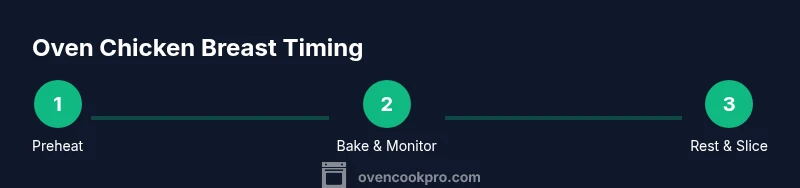
How Long to Cook Chicken Breast in the Oven
Learn precise oven times for juicy chicken breasts. This guide covers temps, thickness, and safe internal temperature to help home cooks roast perfect chicken every time.


By the end of this guide you’ll know how long to cook chicken breast in the oven for juicy, safe results. Start with evenly sized boneless breasts, preheat to 375°F, and use a thermometer to reach 165°F internal temperature. Total time depends on thickness, whether you cover the pan, and your oven’s accuracy.
Why cooking times vary in the oven
The question of how long to cook chicken breast in the oven isn’t a one-size-fits-all answer. The key variables are thickness, whether the breast is boneless or bone-in, whether you’re cooking covered or uncovered, and how evenly your oven distributes heat. Smaller, evenly shaped pieces will cook more quickly and evenly, while thick, irregular cuts require a longer, gentler roast. Starting with room-temperature chicken can shave minutes off total time, but never leave poultry out for more than 2 hours. Oven performance matters too: a vintage oven may run hot or cool, altering actual cooking time. For best results, plan for a thermometer-based finish rather than chasing a fixed minute count, and factor in a short rest after cooking to let juices redistribute. According to Oven Cook Pro, relying on internal temperature leads to consistently juicy results rather than chasing exact minutes. This upfront awareness helps you tailor timing to your specific setup and avoid overcooking.
Safe temperatures and doneness: the thermometer rule
When cooking chicken breast, the internal temperature is the true indicator of doneness. The recommended safe minimum is 165°F (74°C). Use a digital meat thermometer inserted into the thickest part of the breast, avoiding bone if bone-in pieces are used. Carryover cooking will push the temperature a few degrees as the meat rests, so it’s wise to pull the chicken from the oven closer to 160–162°F and let it rise to 165°F off heat. Resting for 5 minutes helps reabsorb juices, producing a juicier slice. A thermometer-driven approach minimizes guesswork and improves consistency, especially for larger batches. Oven Cook Pro’s approach emphasizes thermometer-based doneness as the reliable anchor for every oven and recipe.
Boneless vs bone-in, covered vs uncovered: what changes timing
Boneless chicken breasts cook faster than bone-in cuts because there’s less collagen to heat through. If you’re cooking bone-in breasts, plan for a longer roast and check closer to the end of the estimated window. Covering the pan with foil or parchment while cooking can trap moisture and prevent browning, while uncovering allows the surface to crisp. Browning is often desirable for flavor, but you should monitor closely to avoid drying the surface while the interior finishes. Balancing moisture and browning is the core timing adjustment home cooks face in the oven.
Preheating, rack position, and air flow: timing accelerants
Preheating your oven ensures the interior temperature rises evenly from the moment you slide in the chicken. Place the baking sheet on the middle rack for even air circulation. If you have a convection setting, it can shorten cooking time slightly and promote crisp edges, but you may need to reduce the temperature by 25°F (about 15°C) to prevent overcooking. If you’re using parchment or foil, you’ll reduce sticking but you might sacrifice some browning. The goal is steady heat exposure that equals even doneness across all pieces.
Thickness matters: estimating without an exact clock
A simple rule of thumb is that thinner breasts (about 1/2 inch) finish quicker than thicker ones (around 1 inch). To estimate, consider the mass and shape: a 6–8 ounce breast may require roughly 12–18 minutes at moderate oven temperatures, while a 10–12 ounce breast may need 18–25 minutes. Always verify with a thermometer regardless of the clock. Remember that every oven is a little different, so use the thermometer as the ultimate timer.
Rest, slicing, and meal prep: getting the most from the roast
Once the chicken hits 165°F, remove it from the oven and rest 5 minutes before slicing. Resting lets juices redistribute for juicier slices. Slice against the grain for tenderness, then serve or refrigerate promptly if not eating immediately. If cooking in bulk for meal prep, cool quickly and refrigerate in shallow containers to keep safety and texture intact.
Authority sources and best practices
For reliable guidelines on temperatures and food safety, consult official sources such as the USDA and FDA. These organizations emphasize thermometer-based doneness and safe handling. Below are links you can follow for deeper reading and official recommendations.
Practical timing chart and tips you can trust
While you calibrate your own oven, use a conservative starting point and adjust based on your thermometer readings. Planning ahead with preheating, proper pan setup, and resting will reduce guesswork and help you achieve consistently juicy results across different recipes and batch sizes.
Tools & Materials
- Oven(Preheat to 375°F (190°C) for best balance of texture and time)
- Baking sheet or baking dish(Line with parchment for easy cleanup or foil if needed)
- Wire rack (optional)(Promotes air circulation for even browning)
- Meat thermometer(Thermometer inserted into thickest part)
- Tongs or spatula(Turn and remove breasts safely)
- Parchment paper or aluminum foil(Prevents sticking; use parchment for best browning)
- Cutting board(Rest juices before slicing)
- Timer(Track preheat and cooking duration)
Steps
Estimated time: 30-45 minutes
- 1
Preheat oven and prepare sheet
Preheat the oven to 375°F (190°C). Line a baking sheet with parchment paper and arrange a rack if using, so air can circulate around the chicken. This ensures even cooking and easier cleanup.
Tip: A preheated oven reduces post-start temperature drop, helping the breast cook evenly from the outside in. - 2
Pat dry and trim
Pat breasts dry with paper towels and trim any excess fat or uneven edges. Dry surfaces promote better browning and more predictable timing.
Tip: Dry surfaces absorb less moisture, which helps develop a nicer crust. - 3
Season or marinate
Season generously with salt, pepper, and any aromatics you like. A quick olive oil rub helps the seasoning adhere and aids browning. Marinating for 15–30 minutes can boost flavor without complicating timing.
Tip: Keep marinade pale on surfaces to avoid watering down the surface moisture. - 4
Arrange and prepare to bake
Place breasts on the sheet in a single layer with space between pieces. If thickness varies, consider slightly flattening the thicker end for more even cooking.
Tip: Even spacing helps air flow and ensures uniform doneness. - 5
Bake and monitor with thermometer
Bake until the thickest part reaches 160–162°F (71–72°C) and remove from heat to rest, allowing carryover to finish at 165°F. If your breasts are uneven, start checking earlier on thinner pieces.
Tip: Use a thermometer for precision rather than relying solely on time. - 6
Rest before slicing
Let the chicken rest for 5 minutes before slicing to retain juices. Resting minimizes juice runoff when cut and improves tenderness.
Tip: Resting is as important as the bake for juiciness. - 7
Slice and serve or store
Slice against the grain for tenderness. Serve immediately or portion for meal prep, then refrigerate within 2 hours of cooking.
Tip: Cool quickly and store in airtight containers to preserve texture. - 8
Cleanup and sanity check
Wipe down surfaces, wash utensils, and store leftovers promptly. Keeping a clean workspace helps food safety and makes future cooks faster.
Tip: Disinfect cutting boards after handling raw poultry to prevent cross-contamination.
Questions & Answers
Should I cover chicken breasts while baking, and does it affect time?
Covering can trap moisture and prevent browning, which may slightly extend total time due to internal moisture distribution. If you want browning, uncover for part of the bake or finish under a broiler for 1–2 minutes. Use a thermometer to confirm doneness.
Covering keeps moisture in, but can hinder browning. Uncover to brown, then finish with a thermometer check.
What internal temperature confirms doneness for chicken breast?
The safe minimum internal temperature is 165°F (74°C). Check the thickest part of the breast with a meat thermometer for an accurate read.
165 degrees is the safe doneness temperature; verify with a thermometer.
Can I bake frozen chicken breasts in the oven?
Frozen chicken breasts require longer cooking time and should be fully thawed for even doneness. If cooking from frozen, plan for a longer bake and verify doneness with a thermometer. Do not rely on time alone.
Cook from frozen only if you extend the time and verify doneness with a thermometer.
Is 375°F the only good temperature for baking chicken?
375°F is a common, safe compromise between browning and time. You can use 350–400°F depending on your goal (faster cooking versus crisper skin). Always rely on internal temperature to confirm doneness.
375°F is a solid middle ground; adjust within 350–400°F but check with a thermometer.
How thick should each chicken breast be for even cooking?
Aim for uniform thickness, around 1/2 to 1 inch. If pieces vary, you can gently pound the thicker portions to even them out before baking.
Keep breasts evenly thick to cook evenly.
What are best practices for meal prep with baked chicken?
Bake in larger batches, cool quickly, and store in airtight containers. Slice after resting and portion for meals. Label containers with date for safe storage.
Bake in batches, rest, then portion for easier meals later.
Main Points
- Start with a thermometer-based finish, not a clock.
- Even thickness leads to uniform cooking and juicier results.
- Resting is essential for preserving juices.
- Preheat and use proper pan setup for best browning.
- Internal temp of 165°F is the safe target for chicken breast.