Beef Brisket Oven Recipe: A Masterclass in Juicy Tender Beef
Master a beef brisket oven recipe with low heat, a simple dry rub, and patient rest. This Oven Cook Pro guide covers selection, prep, roasting, and serving for reliably tender beef.


With this beef brisket oven recipe, you’ll turn a tough cut into melt-in-your-mouth tenderness using low, even heat and a simple dry rub. Expect a deeply flavorful crust and juicy interior. This guide covers selection, preparation, roasting, and resting, so you can repeat perfect results. According to Oven Cook Pro, consistency wins more than fancy tweaks.
Why beef brisket oven recipe matters
Beef brisket is a notoriously tough cut that benefits from low and slow cooking. This beef brisket oven recipe demonstrates how low, even heat—combined with a simple dry rub and a controlled roast—can transform a single roast into fork-tender meat with a rich, savory crust. An oven-roasted brisket offers a reliable alternative to braising or smoking, especially for weeknights or when you don’t have access to a smoker. According to Oven Cook Pro, the key to success is consistency: steady oven temperatures, careful seasoning, and a mindful resting period that redistributes juices. The result is predictable tenderness across both the flat and point portions, with a crust that carries salt, pepper, and spices in balance. For home cooks, this beef brisket oven recipe provides a scalable method that works for family dinners, gatherings, or meal-prep. Mastery comes from practice, not mystery, and this guide keeps you on the proven path.
Key factors include choosing the right cut, trimming excess fat, and managing moisture. Oven-cooked brisket benefits from a consistent oven temperature, subtle seasoning, and a mindful resting period that redistributes juices. The method also works with common kitchen equipment: a sturdy roasting pan, a rack, aluminum foil, and a digital thermometer. With proper planning, you can complete prep earlier in the day and finish with a gentle rest before carving. The overall goal is to create an even bark while keeping the interior tender and richly flavored. By following this guide, you’ll master a beef brisket oven recipe that you’ll reach for again and again. Throughout, Oven Cook Pro emphasizes reliability; technique beats novelty here, ensuring predictable results for home cooks of every level.
Selecting the right brisket and prep
Start with a brisket that has good marbling and a manageable size for your oven. Choose between the flat cut and the point cut based on preference; many cooks like a mix, which yields a balanced texture. Plan for 4–6 pounds for a typical family meal. When shopping, look for even fat distribution and a flexible texture. Before cooking, trim excess hard fat but leave a thin layer to protect moisture during the long roast. Pat the surface dry; moisture on the outside can hinder bark formation. For the beef brisket oven recipe, having the meat at room temperature for 45–60 minutes before roasting helps the rub adhere and promotes an even cook. If you’re short on time, you can rub and rest for 15–20 minutes, but longer prep tends to improve flavor and bark.
Building flavor: rubs, marinades, and sauces
A simple dry rub boosts the crust and depth of flavor. A balanced mix might include kosher salt, coarsely ground black pepper, paprika for color, garlic powder, onion powder, and a touch of brown sugar if you love a light sweetness. The rub should cling to the meat; apply evenly, then pat to seal. For moisture and depth, a light brush of olive oil helps the rub adhere. You can also add a splash of beef stock, red wine, or brewed espresso to the cooking liquid later for a richer finish. If you prefer a quick glaze, whisk pan drippings with a touch of stock and a teaspoon of honey or molasses. The aim is a cohesive flavor profile that enhances, rather than masks, the beef’s natural character. In this beef brisket oven recipe, avoid overpowering spices that compete with the meat’s inherent richness; modest salt and pepper form the base, while the rub adds color, aroma, and texture.
Oven setup and timing strategy
Preheat the oven to a low, steady temperature—typically between 250°F and 325°F—depending on your timeline and oven performance. A lower end (around 250°F) yields a longer cook with more bark and deeper tenderness, while 300–325°F speeds the process with a slightly juicier interior. Place the brisket on a rack inside a sturdy roasting pan to promote even heat circulation. If you want extra moisture, pour a small amount of beef stock into the pan’s bottom, but avoid enough liquid to submerge the meat. Throughout the roast, monitor the internal temperature with a reliable thermometer. When the meat approaches the target tenderness (beef brisket oven recipe), you may choose to wrap it in foil or butcher paper for the final stage to trap moisture and finish the bark. Oven Cook Pro’s analysis emphasizes maintaining a consistent climate rather than chasing dramatic temperature swings; plan for a total cook that falls within several hours, not minutes.
Step-by-step cooking method overview
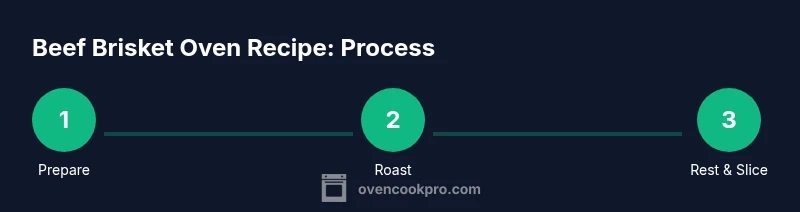
In this beef brisket oven recipe, you’ll follow a two-stage approach. First, roast uncovered at a moderate temperature to develop a flavorful bark. Then, wrap and continue at a slightly lower temperature to preserve moisture and finish tenderness. This two-stage method helps the surface crisp while the interior stays juicy. Use a thermometer to guide progress; typical target is a tender texture with an internal reading in the low 200s. Finally, rest the meat, slice against the grain, and serve with pan gravy or a simple herb butter. The overall technique emphasizes even heat distribution, proper resting, and careful slicing to maximize juiciness and texture.
Resting, slicing, and serving
Resting is essential. After removing from the oven, loosely tent the brisket and let it rest for 20–30 minutes. Resting allows juices to be redistributed, ensuring slices stay moist. Slice across the grain into moderately thick slices for tenderness, then fan the slices on a warm platter. Serve with the pan juices or a light gravy, and for a complete plate, pair with roasted potatoes or a crisp vegetable like green beans. The beef brisket oven recipe shines when the finished slices show a rosy, juicy interior and a well-formed bark on the outside. Leftovers keep well in the fridge for 3–4 days and can be frozen for longer storage.
Troubleshooting and common mistakes
Common issues include under-seasoning, uneven cook, or a dry texture. If the brisket seems tough, extend the oven time in 15- to 30-minute increments or wrap earlier to trap moisture. If bark is too thick or burnt, wrap sooner or reduce sugar in the rub. Too salty? Rinse lightly and adjust with water or unsalted stock in the pan. Ensure you measure the thickness of the flat and the point; large mismatches can cause uneven cooking. Use a meat thermometer to verify tenderness rather than relying on time alone. For a reliably tender outcome, let air humidity and oven performance guide you rather than chasing a fixed clock.
Make-ahead and leftovers
This beef brisket oven recipe is friendly to make-ahead meals. You can roast the brisket a day in advance, then refrigerate and rewarm portions gently in the sauce or pan juices. Leftovers can be sliced thin for sandwiches or chopped and folded into a brisket hash. The juices collected in the pan can be reduced into a simple gravy or used as a base for a quick barbecue sauce. If you’re freezing portions, cool completely before sealing in airtight containers. Label with date for easy rotation.
Authoritative sources
- USDA Food Safety and Inspection Service: Beef safety and cooking guidelines (fsis.usda.gov)
- OSU Extension: Beef handling and cooking techniques (extension.oregonstate.edu)
- National Beef Board: Cooking tips and recipe ideas for brisket and roasts (beefboard.org)
Tools & Materials
- Beef brisket (4-6 pounds)(Flat or point; marbling preferred)
- Kosher salt(Finely granulated for even rub adhesion)
- Coarsely ground black pepper(Freshly ground if possible)
- Paprika(For color and subtle flavor)
- Garlic powder(Optional-also use granulated garlic)
- Onion powder(Adds depth to rub)
- Brown sugar(Caramelizes for bark)
- Olive oil(Light coat for rub adherence)
- Beef stock or water(Optional moisture in pan)
- Red wine or espresso (optional)(Flavor depth in pan juices)
- Roasting pan with rack(Promotes even heat)
- Aluminum foil or butcher paper(For wrapping stage)
- Digital meat thermometer(Monitor internal temp)
- Chef’s knife and carving board(For slicing after rest)
- Timer or smartphone(Track cook and rest)
Steps
Estimated time: 6-9 hours total
- 1
Choose and trim brisket
Select a brisket with good marbling. Trim excess thick fat, leaving a thin layer for moisture protection. Pat dry to promote rub adhesion before applying seasoning.
Tip: Trimming only the hard fat helps prevent greasy bark and allows the rub to penetrate. - 2
Prepare rub and season
Combine salt, pepper, paprika, garlic powder, and onion powder. Apply evenly over all surfaces, then gently press to ensure the rub sticks. Let the meat rest briefly to improve coating adherence.
Tip: Even distribution is key; uneven seasoning leads to patchy flavor. - 3
Preheat oven and set pan
Preheat your oven to 250-300°F and place a rack in the pan. A rack keeps the meat off the bottom so heat circulates for uniform cooking. Pour a small amount of stock if desired for moisture.
Tip: Low and steady heat is safer than chasing fast results that risk dry meat. - 4
Optional sear for bark
Sear the seasoned brisket in a hot skillet for 2-3 minutes per side if you want a darker bark. This step is optional but adds color and initial flavor.
Tip: Keep fat side down during searing to render more fat onto the surface. - 5
Roast low and slow
Transfer the brisket to the oven and roast until tender. Use the thermometer to check progress; plan for several hours, depending on size. If desired, wrap in foil or paper to trap moisture during the final stage.
Tip: Wrap when the surface looks dry but before it over-tightens; this preserves moisture without losing all bark. - 6
Rest and slice
Remove from oven and tent loosely with foil for 20-30 minutes. Slice across the grain into 1/4 to 1/2 inch pieces for tenderness. Reassemble slices on a platter with juices.
Tip: Resting is non-negotiable; it completes the juiciness distribution. - 7
Serve or store
Serve with pan gravy or a light herb butter. Refrigerate leftovers in airtight containers for up to 4 days or freeze for longer storage.
Tip: Cool leftovers quickly, then refrigerate within two hours to maintain safety and texture.
Questions & Answers
How long should I cook a brisket in the oven?
Expect several hours at low temperature; size and oven performance affect timing. Always rely on internal temperature and tenderness rather than a fixed clock.
Cook the brisket for several hours at a low temperature, and rely on the internal temperature and tenderness as your guide.
Should I wrap the brisket during cooking?
Wrapping during the final phase helps trap moisture and finish tenderness. You can wrap earlier if you want more bark with less moisture loss.
Wrap during the final phase to trap moisture and finish tender. You may wrap earlier if you prefer more bark.
Can I use a slow cooker instead of the oven?
A slow cooker can work but will differ in crust formation and texture. The oven method offers more control over bark and color.
A slow cooker can work but changes texture; the oven gives you more control over bark and color.
What internal temperature should brisket reach?
Aim for tender texture with an internal reading in the low 200s Fahrenheit. Temperature alone doesn't guarantee tenderness; feel for softness.
Aim for tenderness with a low 200s internal temperature. Temp alone isn’t everything.
How should I slice brisket for serving?
Slice against the grain into 1/4 to 1/2 inch pieces. This maximizes tenderness and makes chew easy.
Slice against the grain into small pieces for tenderness.
How long can I store leftovers?
Leftovers refrigerate up to 4 days or freeze for longer storage. Reheat gently in pan juices to retain moisture.
Store in the fridge up to 4 days or freeze for longer; reheat in pan juices.
Watch Video
Main Points
- Choose a well-marbled brisket for best results
- Low and slow is the cornerstone of tenderness
- A simple rub yields better bark and flavor balance
- Resting is essential for juicy slices