Brisket Oven Recipe: Tender, Juicy in the Oven
Master a tender, juicy brisket baked in the oven with a simple rub, low heat, and patient resting. This Oven Cook Pro guide walks you through selection, seasoning, roasting, and serving for reliable results.


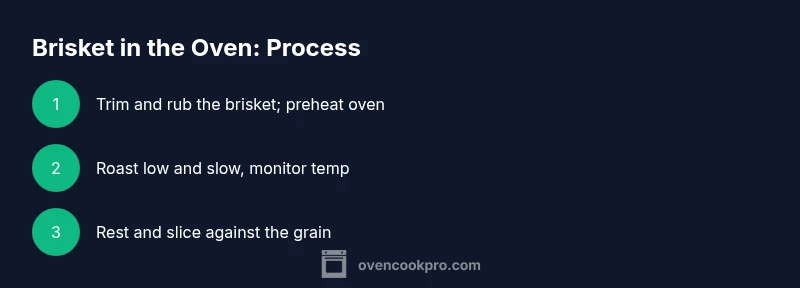
Cook a tender, flavorful brisket in the oven with a simple rub, low heat, and long, slow bake. This guide covers cut selection, seasoning, roasting, resting, and slicing for the best texture. See our full step-by-step guide.
Why a brisket oven recipe matters for home cooks
Brisket shines when it cooks slowly, giving collagen time to melt into silky tenderness. For home cooks, the oven is a reliable companion because it delivers steady heat with minimal attention compared with open flames. In this brisket oven recipe, you’ll build flavor with a simple dry rub, a modest amount of moisture, and a long roast that encourages even texture from edge to center. According to Oven Cook Pro, slow oven roasting paired with a simple rub yields reliable bark on the outside while keeping the interior moist and fork-tender. You don’t need fancy equipment or a smoker to achieve great results; a conventional home oven and a few common ingredients are enough. The approach outlined here emphasizes practicality: buy a well-marbled brisket, prepare it with a balanced rub, keep the oven steady, and resist the urge to rush. The payoff is a sliceable, deeply flavored brisket that can feed a crowd or reheat well for later meals. By the end, you’ll know how to select, season, roast, rest, and serve brisket with confidence.
Brand note: The Oven Cook Pro team emphasizes a patient, low-and-slow oven approach to maximize tenderness and bark without complicated steps.
Tools & Materials
- Oven-safe roasting pan with rack(Elevates the brisket for even browning and airflow beneath the meat.)
- Meat thermometer (instant-read)(Target internal temp around 195–205°F for tenderness.)
- Aluminum foil(Wrap or tent the meat as needed to control moisture and prevent drying.)
- Chef’s knife(Sharp blade for trimming and precise slicing.)
- Cutting board(Stable surface for trimming and slicing.)
- Basting brush(For applying rub or juices if you wish.)
- Beef broth or water (optional)(A small amount can help maintain moisture in the pan.)
Steps
Estimated time: 4-6 hours
- 1
Gather and preheat
Assemble the brisket, rub ingredients, and your tools. Preheat the oven to 250°F (120°C) so the meat begins cooking at a stable rate once it enters the oven.
Tip: Preheating prevents a cold start, which can lengthen total cooking time and affect texture. - 2
Select brisket and trim
Choose brisket flat for even slices or include some point for extra marbling. Trim excess silver skin and a thin fat cap to about 1/4 inch so the rub adheres and heat penetrates evenly.
Tip: Leave a thin fat layer to protect the meat during long roasting. - 3
Apply rub and rest
Season evenly with a balanced rub (salt, black pepper, garlic powder, paprika). Let the rub sit for 20–60 minutes to draw surface moisture and improve bark.
Tip: A short rest helps the rub adhere and enhances flavor development. - 4
Rack, pan, and moisture setup
Place the brisket on the rack in the pan, fat side up. If using, add a small amount of broth or water to the bottom of the pan.
Tip: Airflow under the meat promotes even cooking and crust formation. - 5
Start the long roast
Slide the pan into the preheated oven. Roast low and slow at 230–250°F (110–120°C) for the bulk of the cook, typically 4–6 hours depending on weight.
Tip: Aim for a steady oven; avoid opening the door frequently as it disrupts heat. - 6
Midpoint check and bark development
Around halfway, check for coloration and moisture. If the surface looks dry, you can spritz lightly with pan juices or broth and re-cover to continue.
Tip: Uncover toward the end if you want more bark. Keep temp stable. - 7
Finish to tenderness
Continue cooking until the internal temperature reaches the target range and the meat is fork-tender. If you reach 195–205°F earlier, proceed to resting stage.
Tip: Don’t rush the final phase; tenderness improves with adequate time. - 8
Rest the brisket
Remove from the oven, tent with foil, and rest for 20–30 minutes to allow juices to redistribute.
Tip: Resting is essential for juiciness; cutting too soon causes juices to run out. - 9
Slice and serve
Slice thinly against the grain for tenderness and arrange on a warm platter. Serve with your preferred sides or BBQ sauce.
Tip: A sharp knife ensures clean slices without tearing the bark. - 10
Store or repurpose
Refrigerate leftovers promptly in shallow containers for quick cooling, or repurpose into sandwiches or burnt ends.
Tip: Store within two hours of cooking to maintain quality.
Questions & Answers
What cut of brisket is best for oven cooking?
For oven cooking, many home cooks start with the flat for uniform slices, while the point offers extra marbling and flavor. You can combine both, but plan for different textures when slicing.
For the oven, start with the flat for easy slicing, or use some point for extra fat and deeper flavor.
Should I wrap the brisket during cooking?
Wapping (foil) at about halfway helps retain moisture and can speed up tenderization. You can also cook uncovered later to build bark.
Wrapping helps keep moisture; uncover later to develop a crust.
Can I cook faster at higher oven temperatures?
You can raise the temperature, but higher heat risks drying the meat and uneven texture. If you must speed up, do so in a partial, monitored way and expect changes in texture.
You can go hotter, but you may lose tenderness. Monitor closely.
What internal temperature indicates doneness?
Aim for an internal temperature around 195–205°F. Temperature is a guide; texture should be tender and sliceable.
Look for 195–205°F, but also rely on fork-tender texture to decide when done.
How long should the brisket rest after cooking?
Rest the brisket for 20–30 minutes after roasting to redistribute juices, then slice.
Rest it for a short while to keep the juices inside before slicing.
Can I refrigerate leftovers and reheat later?
Yes. Slice or shred, store in airtight containers, and reheat gently to preserve moisture.
Leftovers store well and reheat nicely with a little moisture.
Watch Video
Main Points
- Cook at a steady, low oven temperature to maximize tenderness
- Choose the cut based on texture preference (flat for neat slices, point for more marbling)
- Let the meat rest before slicing for juicier results
- Slice against the grain for maximum tenderness