When Preheating: How Long Should You Preheat Your Oven?
Learn exactly how long to preheat your oven, what factors affect timing, and how to verify the temperature for perfect results every time. Includes convection vs conventional, safety tips, and recipe-specific guidance.


In this guide you’ll learn how long to preheat an oven for reliable baking, including what affects timing, how to verify the temperature, and practical tips you can apply at home. We’ll cover typical preheat times, how to adjust for convection vs conventional ovens, and essential safety considerations. According to Oven Cook Pro, timing varies by oven age and temperature, so verify with a thermometer.
How Preheating Sets the Stage for Perfect Baking
Preheating is more than simply turning the oven to a target number. It allows the oven to come to a stable, uniform temperature so baked goods start cooking immediately and evenly. When you preheat, you reduce temperature fluctuations that can cause uneven browning or undercooked centers. The preheat phase also helps the baking surface, racks, and air to settle into a predictable environment. According to Oven Cook Pro, the benefits of a proper preheat include consistent heat delivery and better recipe results. For home cooks, the question 'when preheat oven how long' often boils down to the target temperature, oven age, and whether you are using convection. In practice, plan for a short wait and then introduce your batter or roast with confidence. Skipping or rushing this phase is a common source of inconsistent results, especially for delicate pastries or thin cookies.
How Long Should You Preheat? Typical Timelines
A lot of the confusion around 'when preheat oven how long' comes from the range of oven designs and recipe expectations. In general, most home ovens reach the target baking temperature within about 10 to 15 minutes when starting from room temperature, but this can vary. Newer models with solid insulation may heat more quickly, while older units can lag, especially if the thermostat hasn’t been calibrated in a while. If you’re preheating for high-heat baking (like 425°F or higher), you might see preheat phases around 12 to 20 minutes. Always listen for the oven ding or watch the display, but remember that the timer is an estimate. The main objective is to reach a stable internal temperature before you place food inside, not to chase an exact moment. Oven Cook Pro recommends verifying with a thermometer for precise results.
Factors That Influence Preheat Time
Several variables influence how long your oven needs before it’s ready to bake. First, oven age and calibration matter: a miscalibrated thermostat can report the wrong temperature, prolonging the preheat or leading you to under- or overheat. The rack position and interior loading affect air flow; crowded cavities take longer to stabilize. The ambient kitchen temperature, outside doors or windows, and even the time of day can influence heat-up time. Convection ovens generally preheat faster because a fan circulates hot air, reducing the time to reach the target temperature. If you own a smart oven, you might see adaptive preheating, which adjusts times based on usage patterns. Finally, the condition of the oven’s seals, gaskets, and door latch can subtly alter heat retention. To minimize surprises, perform a quick calibration if you suspect accuracy issues and use an oven thermometer as a baseline check.
Verifying Temperature Without a Thermometer
While a probe thermometer is ideal for accuracy, you can still gauge readiness without one, though it requires careful observation. Start by preheating to the recipe temperature and watching the oven’s heat indicators (light switch off, timer engaged, or display steady). Listen for the burner hum or click, and check that the interior has uniform warmth when you place a bare piece of bread or a pan inside for a minute. However, this is less reliable than using an oven-safe thermometer; if you bake often, invest in a dial or digital oven thermometer for consistent results. Keep in mind that many ovens commonly over- or under-shoot the set temperature by a few degrees, so thermometer verification is a small investment for big quality gains.
Preheating for Different Temperatures
Different recipes require different starting temps, and preheat duration tends to scale with the target temperature. At typical home bake temps around 350°F to 375°F, expect 10 to 15 minutes of preheat. For higher-temperature baking, such as 400°F to 425°F, you may need 15 to 20 minutes or slightly longer if the oven is older. If you’re using convection, you’ll often need a shorter preheat window; convection can move heat more rapidly to the center of the cavity, improving heat transfer. Always verify with a thermometer when possible, especially if you’re moving between temperatures quickly or using multiple pans. The key is stability: once the oven is at the right temperature, close the door gently and place the food inside to minimize temperature drops.
Common Preheat Mistakes and How to Fix Them
Several mistakes can undermine preheating success. Opening the door repeatedly during preheat wastes energy and disrupts temperature stabilization. Relying solely on the oven’s display can be misleading if the thermostat is off; even when the display reads “ready,” actual air temperature may differ. Placing oversized or thick baking sheets into a cold oven can affect heat distribution and slow preheating; start with a single pan or a light sheet to monitor. Another pitfall is preheating for a long period with nothing inside—this wastes energy and can degrade insulation over time. If you suspect accuracy issues, perform a quick calibration test (e.g., by baking a pizza or cookies and noting outcomes) and adjust your expectations accordingly.
Using Convection vs Conventional Ovens
Convection ovens change the dynamics of preheating. The fan circulates hot air, removing hot spots and enabling faster heat equalization. When you switch from conventional to convection, you typically need to lower the baking temperature by about 25°F and may reduce preheat time slightly. Some recipes specify convection mode explicitly, while others assume conventional heating; if you aren’t sure, start with the recipe’s temperature, test with a thermometer, and adjust on the next attempt. If your oven can switch between modes, preheat in the most appropriate setting for your dish. Remember that convection can intensify browning, so keep an eye on edges and adjust time or temperature if needed.
Safety and Setup Before You Preheat
Safety begins long before the oven reaches temperature. Clear any combustibles from around the oven area, and remove items from racks that could wobble or collapse under heat. Ensure the oven door seals properly and avoid touching hot surfaces. If your oven has a child safety lock or special settings, review the manual before use. Do not place aluminum foil under broiler or on the racks in ways that block airflow, as this can distort heat distribution or create hot spots. Finally, ensure the kitchen is well ventilated to prevent smoking during preheat, especially if the oven is older or not ventilated well.
Tools That Help You Nail Preheating
A few reliable tools can make preheating straightforward and repeatable. An oven thermometer is the best investment for accuracy; place it in the center of the middle rack to monitor true temperature. A reliable timer or smartphone app helps you track the preheat duration without distraction. If you bake often, a small infrared thermometer can help verify surface heat on the baking pan, though not strictly necessary. Consider keeping an oven-safe pan in the oven during preheat to help heat distribution for specific recipes. A light-weight cooling rack can be used to balance pans and allow air movement, preventing hotspots.
Quick Troubleshooting: When Your Oven Won't Preheat
If your oven won’t preheat, start with the basics. Check that it’s plugged in and the circuit breaker hasn’t tripped. Confirm the bake mode is selected and the temperature dial is functioning. If the oven displays an error, consult the manual or contact a technician. A faulty thermostat or igniter can cause failures to reach temperature; avoid attempting dangerous DIY repairs. If power and controls seem fine, calibrate the oven using a known-temperature reference or seek professional calibration. Until the issue is resolved, avoid using the oven for high-temperature tasks and use a toaster oven or another heating method as an alternative.
Preheating for Special Recipes: Cookies, Roasts, Pastries
Cookies benefit from a predictable, moderate preheat so fats melt evenly and edges crisp without burning. Preheat to a commonly used cookie temperature (around 350°F) and allow the dough to rest on a room-temperature surface before sliding into the oven. Roasts usually require a hotter start; preheating to 375–425°F helps develop a good crust and interior browning; keep the door closed to maintain even heat. Pastries and puff-paste dishes demand precise, stable temperatures; a longer preheat for delicate doughs provides the foundation for flaky textures. For all these cases, use an oven thermometer, and if you’re short on time, consider adjusting by a few degrees rather than sacrificing whole minutes of preheat.
How to Extend Oven Life While Preheating
Frequent rapid temperature shifts can wear out seals and heating elements. Use the preheat function only as needed for baking, and avoid leaving the oven empty for extended periods. Regularly clean the interior to reduce smoke and odors, and calibrate the thermostat yearly or as needed. If you rely heavily on precise temperatures, invest in a high-quality oven thermometer and verify temperatures at least every few uses. Finally, be mindful of energy use: preheating adds to energy costs and environmental impact, so preheat efficiently by planning, grouping oven tasks, and baking multiple items sequentially when possible.
Tools & Materials
- Oven(Ensure oven is clean and empty before preheating.)
- Timer or clock(Set to measure preheat duration accurately.)
- Oven thermometer (optional)(Place to verify actual temperature.)
Steps
Estimated time: 15-20 minutes
- 1
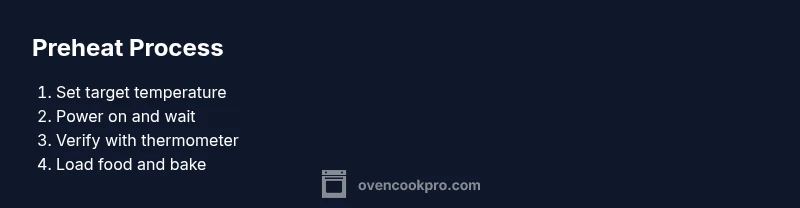
Set target preheat temperature
Turn on the oven and select Bake mode. Set the temperature to the recipe’s requirement, taking into account whether you’ll bake with convection or standard heating. Confirm the display shows the intended target before proceeding.
Tip: If your oven defaults to a slightly different value, note the discrepancy and plan with a thermometer. - 2
Power on and start heating
Allow the oven to begin heating. Do not rush this phase; use the built-in indicator or audible signal to know when preheating is underway. Avoid opening the door during this period as it will introduce temperature fluctuations.
Tip: Keep the door closed and limit any draft from nearby appliances. - 3
Verify target temperature
If you have an oven thermometer, place it in the center of the middle rack. When the thermometer reaches the target temperature, or when the oven indicator states 'ready', proceed to the next step. If you don’t have a thermometer, proceed cautiously once the indicator confirms readiness.
Tip: Center placement gives the best reading for overall oven temperature. - 4
Prepare the baking setup
While the oven ramps, position racks in the middle of the oven and arrange pans so they’re not touching each other. A single, steady rhythm helps maintain heat distribution and ensures a consistent start to bake time.
Tip: Use a single sheet pan to monitor heat if you’re testing a new recipe. - 5
Open the door minimally to load
Open the door only briefly when loading food to minimize heat loss. If you’re using multiple pans, stagger their insertion to preserve even temperature throughout the cavity.
Tip: Know your oven’s door swing to avoid hitting hot surfaces. - 6
Begin baking and monitor early bake
Close the door gently and start timing as soon as you place the food inside. For delicate pastries, cookies, or roasts, give the dish a quick check after the initial few minutes rather than repeatedly peeking.
Tip: Limit door openings to maintain stable heat during the first portion of bake.
Questions & Answers
How long should I preheat for most recipes?
Most recipes assume a preheat of about 10–15 minutes at common bake temps; adjust for your oven and recipe and verify with a thermometer.
Most recipes expect about ten to fifteen minutes of preheating; verify with a thermometer for accuracy.
Does convection change preheating time?
Yes, convection can heat faster; consider lowering the temp or preheat time by about 25% depending on your recipe and oven.
Convection heats faster; you may lower the preheat time or temperature.
Can I preheat with the rack in place?
Yes, you can preheat with the rack in place, but remove anything that could melt and ensure air can circulate freely.
Racks in are fine if safe; keep space for air to move.
Why does my oven take longer to preheat as it ages?
Older ovens may have thermostat drift or worn elements causing slower preheating; consider calibration or repair.
Aging ovens can heat slower; check calibration or get service.
Is it safe to preheat for a few minutes and start cooking later?
Preheating and then delaying cooking is possible for some recipes, but many baked goods require immediate bake for best results.
Preheat as needed; delaying can affect results.
What should I do if my oven won't reach the set temperature?
Check power, circuit, and thermostat; persistent issues require professional service.
Check power and thermostat; call a professional if it persists.
Watch Video
Main Points
- Preheat to stabilize temperature before baking
- Convection can alter preheat time and temperature needs
- Verify with a thermometer for best results
- Avoid frequent door openings during preheat