How Long to Preheat Oven to 400°F: A Practical Guide
Learn how long to preheat oven to 400°F, how to verify accuracy, and practical steps to improve bake quality and safety for reliable results every time.


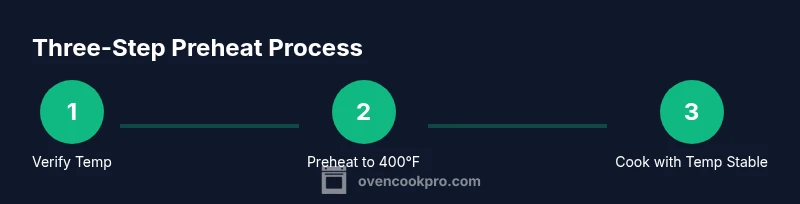
To preheat to 400°F, let the oven reach the target temperature before loading food. Most ovens take several minutes, up to about 15 minutes, depending on model and convection use. Always verify with an oven thermometer, keep the door closed, and account for minor fluctuations. If your oven struggles, calibrate or schedule service.
Understanding Why You Need to Preheat to 400°F
If you’re asking how long oven preheat 400, the short answer is: preheating stabilizes the oven’s temperature so your recipes bake evenly and predictably. A steady 400°F ensures the Maillard reaction starts at the right moment, which improves browning, texture, and color for a wide range of foods—from breads and pastries to roasted vegetables and proteins. Many home ovens have slight variances between the dial setting and the actual temperature inside the cavity, so preheating helps bridge that gap. For best results, treat preheating as a prep step that runs in parallel with ingredient readiness. In addition, consider how rack position, oven type (conventional vs convection), and the use of a baking stone or sheet can affect warm-up dynamics. By understanding these factors, you’ll optimize timing and reduce flavor losses caused by underheating or overcooking.
- Preheating minimizes temperature fluctuations when you load food
- 400°F is a versatile target for many baking and roasting tasks
- Convection can shorten heat-up time but requires slight recipe adjustments
- Racks and cookware influence air flow and heat transfer
How Preheating Affects Baking Results
Preheating to 400°F creates a stable thermal environment that directly impacts moisture retention, crust formation, and interior doneness. When a hot oven meets dough or batter, surface moisture evaporates rapidly, contributing to a crisp exterior and a tender interior. In breads and cookies, preheating ensures consistent spread and browning across the sheet. For proteins, a hot start aids Maillard browning while sealing juices. If you skip preheating or under-warm the oven, you risk uneven doneness, pale crusts, and longer overall cooking times. If you’re converting recipes from a colder oven or a different oven type, expect 1–3 extra minutes and adjust accordingly. Always rely on visual cues alongside a thermometer for best accuracy.
- Accurate heat is essential for even color and texture
- Convection can change effective temperature and bake times
- Preheating is especially important for high-temperature baking
- Calibrated ovens produce more reliable results over time
Step-by-Step Reasons for Temperature Verification
Relying on the dial alone is unreliable because many ovens run hotter or cooler than labeled. Verification reduces guesswork and helps you trust the recipe timing. Start with a reliable oven thermometer placed in the center of the rack. Compare the thermometer reading after 5–7 minutes of preheating and make adjustments if needed. If your thermometer reads consistently off by a fixed margin, you may need to calibrate the oven or replace a faulty heating element. This section explains how to integrate thermometer checks into your routine without slowing you down.
- Place thermometer in the middle of the oven cavity
- Check after 5–7 minutes to avoid over/underheating
- Use calibration settings or professional service for persistent errors
- Document any discrepancies for future reference
Common Scenarios: Convection vs Conventional Ovens
Convection ovens often reach the target 400°F more quickly because the fan distributes heat more efficiently. When using convection, you may want to reduce the stated temperature by 25°F (to about 375°F) depending on the recipe and your oven’s behavior. Conversely, conventional ovens rely on radiant heat from coils, which can create hot spots; preheating might take a bit longer, and rotation of pans helps. If you frequently bake multiple trays, consider using a sturdy baking stone or steel to maintain steady heat, especially in older ovens. Always verify with thermometer in convection mode to account for the fan-driven temperature dispersion.
- Convection often reduces preheat time, but adjust temperatures
- Rotate pans for even browning in multi-tray work
- Use a stone/steel to stabilize heat distribution
- Traditional ovens may need longer preheat for even results
Safety Considerations When Preheating
Preheating involves high heat and moving parts, so safety matters. Keep the oven door closed during the warm-up to prevent heat loss and avoid burns from hot surfaces. Use proper oven mitts when placing racks or trays in the oven. Never place plastic cookware inside a hot oven. If your oven lights or digital controls fail, unplug the unit and consult a professional. Regularly inspect gas lines (for gas ovens) and electrical connections to prevent hazardous conditions. A quick safety check before preheating can prevent accidents and maintenance issues.
- Close the door during preheating
- Wear heat-resistant gloves when handling hot items
- Do not use plastic cookware at high temps
- Schedule professional checks for persistent malfunctions
Troubleshooting If Your Oven Won’t Reach 400°F
If your oven won’t reach 400°F, start with a thermometer check to rule out measurement error. If the reading is consistent but low, you may have a calibration issue or a faulty heating element. Check the power supply and ensure there are no wiring problems. If you observe frequent tripping breakers or unusual smells, stop using the oven and call a technician. In some cases, using a small baking stone or metal disc can help stabilize heat while you arrange service. Document symptoms and mileage to speed up diagnostics.
- Verify thermometer accuracy first
- Consider calibration or element replacement if readings are off
- Check power supply and look for electrical signs of trouble
- Use a temporary heat-stabilizing surface if awaiting service
Practical Tips for Accurate Preheating and Consistent Results
- Always rely on a calibrated thermometer for accuracy, not the dial alone. Place it in the center of the rack for a representative reading.
- Preheat with the oven empty, then insert food after the target temp is reached.
- Keep the door closed during the entire preheat period to prevent heat loss and ensure even warming.
- If using multiple racks, stagger their positions and rotate trays halfway through the bake for uniform results.
- Regulate expectations based on your oven’s age, model, and whether you use convection; small variances are normal but can be managed with calibration and routine checks.
Pro tip: Keep a simple preheating log to track calibration changes over time and notice when service is needed.
KEY TO PREHEATING SUCCESS
A well-executed preheat to 400°F sets the stage for reliable, delicious results. By verifying temperature, understanding convection effects, and practicing safe preheating habits, you’ll achieve better browning, even doneness, and consistent textures across recipes.
Tools & Materials
- Oven thermometer(Place in center of rack for accurate reading)
- Timer(Set for initial read of 5–7 minutes)
- Oven mitts(Heat-resistant, insulated)
- Baking sheet or tray(Flat surface for air flow)
- Oven rack(s)(Positioned to avoid airflow obstruction)
- Parchment paper (optional)(Used for easy cleanup)
Steps
Estimated time: Total time: 5-15 minutes
- 1
Verify oven temperature with a thermometer
Insert the oven thermometer in the center of the rack and start preheating to 400°F. After 5–7 minutes, compare the thermometer reading to the dial to identify any discrepancy. This step ensures you’re cooking at the intended heat rather than at a guessed temperature.
Tip: Place the thermometer where food will be centered to reflect actual cooking conditions. - 2
Arrange racks for even air flow
If you’re using multiple racks, space them evenly and avoid blocking the heating elements. Proper spacing improves heat distribution and reduces hot spots, which helps foods cook more evenly once you start baking.
Tip: Keep at least 1–2 inches of clearance around pans. - 3
Set oven to 400°F and begin preheating
Turn the oven on and select 400°F. Allow the oven to begin heating; use the thermometer to track progress and confirm when the center hits target temperature. Don’t open the door during this phase to minimize heat loss.
Tip: Use convection mode if your recipe supports it, but note temperature adjustments may be necessary. - 4
Wait for the thermometer to stabilize at 400°F
Continue to monitor until the thermometer shows a stable 400°F for at least 1–2 minutes. If the reading fluctuates, wait an extra 1–2 minutes to ensure steady heat before loading food.
Tip: Avoid opening the door to prevent sudden drops in temperature. - 5
Verify center temperature and prep food
Take a final center-reading once preheat is complete. While waiting, prepare your baking sheet and parchment paper if used. When ready, slide in food promptly to leverage the hot start.
Tip: If using frozen items, plan extra preheating time as needed for even browning. - 6
Start cooking or adjust rack as needed
Place the food on the preheated surface or rack and begin cooking. If your oven requires rotation for even results, plan to rotate halfway through cooking.
Tip: For large cuts or roasts, position them toward the center of the oven for uniform heat exposure.
Questions & Answers
Why does my oven take longer than expected to preheat to 400°F?
Oven preheat times vary by model, age, and whether convection is used. Temperature calibration, heating element condition, and door insulation all affect how quickly a cavity reaches 400°F. If it consistently runs slow, check calibration and consider professional service.
Ovens differ by model and age; calibration and heating elements influence preheat time. If it’s slow consistently, consider checking the calibration or having a technician inspect the oven.
Is preheating to 400°F always necessary?
Not every recipe requires 400°F. Some bake at 350–375°F or use specific temperatures for crisping or tenderness. Always follow the recipe’s temperature guidance, while using 400°F as a safe default for many breads, roasts, and pastries.
No. Some recipes call for different temperatures. Use 400°F as a reliable default when the recipe instructs it or when you’re unsure.
How can I speed up preheating safely?
Speed comes from keeping the door closed, using convection if appropriate, and ensuring racks are prepped before the oven reaches temperature. Avoid opening the door early and don’t force heat by setting extra high temps that could cause uneven cooking.
Keep the door closed, consider convection if safe for the recipe, and prep racks ahead of time. Don’t rush by opening the door or cranking the heat.
What should I do if my oven never reaches 400°F?
If 400°F is unattainable, test with a separate thermometer to rule out sensor error. Calibrate if possible and inspect heating elements and electrical connections. If unresolved, consult a professional technician.
If it never reaches 400, test with a thermometer, check calibration, and likely seek professional service.
Does altitude affect preheating time?
Altitude can influence air pressure and heat transfer slightly, but typical home ovens are designed to handle standard cooking ranges. Preheating times may vary minimally, and you should rely on thermometer readings for accuracy.
High altitude can slightly affect heat transfer, but you should rely on your thermometer for accuracy rather than chasing exact times.
Should I preheat with the door open to speed up the process?
No. Keeping the door closed minimizes heat loss and ensures even heating. Opening the door defeats the purpose of preheating and can cause unsafe temperature fluctuations.
No—keep the door closed. Opening it just wastes heat and can lead to uneven cooking.
Watch Video
Main Points
- Preheat to 400°F before loading food.
- Use a thermometer to verify accuracy.
- Convection affects heat-up time and temperatures.
- Keep the oven door closed during preheat.
- Calibrate or service if consistently off.