When to Preheat the Oven: A Practical Guide for Home Cooks
Learn when to preheat the oven, how long it should take, and how to verify accuracy. This guide covers convection vs conventional heat, common timing mistakes, and practical steps for reliable browning and even texture.


According to Oven Cook Pro, when to preheat oven and how long it should take for common dishes is essential for even results. You’ll learn convection vs conventional differences, temperature accuracy, and steps to verify the oven is hot enough before baking. By preheating correctly, you’ll improve texture, rise, and overall cooking times, avoiding cold spots and uneven browning in every bake at home.
Why Preheating Matters
Preheating is more than a simple ritual; it primes the oven so heat is evenly distributed from the moment the food enters. If you skip this step, you risk longer bake times, uneven browning, and disappointing textures. For bread, it helps create an initial rise; for cookies and pastries, it supports crisp edges and tender centers; for roasted vegetables, it encourages caramelization rather than steaming.
According to Oven Cook Pro, preheating is a foundational habit that improves repeatability and browning. This is especially true on older ovens or those with hot spots. By starting with a hot, uniform interior, you set a consistent baseline for every bake, whether you are cooking a weeknight dinner or entertaining guests. Even small temperature dips during insertion can throw off the entire bake; preheating reduces this risk.
When to Preheat: Core Rules
Most recipes assume you will preheat to the target temperature before adding the food. Exceptions exist: certain quick breads or batter-based recipes may rely on a short warm-up or direct heat from a cold pan. The general rule is to preheat to the recipe’s stated temperature and start timing only after you’ve inserted the food. If you’re using a convection oven, reduce the temperature by about 25°F (14°C) unless the recipe specifies otherwise. This rule aligns with guidance from Oven Cook Pro.
Temperature Accuracy and Oven Type
Temperature accuracy is the backbone of reliable outcomes. Dial temperatures on many older ovens drift by 25°F or more. Use an oven thermometer placed in the center of the rack to confirm the true heat. If your oven reads consistently high or low, consider recalibrating per the manufacturer’s instructions or contacting service. Convection models heat faster and more evenly, but they also may require adjustments to time and temperature to match recipes. Oven Cook Pro’s analysis shows that confirming accurate heat is more important than chasing a perfect preheat time.
Preheating for Different Foods
Different foods benefit from different preheating logic. For cookies and pastries, a properly heated oven helps set structure quickly, delivering crisp edges and tender interiors. For bread, preheating supports a strong oven spring and a uniform crumb. For roasted vegetables, a hot start promotes rapid browning and caramelization. When cooking meat or fish, preheating helps seal in juices early, but be mindful of starting temperatures and resting times after cooking. Always follow the recipe's target temperature unless you are adjusting for convection.
How to Verify Your Oven Is Ready
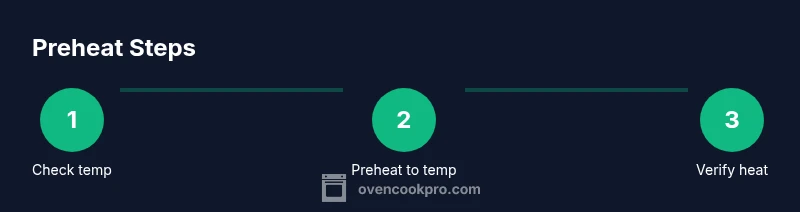
- Place an oven-safe thermometer in the center of the rack. 2) Close the door and set the timer to the typical preheat window (usually 10–15 minutes). 3) When the thermometer reaches the target temperature, open the door briefly to ensure there is no large drop. 4) If off by more than 25°F, recalibrate or wait a few more minutes. 5) Have your pan or sheet ready so you can insert food promptly once preheated.
Common Preheating Mistakes and How to Avoid Them
- Opening the door repeatedly during preheat wastes heat and confuses timing. - Starting with cold pans or food can kill the intended temperature drop and affect bake results. - Using the warming drawer as a preheat substitute creates uneven heat. - Forgetting to preheat when timing is tight leads to longer bake times and uneven browning. - Ignoring thermometer readings increases the risk of inconsistent outcomes.
A Simple Preheating Routine for Busy Nights
Before you start, pull out your ingredients and set your oven to the recipe’s target temperature. Check your thermometer, press start, and prepare your pan. Once the oven hits the set temperature, insert your food immediately and begin timing. If you’re pressed for time, consider a two-stage approach: preheat to a slightly lower temperature first, then raise to the final target once the dish is loaded.
Special Cases: Cold Ovens, Roasts, and Frozen Foods
A cold oven may require a longer ramp-up. For large roasts or heavy pans, allow extra preheat time and monitor temperature closely. Frozen foods typically benefit from direct heat once thawed, but many recipes still require a hot start for optimal browning. In any case, follow the recipe’s guidance and verify with a thermometer when possible.
Tools & Materials
- Oven thermometer(Place in center of the rack for accurate readings)
- Kitchen timer(Set to the target preheat duration (e.g., 10–15 minutes))
- Baking sheet or sheet pan(Use a sturdy metal pan with a rim to catch drips)
- Oven-safe thermometer (optional)(Extra check for very critical bakes)
- Infrared thermometer (optional)(Quick surface temp check if needed)
- Parchment paper(For easy release and cleanup)
Steps
Estimated time: 15-25 minutes
- 1
Check the recipe temperature
Review the recipe or packaging to confirm the exact oven temperature. If you’re unsure, default to the stated temperature to ensure proper browning and rise. This step ensures you are starting from a correct baseline.
Tip: Always trust the recipe first; use your thermometer to confirm the stated temperature, not guesswork. - 2
Set the oven to the target temperature
Turn the oven to the required temperature. If you’re using convection, plan to reduce the temperature by about 25°F (14°C) unless the recipe specifies otherwise. This adjustment accounts for faster heat transfer in convection ovens.
Tip: If you bake often, make a small cheat sheet of convection adjustments for your favorite recipes. - 3
Choose preheat method and wait
Close the door and start the preheat timer. Most ovens reach target in 10–15 minutes, but heavy racks or older models can take longer. Use a thermometer to confirm the interior temperature as it rises.
Tip: Avoid peeking into the oven repeatedly; each door opening wastes heat and extends the preheat time. - 4
Verify target temperature before loading
Once the thermometer hits the target, briefly open the door and verify there is no large drop when you close it. If you see a significant fluctuation, wait a bit longer or recalibrate the dial.
Tip: A small dip is normal, but a large dip indicates an inaccurate dial or heating element fault. - 5
Prepare the rack and pan
While the oven finishes heating, position your rack in the recommended location and arrange your pan, parchment, or silicone mat. Having everything ready prevents delayed loading once the oven is hot.
Tip: Keep your hands clear of the hot door and use oven mitts when handling racks. - 6
Insert food and start timing
Place the food or tray on the center of the rack and start the cooking timer immediately. Minimal door opening preserves the set temperature for even cooking.
Tip: Rotating pans halfway through baking helps counteract any hot spots.
Questions & Answers
What is the typical preheat time for most ovens?
Most ovens reach their target temperature in about 10–15 minutes, but this varies by model and age. Use a thermometer to confirm once the oven signals it is heated.
Most ovens take around ten to fifteen minutes to preheat; use a thermometer to verify the exact temperature before you bake.
Can I preheat with the oven door open?
Preheating with the door open wastes heat and can lead to uneven heating. Always keep the door closed during preheat.
No—keep the door closed during preheating to maintain the heat and ensure even cooking.
Do convection ovens preheat faster than standard ovens?
Yes, convection ovens typically heat faster. You may need to lower the recipe temperature by about 25°F (14°C) unless the instructions say otherwise.
Convection ovens usually preheat faster, so lower the temp by roughly twenty-five degrees unless the recipe tells you not to.
Should I preheat for frozen foods?
Follow the package directions; many frozen items assume a hot start. If no guidance is given, preheat to the recommended temp and bake as usual.
Check the package; if there’s no specific instruction, preheat to the usual temp and bake as directed.
What if my oven never reaches the target temperature?
Check the heating element, fuses, and power supply. If the issue persists, consult the manufacturer’s manual or a service professional.
If the oven won’t heat, inspect the heating element and power supply, and contact a technician if needed.
Watch Video
Main Points
- Verify the oven reaches the target temperature before loading food
- Use a thermometer to confirm accuracy, not the dial alone
- Adjust convection temps lower unless directed otherwise
- Preheating reduces hot spots and improves browning
- Plan for extra preheat time on older or faulty ovens