Do You Need to Preheat the Oven? A Practical Guide
Learn when preheating is essential, how long it takes, and how temperature accuracy affects baking and roasting. An expert, step-by-step guide from Oven Cook Pro for home cooks seeking reliable oven guidance.


Definition: Do you need to preheat oven? For most baking and roasting tasks, yes. Preheating helps the oven reach the recipe’s target temperature before food enters, ensuring even browning, predictable rise, and consistent texture. Some recipes may call for starting in a cold oven or for very short preheat times; always follow the instructions. Typical preheat times range from about 10 to 15 minutes at common baking temperatures.
Do You Need to Preheat Oven: A Practical Overview
For many home cooks, the question do you need to preheat oven is central to getting consistent results. According to Oven Cook Pro, most baking and roasting tasks rely on a stable starting temperature, so preheating is usually essential. When the oven is cold, the interior temperature lags behind the set point, which can lead to uneven browning and undercooked centers. Preheating gives food the immediate heat at the moment it begins cooking, supporting predictable rises in breads, proper crust formation on cookies, and even roasting of vegetables.
However, there are exceptions. Some recipes specify that the oven should start cold to promote gentle moisture loss or to trigger particular textures. In these cases, following the recipe is crucial. The key factor is temperature accuracy: using a dial setting without verifying it with a thermometer can create a large gap between intended and actual heat. This is where a simple oven thermometer becomes a wise investment. Oven Cook Pro's analysis shows that verifying temperature can reduce deviations by avoiding slow heat buildup or hotspots. By understanding do you need to preheat oven, you’ll make better choices for baking science and cooking outcomes.
How Preheating Affects Baking Outcomes
Preheating the oven helps ensure the moment heat hits the food at the start, leading to more reliable leavening, browning, and texture. In bread, a hot initial bath encourages a strong oven spring; in cookies, it helps set the structure quickly for a crisp edge and soft center. In casseroles and vegetables, even heat prevents soggy bottoms and uneven cooking. The question of do you need to preheat oven has a practical answer: preheating improves temperature stability and repeatability. If your kitchen is breezy or your oven has hotspots, a thermometer or an additional rack can help you identify problem zones. Oven Cook Pro analysis shows that cooking outcomes improve when you verify actual temperature and maintain it through the bake. Remember: preheating is part of setting up a recipe for success, not an afterthought.
When to Preheat and When You Might Skip It
Most breads, cakes, cookies, and pastries benefit from a hot start; preheating ensures proper rise and crust formation. For many casseroles, roasts, and vegetables, preheating helps with even cooking and predictable finishing times. Some recipes specifically call for starting in a cold oven to achieve a particular texture or moisture balance. In those cases, do not assume preheating is optional—follow the recipe. The broader principle remains temperature accuracy. If you don’t verify your oven’s actual temperature, you may end up with undercooked centers or overly brown exteriors. Do you need to preheat oven? In the vast majority of conventional baking and roasting tasks, yes, but adapt to recipe instructions.
Tools, Temperatures, and Timing: Getting It Right
A reliable oven thermometer is indispensable for confirming that the oven actually reaches the set temperature. Relying on the dial alone can lead to a false sense of accuracy, especially in older models or convection ovens. Typical home oven temperatures range from 300°F to 450°F (150°C to 230°C). When using convection, many recipes suggest lowering the temperature by about 25°F (15°C) to compensate for accelerated heat transfer. Do you need to preheat oven? Yes for most scenarios, but baking science benefits from precise temperature control. Begin by selecting the target temperature in the recipe, then preheat with the door closed until your thermometer reads the desired value. Avoid opening the door during this phase to prevent heat loss and uneven preheating.
Additionally, organize your rack(s) before you start preheating. Place pans on racks in the center of the oven for even airflow. If you know you’ll bake multiple items, positioning can prevent crowding and temperature drops. For delicate items, such as soufflés or meringues, maintain a steady heat and avoid rapid temperature fluctuations.
When the temperature stabilizes, you’re ready to load food. Do you need to preheat oven? The answer becomes clear: preheating is the simplest path to consistent results.
Common Scenarios: Breads, Cakes, Roasts, and Pastries
For yeasted breads, do you need to preheat oven? Yes, to promote a robust oven spring and a crisp crust. For cakes, a warm start is often critical to avoid dense textures, so preheating to the correct temperature is essential. Cookies benefit from preheated surfaces that set edges quickly for a defined shape. Roasts and vegetables rely on steady heat to cook evenly from edge to center, reducing the risk of undercooked centers. In pastries like puff pastry or laminated doughs, precise preheating prevents soggy layers and ensures proper rise. The do you need to preheat oven question has widely applicable answers across these categories, underscoring the value of a thermometer and careful timing.
Troubleshooting Preheating: Problems and Fixes
If your oven seems slow to reach temperature, recalibrate or replace inaccurate components. A simple dial can mislead you about actual heat. If you notice hotspots, rotate pans mid-bake or add a second rack to balance heat distribution. Opening the door during preheating wastes energy and disrupts the process. If your oven consistently overshoots temperature, consider a thermostat adjustment by a professional. In all cases, verify temperature with an oven thermometer and adjust recipes as needed. The core idea remains: do you need to preheat oven? In almost all baking scenarios, the answer is yes, but the exact steps depend on your appliance and recipe.
Tools & Materials
- Oven thermometer(Place in center of rack to monitor actual temperature vs. dial)
- Timer or smart timer(Accurate timing for preheat and bake phases)
- Parchment paper or silicone mat(Prevents sticking and ensures even heat contact)
- Baking sheet or pan(Flat, stable surface for even heat transfer)
- Oven-safe mitts or gloves(Protect hands when loading and removing hot items)
- Rack(s) for airflow(Center rack is ideal for even heating; adjust as needed)
Steps
Estimated time: 20-40 minutes
- 1
Set target temperature
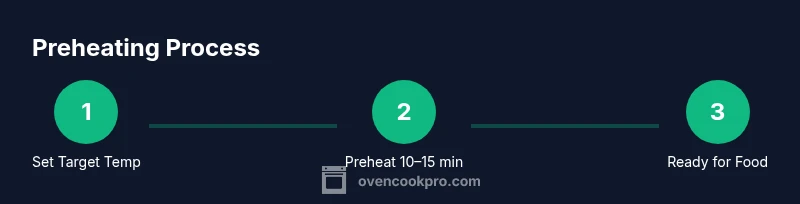
Power on the oven and set it to the recipe's indicated temperature. If your oven uses a digital display, confirm the readout matches the intended heat. This first action establishes the baseline for accurate cooking.
Tip: Use an oven thermometer to verify actual temperature before proceeding. - 2
Preheat and wait
Close the door and allow the oven to come to temperature. Typical preheat time ranges from 10 to 15 minutes at common baking temperatures, though this can vary with oven age and calibration. Do not rush this step, as early heat affects texture and rise.
Tip: Avoid opening the door during preheat to prevent heat loss and hotspots. - 3
Arrange racks and pans
While heating, place racks in their intended positions and arrange pans where the hot air can circulate evenly. If you know you’ll bake multiple items, plan positioning to minimize crowding and temperature drops.
Tip: Pre-position pans so you’ll load food immediately when preheating completes. - 4
Load food after preheat
Once the thermometer or display confirms target temperature, load your food promptly. This minimizes temperature drop and helps ensure even cooking from the start.
Tip: Work quickly but carefully to maintain a stable heat environment. - 5
Monitor and adjust as needed
During the bake, monitor progress and adjust if you notice temperature drift or uneven results. If using convection, reduce the heat by about 25°F (15°C) unless the recipe specifies otherwise.
Tip: Keep a cheat sheet of common convection adjustments for quick reference.
Questions & Answers
Do you always need to preheat the oven?
In most baking and roasting tasks, yes. Preheating helps ensure even heat, proper rising, and consistent browning. Some recipes may call for cold-start to achieve a specific texture; always follow the recipe.
Typically yes. Preheating gives you consistent heat, but follow the recipe if it specifies a cold-start.
How long does preheating take at 350°F?
Most home ovens take around 10 to 15 minutes to reach 350°F, though exact times vary by model and calibration. Use an oven thermometer for accuracy.
Usually about 10 to 15 minutes at 350 degrees, but check with a thermometer for accuracy.
What if my recipe says start in a cold oven?
Some recipes specify starting in a cold oven to influence texture or moisture loss. If the recipe calls for this, follow it. You can still verify temperature when the bake begins and adjust timing as needed.
If the recipe says cold start, follow it. Verify heat when you begin and adjust timing if needed.
Can I preheat with food inside the oven?
Preheating with food inside is generally not recommended. It can cause uneven heating and longer preheat times. If the recipe requires it, place food carefully and monitor closely.
Usually not recommended. Preheat empty for even heat, unless the recipe specifies otherwise.
Should I adjust for convection preheating?
Yes. With convection, reduce the temperature by about 25°F (15°C) or follow the recipe’s convection guidance. Convection moves heat more efficiently, affecting outcome.
Reduce the temp by about 25 degrees if using convection, unless the recipe says otherwise.
What tools help verify preheating accuracy?
An oven thermometer is the most reliable tool to verify actual temperature. Pair it with a timer and follow the recipe for best results.
A thermometer is essential to verify the oven actually hits the set temperature.
Watch Video
Main Points
- Preheating improves bake quality and consistency.
- Always verify temperature with an oven thermometer.
- Follow recipe-specific instructions for cold-start versus preheated starts.
- Use convection adjustments when applicable to maintain accuracy.