How to Tell If Your Oven Is Preheated: A Step-by-Step Guide
Learn reliable methods to confirm your oven is properly preheated using a thermometer, cues, and safe timing tips. This Oven Cook Pro guide helps home cooks achieve consistent results with clear steps and practical troubleshooting.


By the end of this guide, you’ll know how to confirm your oven is preheated without guesswork. You’ll rely on observable cues, an accurate oven thermometer, and a reliable preheat window. You’ll also learn how to troubleshoot common delays, how open-door timing affects heat, and how to adapt checks for different oven types.
Why Preheating Matters
Preheating your oven isn't optional; it's a foundational step that shapes texture, color, and evenness of bake. According to Oven Cook Pro, preheating creates stable heat layers that drive browning and ensure foods cook through consistently. Skipping this step often yields uneven centers, pale crusts, or soggy bottoms. In this section, we explore why preheating matters across common recipes, from pastries to casseroles, and how to calibrate expectations for your oven’s quirks. Understanding preheating helps home cooks achieve repeatable results, reduce waste, and feel confident when following new recipes. For bakeries or weekend cooks alike, the principle remains the same: heat matters, and you’ll verify it with dependable cues and tools.
Observable Cues Indicating the Oven Is Ready
The most intuitive signal is that the oven has reached the target temperature. Look for the thermometer needle to stabilize near the set point, and listen for the absence of the preheat hum or indicator beeps if your model provides them. If your oven includes a preheat light that shuts off when ready, use that as a secondary cue in conjunction with a thermometer. Note that some ovens show a blinking indicator that turns solid once the target is reached; rely on multiple cues rather than a single signal. In practice, combine thermometer readings with a brief stabilization check to confirm even heat, especially in older or compact models.
The Right Tool: Thermometer Placement and Accuracy
A reliable oven thermometer is the most consistent way to verify preheating. Place the thermometer in the center of the oven on the middle rack, away from walls and racks, to avoid hot spots or radiant heat skewing the reading. Dial thermometers need calibration occasionally, while digital readouts can drift if placed too near the door or vent. Always ensure the thermometer is oven-safe and rated for the temperatures you use. By standardizing placement, you reduce interpretation errors and gain a dependable reference point for your preheat checks.
A Practical Step-by-Step Check (No Guesswork)
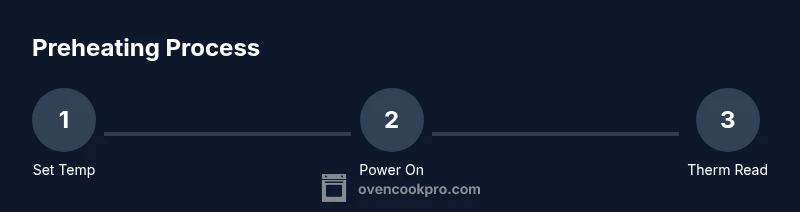
To verify preheating with confidence, follow a repeatable routine that blends timer discipline with thermometer accuracy. Set the target temperature as per your recipe, arrange racks, and close the door to minimize heat loss. Insert your oven thermometer in the center and start a timer. After about 5–10 minutes, check that the reading is close to the target and stable for at least a minute. If it isn’t, wait longer or re-check after re-seating the thermometer. The goal is a stable, near-target reading before you begin cooking. Always keep the door closed during the stabilization window to maintain heat consistency.
Troubleshooting Common Preheating Delays
If the oven stalls at a sub-target temperature, first verify you set the correct temperature for the recipe and that the door isn’t left ajar. Inspect the door gasket for wear, which can cause heat loss. For older ovens, calibration drift is common; testing with a separate thermometer helps you quantify the discrepancy and decide whether a professional calibration is needed. If you’re using a convection setting, remember that airflow changes heat distribution and may affect preheat times. When in doubt, run a quick test bake at a small, simple dish to confirm performance before committing to a larger recipe.
Safety and Best Practices for Safe Preheating
Never touch heating elements; use insulated oven mitts when placing or removing thermometers. Keep flammable items away from the oven and avoid leaving the door open longer than necessary. If you smell burning or observe smoke, stop the preheat, turn off the oven, and allow it to cool before inspecting. Convection ovens require minor temp adjustments, and always follow the manufacturer’s guidelines for preheating procedures. Adopting these practices reduces risk while ensuring consistent results in everyday cooking.
Practical Tips for Real-World Kitchens
Every kitchen has its quirks, and real-world cooking often requires adaptable checks. Use an oven thermometer for accuracy, but also rely on recipe-specific indicators (like browning cues) once preheating is complete. For compact apartments with smaller ovens, consider placing the thermometer closer to the center and allowing a longer stabilization period. If you frequently bake at high temperatures, invest in an oven thermometer with a wide temperature range and quick response time. Finally, document your oven’s behavior to establish a personal preheat profile that guides future cooking decisions.
Quick Recap and Practical Takeaways
Preheating is essential for even cooking and reliable results. Verify with a thermometer, keep the door closed during preheat, and calibrate your oven if readings drift. Remember to adapt approaches for convection models and to account for warmth loss when the door is opened for any reason. With a repeatable routine, you’ll improve consistency across recipes and seasons.
Tools & Materials
- Oven thermometer(Place in center of oven on the middle rack)
- Kitchen timer(To track preheat duration and stabilization period)
- Oven mitts(Protect hands when handling hot racks or thermometer)
- Pen and notepad(Optional log for readings and timings)
Steps
Estimated time: 15-20 minutes
- 1
Set target temperature and prepare the oven
Find the recipe’s required temperature and set the oven accordingly. Clear the interior and remove any pans or foil that might obstruct heat flow. This ensures consistent heat distribution once preheat begins.
Tip: Double-check the recipe temperature and use the thermometer to verify accuracy. - 2
Position racks and clear the interior
Place racks where you’ll bake to avoid rearranging later. A clear interior helps air circulate and reduces cold spots that can misguide temperature readings.
Tip: Keep at least 2 inches of clearance around thermometer placement for accurate reading. - 3
Activate preheat and set a timer
Turn on the oven’s preheat function or simply set the target temperature and allow heat to build. Start a timer to track how long the oven takes to approach the target, usually several minutes.
Tip: If your oven has a preheat indicator light, monitor it in addition to the thermometer. - 4
Insert the oven thermometer in the center
Place an oven-safe thermometer in the center of the oven on the middle rack. Avoid walls or racks where heat can skew readings.
Tip: Ensure the thermometer is fully inserted and stable to prevent readings from shifting. - 5
Wait for stabilization near the target
Continue preheating and monitor the thermometer until the reading stays near the target for about a minute. Do not rush to begin cooking until you see consistency.
Tip: Keep the door closed during this window to prevent heat loss. - 6
Confirm readiness and start cooking
Once the thermometer is steady near the target, you can start cooking. If you’re unsure, perform a quick test bake with a small item to verify performance.
Tip: Document any discrepancies for future reference.
Questions & Answers
What counts as a preheated oven?
A preheated oven is one that has reached and maintained the target temperature for at least a short stabilization period. Use a thermometer to confirm the reading and ensure heat is evenly distributed before cooking.
A preheated oven is when it has reached and held the target temperature for a moment. Check with a thermometer to confirm it’s steady before you start cooking.
How long should preheating take in a typical home oven?
Preheating time varies by model and temperature but generally takes several minutes. Use a thermometer and the oven’s indicator as your guide rather than relying on time alone.
Preheating takes a few minutes and depends on the oven. Rely on the thermometer rather than guessing from time alone.
Can I preheat with food inside the oven?
Preheating with food already inside is not recommended for most recipes, as it can change heat distribution and extension times. If you must, ensure the dish is oven-safe and monitor temperature carefully.
It's usually better to preheat empty or with a suitable dish in there, so heat distributes evenly.
Why does my oven show a different temp than the thermometer?
Ovens can drift due to calibration, door seals, or wear. A separate thermometer gives an independent reading, and if it consistently differs, you may need calibration or professional service.
Oven displays can drift. Use a separate thermometer and consider calibration if readings don’t align.
Is preheating different for convection ovens?
Yes. Convection often heats faster and distributes air more evenly, so you may lower the target temperature or shorten the preheat time per recipe guidance. Always follow manufacturer recommendations.
Convection ovens often preheat quicker and may need a temperature adjustment per the manual.
What should I do if the oven never reaches the target temperature?
If your oven won’t reach the target, check the door seal, thermostat calibration, and any error indicators. Consider professional servicing if the issue persists despite recalibration attempts.
If it won’t reach temperature, check the seal and calibration, and call a technician if needed.
Watch Video
Main Points
- Verify target temperature with a thermometer.
- Keep the door closed during preheat to maintain heat.
- Use a center-placed thermometer for accuracy.
- Calibrate if readings drift over time.