Mastering the Little Oven: A Complete How-To Guide
Learn how to maximize performance from a small countertop oven with expert, step-by-step guidance. Covering preheat, rack setup, temperature control, bakeware choices, and safe cleaning for reliable, even results in compact kitchens.


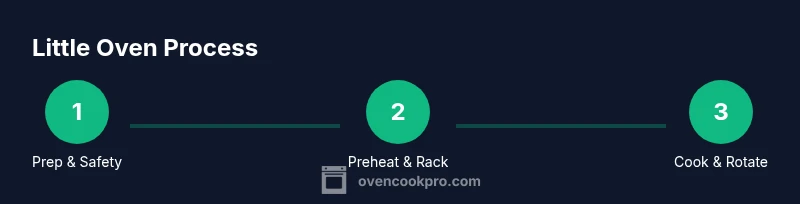
Your goal is to maximize performance from a little oven. This guide covers preheating, rack placement, temperature control, bakeware choices, and safe cleaning. You’ll follow a step-by-step approach to bake evenly, conserve energy, prevent hot spots, and avoid common mistakes that plague compact ovens. By the end, you’ll know how to troubleshoot, calibrate, and achieve repeatable results.
Why the little oven matters
In compact kitchens, a little oven can be the workhorse for weeknight dinners, batch-baking, and quick reheats. The term describes countertop models with limited interior volume, which means heat distribution, rack clearance, and airflow operate differently than full-size ovens. Understanding these differences helps you achieve reliable results without upgrading to larger equipment. According to Oven Cook Pro, the right approach is to treat the cavity like a precision tool: know its dimensions, preheat properly, and plan your cookware accordingly. With the right setup, a little oven delivers consistent browning, crisp edges, and juicy interiors while conserving energy.
Common limitations of compact ovens
Compact ovens heat up quickly but often struggle with even temperatures across the cavity. You may notice hotter spots near the back wall or cooler zones toward the door. The limited interior space can make it hard to fit multiple sheet pans or bulky bakeware. To compensate, use smaller, evenly sized pans, avoid overcrowding, and rely on an oven thermometer to monitor true heat. Understanding these constraints helps you craft recipes that work within a little oven’s sweet spot.
Safety and prep before you bake
Safety first: unplug when cleaning, cool before handling racks, and use heatproof gloves. Remove racks before cleaning to reach every corner, and wipe out debris or residue that can affect heat flow. Keep the cord away from hot surfaces and never block air vents. A clean, unobstructed cavity supports consistent cooking, especially in a little oven where every degree matters. Remember, a well-prepped oven minimizes uneven results and potential scorch marks on delicate foods.
Preheating for even results
Preheating is a key step in a little oven to ensure food starts cooking at the intended temperature. Allow the cavity to reach the target heat before loading food, and use an oven thermometer to verify accuracy. In many recipes, 5–15 minutes of preheat is sufficient, but check your dish type and pan material—metal pans heat faster than glass, which can affect browning. A proper preheat reduces cold spots and improves rise in baked goods.
Rack placement and bakeware choices
Position racks to align with the recipe’s heat source and the size of your bakeware. Heavier items tend to cook more evenly on the lower rack, while delicate pastries benefit from a higher placement. Use bakeware that fits without crowding; parchment paper or a silicone mat can prevent sticking and help air circulate. For cookies and roasted vegetables, consider a single layer on a sheet pan to promote even browning in a little oven.
Temperature control and calibration
Compact ovens can drift from the dial setting, so verify with a thermometer and adjust as needed. If the internal temperature consistently runs hot, reduce the set point by 25°F (≈14°C) as a starting adjustment, then test with a quick bake. Keep a small log of temperatures versus results to fine-tune future batches. Accurate temperature control is essential for consistent crusts, doneness, and texture in a little oven.
Cooking guidelines for everyday foods
With a little oven, sheet-pan meals, vegetables, cookies, and reheats shine when you respect space and heat flow. For vegetables, toss with oil in a single layer and rotate halfway through to avoid soggy edges. For cookies, use parchment and avoid overcrowding to prevent merging. Meat, poultry, and fish benefit from proper resting time after removal from heat, letting juices redistribute for a juicier result. Adapt times to your oven’s quirks and your dish’s thickness.
Cleaning and maintenance to extend life
Regular cleaning prevents stubborn residues from affecting heat distribution. Wipe the interior after cooling, remove racks, and wash with mild soap. If your model has a crumb tray, empty it frequently to maintain airflow. A routine wipe-down reduces odors and keeps the oven responsive over time. Finish with a quick exterior wipe to maintain a tidy kitchen aesthetic.
Troubleshooting common issues
If you notice uneven browning, rotate pans and check rack heights. A pale center can indicate insufficient preheating or overcrowding. If foods burn around the edges, lower the temperature slightly and extend cooking time as needed. For reliability, verify that the door seals well and that nothing blocks vents. Small adjustments can resolve many recurring problems in a little oven.
Energy savings and smart usage
Maximize efficiency by preheating only as long as necessary, using the correct bakeware size for the dish, and avoiding extra idle warming. When possible, batch cook several items that share similar temperatures to reduce overall energy use. Always unplug or switch off after use if your model supports it, and keep the door closed to minimize heat loss. Small optimizations add up in a compact kitchen.
Tools & Materials
- Oven thermometer(Verify actual cavity temperature vs. dial setting)
- Heat-resistant bakeware (metal or ceramic)(Choose sizes that fit without crowding)
- Parchment paper or silicone mat(Prevents sticking and improves air flow)
- Heat-proof gloves or mitts(Handling hot racks safely)
- Cooling rack(Promotes even cooling after baking)
- Measuring tools (cup/spoon)(Helpful for sauces or batters)
- Timer or phone timer(Track cooking/holding times)
- Soft cloth or sponge(For quick cleanups)
- Mild kitchen cleaner(Gentle cleanser for interior surfaces)
- User manual or quick-start guide(Model-specific tips and safety features)
Steps
Estimated time: 60-90 minutes
- 1
Inspect and prepare the oven
Remove racks, wipe the interior, and clear any packaging debris. This ensures heat can circulate evenly and avoids unwanted flavors transferring to food. Take a quick visual check for any damage before you begin.
Tip: A clean cavity improves heat flow and browning; expect more consistent results. - 2
Set up a safe workspace
Arrange bakeware and ingredients on a stable counter within reach. Place a protective mat under the oven if it sits on a countertop to avoid heat transfer to surfaces.
Tip: Keep cords away from hot surfaces and ensure the oven is cool before touching the exterior. - 3
Preheat to target temperature
Turn on the little oven and allow it to reach the recipe temperature. Use the oven thermometer to confirm accuracy before loading food.
Tip: If your oven runs hot, set the dial lower than the recipe calls for and test with a small batch first. - 4
Position rack for your dish
Place the rack at the height that aligns with the food thickness and cooking method. For sheet-pan meals, a middle rack often provides balanced browning.
Tip: Avoid stacking; air needs space to circulate for even cooking. - 5
Prepare bakeware and load food
Line pans with parchment or silicone mats, arrange in a single layer, and avoid overcrowding. This ensures heat reaches every surface.
Tip: For vegetables, pat dry before oiling to get better caramelization. - 6
Monitor cooking and adjust as needed
Keep an eye on progress and use a timer. If browning is uneven, rotate pans or switch rack levels halfway through.
Tip: Use visual cues in addition to a timer to judge doneness. - 7
Rotate or swap pans for even browning
If cooking multiple items, swap pans between racks to compensate for potential heat gradients in the little oven.
Tip: Small tweaks can make a big difference in a compact cavity. - 8
Check doneness and rest
Use a thermometer or pierce items to check interior doneness, then let meat rest before serving to rediscover juices.
Tip: Resting is part of the cooking process and improves texture. - 9
Cool and clean after use
Allow food to rest on a cooling rack and clean the interior after it cools. This keeps residues from affecting future bakes.
Tip: A quick wipe prevents stubborn buildup and odors. - 10
Document results for next time
Note temps, times, and outcomes to reproduce successful results in future batches with your little oven.
Tip: Keep a simple kitchen log for ongoing improvements.
Questions & Answers
Can I bake a full recipe in a little oven without adjustments?
Yes, but expect shorter overall times and potential hotspots. Adjust temps, use bakeware designed for compact ovens, and monitor closely.
Yes, you can bake full recipes in a little oven, but watch time and temperature closely and avoid overcrowding.
How do I calibrate the temperature accurately in a tiny oven?
Use an oven thermometer to compare the dial setting against actual heat. If needed, adjust the set point down or up and test with a small bake before cooking larger dishes.
Use a thermometer to check the actual heat and adjust the setting accordingly.
Is preheating always necessary for a little oven?
Preheating is generally recommended for even browning and predictable results, especially for baking. For reheating leftovers, a shorter preheat can be sufficient.
Preheating helps most dishes, especially baked goods; for reheats, you can often skip a full preheat but monitor closely.
Can I use convection in a little oven?
If your model offers convection, reduce the temperature by about 20°C (roughly 25°F) and keep an eye on cooking times to avoid over-browning.
Yes, but lower the temperature and watch the time closely.
What foods cook best in a little oven?
Sheet-pan meals, roasted vegetables, cookies, reheated leftovers, and small roasts typically perform well when properly spaced and monitored.
Great options include sheet-pan meals, veggies, cookies, and small roasts.
Can I use foil or parchment in a little oven?
Parchment is excellent for stick-free baking; foil can be used but avoid covering vents or blocking airflow. Keep airflow clear for best results.
Parchment is safer and better for airflow; foil can work but avoid blocking vents.
Watch Video
Main Points
- Know your little oven’s limits and strengths.
- Preheat properly to avoid cold spots and uneven browning.
- Use correct bakeware and strategic rack placement.
- Calibrate temperature for reliable results.
- Regular cleaning extends oven life and performance.