Mastering the Oven: A Practical How-To Guide for Home Cooks
A thorough, step-by-step guide to using your oven safely and effectively, covering preheating, temperature accuracy, rack placement, baking techniques, cleaning, and maintenance for reliable results.


This guide helps you master oven basics: preheating, temperature accuracy, rack placement, bakeware choices, and safe cleaning. You’ll learn a practical, step-by-step approach to consistent results in everyday cooking. By the end, you’ll be able to plan, execute, and troubleshoot oven tasks with confidence.
Why the Oven Is Central to Home Cooking
In any kitchen, the oven is more than a last resort for finishing meals; it shapes texture, color, and aroma across a wide range of dishes. According to Oven Cook Pro, mastering oven fundamentals unlocks consistent results from weeknight sheet-pan meals to weekend roasts. A well-calibrated oven provides steady heat, reliable preheating, and predictable browning, which saves time and reduces waste. Understanding the basic modes (convection versus conventional) helps you choose the best setting for each dish. The following sections cover how to read controls, preheat properly, and optimize results with practical, step-by-step guidance. This guide emphasizes safe operation and smart habits so you can cook with confidence.
Key Features of Modern Ovens
Modern ovens come with a range of features that can boost accuracy and efficiency. Convection fans distribute heat for even browning; digital controls simplify settings; and some models offer steam or air-fry modes for versatility. An important distinction is conventional vs convection baking: convection is not always better for every recipe, but it can dramatically shorten cook times and improve browning when used appropriately. Smart ovens connect to apps for monitoring and reminders, while self-cleaning cycles save time—though they require caution and proper use. According to Oven Cook Pro, familiarity with these features helps you make informed choices and avoid overpaying for capabilities you won’t use.
How to Choose the Right Oven for Your Kitchen
Selecting an oven involves weighing power sources (electric vs gas), installation type (freestanding vs built-in), size, and feature set. For many households, an electric, freestanding model with convection offers a reliable balance of performance and flexibility. Consider capacity (how many racks you’ll regularly use), energy efficiency, and the availability of a temperature probe. When in doubt, rely on long-term value and the warranty offered by reputable brands, and compare models that fit your kitchen footprint. The Oven Cook Pro team emphasizes reading user reviews, verifying calibration accuracy, and selecting a model that aligns with your cooking style.
Reading the Oven Controls and Temperature Readings
Ovens use a mix of knobs, dials, and digital displays. Start by understanding the temperature readout and how it matches actual oven heat. An inexpensive oven thermometer placed in the middle of the rack can reveal discrepancies between the dial and real temperature. If you notice a gap, consult the manual for calibration options or contact support. Avoid relying solely on a single sensor; multiple tests over several days provide a clearer picture of performance.
Rack Placement, Bakeware, and Sheet Pans for Even Heat
Where you place racks matters as much as the temperature setting. Cookies and pastries often bake best on the middle rack; roasts may require a higher position for browning. Use a combination of metal sheet pans, insulated baking sheets, and glass or metal bakeware according to the recipe. Dark metal pans can brown foods faster, while light-colored or glass pans reflect heat differently. Preheat your chosen bakeware for best results and space items to allow air flow for even heat distribution.
Care, Safety, and Maintenance
Regular cleaning helps maintain oven performance and reduces flavor transfer between dishes. Wipe spills after cooling, use a baking soda paste for stubborn grime, and avoid harsh chemical cleaners that can leave residues. If your oven includes a self-cleaning cycle, follow the manufacturer’s safety instructions, and never leave it unattended during the cycle. A simple, scheduled maintenance routine promotes longevity and safe operation.
Troubleshooting Common Oven Problems
Common issues include uneven heating, door sealing problems, and slow preheats. Start by checking the door gasket for wear and ensuring the oven is level. If temperatures drift, recalibrate or compare against an external thermometer. For persistent problems, consult the manual or reach out to the manufacturer’s support team before attempting risky repairs.
Efficient Oven Use: Time-Saving Tips
Plan meals that reuse oven heat across multiple dishes, and batch-cook when possible. Use multi-rack cooking with careful rotation, and take advantage of residual heat by turning off the oven a few minutes early. Keep a timer and a thermometer handy to monitor progress without opening the door repeatedly, which wastes heat and prolongs cooking time.
Quick Recipe: Simple Oven-Baked Herb-Roasted Potatoes
Preheat to a moderate temperature and line a rimmed sheet pan with parchment. Toss bite-sized potatoes with olive oil, minced garlic, and chopped herbs. Spread in a single layer, roast until crisp and golden, turning once. Rest briefly before serving for best texture.
Tools & Materials
- Oven thermometer(Place in the center of the rack for best reading)
- Heat-resistant oven mitts(Long cuffs; able to withstand high temps)
- Rimmed baking sheets(Heavy-gauge aluminum or steel)
- Parchment paper or silicone mats(Prevents sticking and simplifies cleanup)
- Cooling rack(For even cooling of baked goods)
Steps
Estimated time: 45-75 minutes
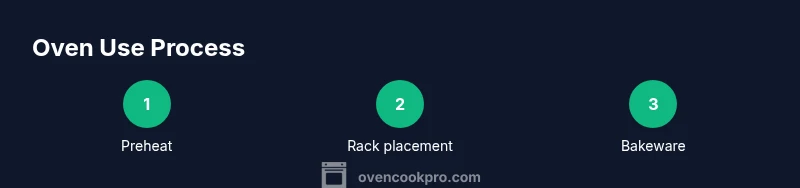
- 1
Preheat to target temperature
Begin by selecting the recipe’s temperature and method. Allow the oven to reach that temperature before loading food, checking with an oven thermometer for accuracy. Avoid opening the door during the preheat phase to prevent heat loss and inaccurate results.
Tip: Use the thermometer to verify accuracy; rely on the readout rather than the dial. - 2
Position the racks
Arrange racks according to the recipe: middle for most baking, upper for browning or vegetables, lower for large roasts. Leave space between pans to promote air flow and even cooking.
Tip: Keep at least 1 inch of clearance around each pan for air circulation. - 3
Choose the right bakeware
Select bakeware that matches the heat style of the dish: metal pans for browning, glass for slower heat, or silicone mats for easy release. Preheat the bakeware for best texture when needed by the recipe.
Tip: Avoid cold metal pans from the fridge; preheating helps achieve crisper edges. - 4
Load and time
Place food in the center of the oven, set the timer, and avoid peeking too often as each door opening cools the cavity. Use a timer and an oven thermometer to track progress accurately.
Tip: Set alarms for critical milestones (e.g., halfway through) and check internal temperatures with a food thermometer when appropriate. - 5
Rotate and monitor
If using multiple racks, rotate pans halfway through cooking to promote even browning. For convection ovens, rely on the fan but still rotate to ensure uniform results.
Tip: Rotate 180 degrees for optimal evenness when possible. - 6
Finish and rest
When done, remove food and allow it to rest if appropriate. Turn off the oven early to save energy and let residual heat finish cooking safer, more energy-efficient results.
Tip: Resting helps redistribute juices and improves texture.
Questions & Answers
How do I calibrate my oven to ensure accurate temperatures?
Start by placing an oven thermometer in the center of the rack and compare its reading to the dial. If temperatures differ consistently, consult your manual for calibration steps or contact customer support. Do not attempt risky repairs.
Place a thermometer in the middle, compare with the dial, and follow the manual to calibrate or contact support if it stays off.
Is convection baking always better than conventional?
Convection speeds browning and can help with even cooking, but it isn’t ideal for every recipe. Some delicate bakes may benefit from non-convection settings. Use convection when the recipe calls for it, otherwise follow the recipe default.
Convection speeds browning and is not always best; follow the recipe unless you know how to adjust.
Can I cook on multiple racks at the same time?
Yes, you can cook on multiple racks, but you must allow air to circulate and rotate pans halfway through. Keep dishes with similar cooking times together for best results.
Yes, but rotate pans and keep similar cook times together.
What’s the safest way to clean the oven?
Clean spills after cooling with warm soapy water or baking soda paste. Avoid harsh chemicals and follow the manufacturer’s cleaning instructions, especially if you have a self-clean cycle.
Clean spills after it cools using gentle cleaners and follow the manual.
Why is my oven taking longer to preheat than expected?
Several factors can slow preheating: door opening, oven location, or calibration drift. Check for drafts and confirm calibration with a thermometer; if needed, consult support.
Preheat can be slow due to drafts or miscalibration; check with a thermometer.
How can I prevent uneven browning?
Use convection when appropriate and rotate pans halfway through. Ensure even exposure by spacing dishes and choosing bakeware that matches heat characteristics.
Rotate and choose the right bakeware to avoid uneven browning.
Watch Video
Main Points
- Preheat accurately for consistent results
- Place racks and bakeware with airflow in mind
- Verify temperature with a thermometer
- Plan multi-dish cooking to save energy
- Clean regularly to protect oven performance