Small Electric Oven: A Complete How-To Guide
Learn how to select, set up, and use a small electric oven for reliable baking, roasting, and everyday meals. Expert guidance from Oven Cook Pro.


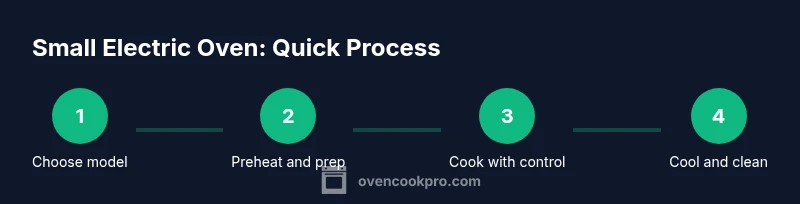
With a small electric oven, you’ll learn how to select a compact model, set it up safely, and use it for everyday baking and roasting. This guide covers essential features, safety tips, and practical steps to get reliable results. By following the steps, you’ll maximize efficiency and minimize waste in a small kitchen.
What defines a small electric oven and when to choose one
A small electric oven is a compact countertop appliance designed to sit on a kitchen counter, blending convenience with versatile cooking functions. It’s ideal for apartments, tiny kitchens, or as a secondary oven in larger homes. According to Oven Cook Pro, its compact footprint makes it easy to position under cabinets and on busy counters without sacrificing basic capabilities like baking, roasting, and broiling. When you’re deciding whether to add a small electric oven to your setup, consider your available counter space, how often you’ll use it for weeknight meals, and whether you want a dedicated appliance for pizzas, roasted vegetables, or reheated leftovers. In practice, these ovens excel at quick tasks and can take some load off a full-size range, especially during holidays or when entertaining in tight spaces.
Size, power, and energy efficiency: what to compare
Size, power, and energy efficiency are the three pillars of comparing small electric ovens. Look at overall footprint, interior capacity, and the number of rack positions rather than trying to map to a full-size oven. Instead of chasing exact wattage numbers, focus on how quickly the oven heats and how evenly it maintains temperature across racks. Energy efficiency also depends on insulation, door design, and preheat behavior. The right model will balance a compact footprint with reliable, even heating.
Many models emphasize rapid preheat or true convection as a feature; if you plan on batch baking or roasting, a fan-assisted design can reduce cooking times and improve browning. Check for a glass door that stays cool on the exterior and an interior with easy-clean enamel to minimize maintenance. Finally, assess how the oven handles residual heat—some doors stay cooler and help conserve energy after cooking.
Essential features to look for in a model
Key features determine how easy and reliable your results will be. Prioritize even heating across the cavity, reliable temperature control, and a clear display. Useful extras include a programmable timer with an auto shut-off, a bake and broil function, and a crumb tray for easy cleanup. Interior materials should be non-stick or easy-to-clean enamel, with removable racks and a simple, sturdy door. For safety, look for cool-touch exteriors, a built-in anti-tip rack, and an automatic shut-off if the door is opened mid-cycle.
Typical cooking capabilities: baking, roasting, and broiling
Small electric ovens support a range of everyday tasks: baking cookies, roasting vegetables, reheating leftovers, toasting bread, and even baking small sheet-pan meals. They are especially good for single servings and small casseroles. For best results, match your cookware to the oven’s interior dimensions and avoid overcrowding. Temperature control accuracy matters here; calibrate if you notice uneven browning, and consider using parchment paper to prevent sticking and make cleanup easier.
Practical setup and placement considerations
Place the oven on a stable heat-resistant surface, away from the edge of counters, with several inches of clearance on all sides to allow ventilation. Do not place it directly beneath overhead cabinets where heat could accumulate; ensure there’s a nearby power outlet and avoid using extension cords. Position the oven where you can easily reach the racks and monitor food; keep a dedicated space for accessories like parchment, foil, and baking sheets. For safety, keep children and pets away during operation and always unplug before cleaning.
Cleaning, maintenance, and longevity tips
In daily use, wipe the exterior and door seal after each cook. Let the interior cool completely before cleaning; use a damp cloth and mild soap or a non-abrasive cleaner on enamel surfaces. For stubborn stains, a paste of baking soda and water can lift residues; avoid abrasive scrubbers that could scratch the enamel. Regularly empty and wipe the crumb tray, and check the door gasket for wear. A little routine maintenance extends life and keeps heating even.
Troubleshooting common performance issues
Even the best small electric ovens can develop quirks. If the oven seems to heat unevenly, use an oven thermometer to verify the internal temperature and rotate pans. If you notice frequent temperature drift, recalibrate according to the user manual or contact support. Smoke or unusual smells may indicate residual oil or burnt food—start with a thorough interior cleaning and inspect seals and racks. Fans that run louder or continually cycle might point to a failing fan or motor; consult the manual or a technician.
How to use in common kitchen workflows
Integrate the oven into weekly meal planning by pairing it with batch cooking; for example, preheat for roasted vegetables while preparing proteins in the main oven. Use the small electric oven to reheat leftovers without drying them out by using lower temperatures and moisture-preserving lids. When baking, consider smaller sheet pans and pre-scaled recipes to maximize efficiency. Keep parchment paper or silicone mats handy to reduce cleanup and improve release.
Tools & Materials
- Heat-resistant oven mitts or silicone gloves(Protect hands when handling hot racks and trays)
- Oven-safe thermometer(Place on rack to verify actual oven temperature)
- Baking sheet or rimmed pan(Use for roasting or baking on a flat surface)
- Parchment paper or silicone baking mat(Prevents sticking and simplifies cleanup)
- Soft cloth or sponge(For wiping spills and exterior cleaning)
- Non-abrasive scrub brush or sponge(For deeper interior cleaning if needed)
- Cooling rack(Allow baked goods to rest and cool evenly)
- Oven-safe probe for meat (optional)(For meat temperature checks if model supports it)
Steps
Estimated time: 60-90 minutes
- 1
Choose model and position
Select a compact model with essential features. Place it on a stable, heat‑resistant surface with clearance on all sides to ensure safe operation. Verify it fits your counter space and that there is room to access racks without crowding nearby appliances.
Tip: Measure your counter space before purchase to avoid overhang or knock‑offs. - 2
Plug in and verify outlet compatibility
Plug the oven into a grounded outlet that matches the device’s basic power needs. Avoid using extension cords, which can introduce voltage drop and heat buildup. Check that the cord is in good condition and that the outlet isn’t shared with a high‑load device.
Tip: If in doubt, consult the manual or a licensed electrician about outlet suitability. - 3
Preheat to target temperature
Preheat the oven to your recipe’s specified temperature before loading food. This ensures even heat distribution from the moment you start cooking. Use an oven thermometer to confirm that the interior temperature matches the target.
Tip: Don’t skip preheating for baked goods; it helps achieve consistent rise and browning. - 4
Load cookware and food correctly
Place food on a rack with proper clearance around each piece to promote air circulation. Use oven‑safe containers and avoid plastics or foams that can melt or off‑gas. If using multiple trays, stagger them for even exposure to heat.
Tip: Leave space between items to prevent steaming and uneven browning. - 5
Monitor cooking and adjust timing
Check early and often, especially for new recipes or models. Use the built‑in timer if available and rotate pans halfway through cooking for even browning. Be prepared to shorten or extend times based on observed results.
Tip: Trust your thermometer more than the clock for sensitive dishes. - 6
Finish and rest
When cooking completes, remove items carefully and let them rest as needed. Resting improves texture and moisture distribution in baked goods and roasts. Use a cooling rack to promote even cooling and prevent sogginess.
Tip: Cover loosely with foil if needed to retain warmth without trapping steam. - 7
Clean after use
Unplug and let the oven cool before cleaning. Wipe the interior with a damp cloth and mild soap; remove and clean racks separately. Regularly empty the crumb tray and inspect the door seal for wear.
Tip: Avoid abrasive cleaners that could scratch enamel surfaces.
Questions & Answers
What is a small electric oven?
A small electric oven is a compact countertop appliance designed for baking, roasting, and broiling in tight spaces. It offers essential oven functions without needing a full-size range. These units are ideal for apartments, dorms, or as a secondary oven during busy weeks.
A small electric oven is a compact countertop oven that bakes and roasts in small kitchens, great for apartments or extra cooking capacity.
Can a small electric oven replace a full-size oven?
For many daily tasks, a small electric oven can supplement a full-size oven, especially for single meals or batch cooking. It may not handle large trays or multi‑dish meals at once. Plan around its capacity and features when designing meals.
It can supplement a full-size oven, but may not handle very large batches at once.
What safety features should I look for?
Look for cool‑touch exteriors, stable feet, automatic shut‑off, and a secure door latch. A reliable thermostat or thermometer helps ensure accurate temperatures. Avoid exposed coils or damaged cords.
Prioritize cool surfaces, auto shut-off, and reliable temperature control for safer operation.
How do I calibrate temperature accurately?
Use an oven thermometer to compare the set temperature with the actual interior temperature. If discrepancies persist, refer to the manual for calibration steps or contact customer support for model-specific guidance.
Use a separate thermometer to verify temperature and adjust if your model allows calibration.
How should I clean the interior without harming coatings?
Let the oven cool completely, then wipe with a damp cloth and mild soap. For stubborn residues, a baking soda paste can lift stains without scratching enamel. Avoid abrasive pads that can dull coatings.
Cool, wipe gently, and avoid harsh cleaners to protect the enamel.
What dishes work best in a small electric oven?
Sheet-pan dinners, roasted vegetables, cookies, roasted chicken thighs, and toasting or reheating bread are all well-suited for compact ovens. Keep portions small and use appropriately sized pans to maximize airflow and browning.
Great for sheet-pan meals, veggies, cookies, and reheating leftovers in a pinch.
Watch Video
Main Points
- Choose a model with even heating and simple controls
- Preheat properly for reliable results
- Use parchment paper or silicone mats to cut cleanup
- Place on a stable, ventilated surface with space around
- Regularly clean and inspect seals for long life