Portable Oven: A Complete How-To Guide
Learn how to choose, use, and maintain a portable oven for compact kitchens, camping, and emergencies. This Oven Cook Pro guide covers features, safety, power options, and a step-by-step setup.


With a portable oven, you can bake and roast in tight spaces, camping trips, or a small apartment. This quick answer outlines how to pick the right model, prepare it safely, choose power options, and perform essential maintenance. You will learn practical steps to set up, preheat, and cook reliably while keeping safety top of mind.
Why a portable oven matters in small spaces
In today's compact kitchens and on the go, a portable oven can expand your cooking repertoire without a full-size oven. It delivers baking, roasting, and reheating capabilities in a footprint that fits on a countertop or a camping table. According to Oven Cook Pro, the best portable ovens balance heat consistency with safety features, so you can cook with confidence even in a studio apartment or a vacation cabin. When you need flexibility for weekend projects or weekday meals, a portable oven becomes a reliable ally in your culinary toolkit. The key is to understand its strengths—space efficiency, rapid preheating, and the ability to operate on multiple power sources—so you can pick a model that truly matches your home and lifestyle.
How to evaluate portable ovens: features that matter
When shopping for a portable oven, start with core specifications: size, weight, and heat output. Look for models with even heating, a stable rack system, and a reliable thermostat. Consider power options: electric, gas, or propane-safe units; for apartments, electric may be easiest, while campers may prefer propane or induction-ready surfaces. Temperature range and preheat performance determine what you can cook—bread, roasted vegetables, and casseroles all rely on consistent heat. Safety features to prioritize include automatic shutoff, an insulated door, cool-touch handles, and clearly labeled controls. Finally, check for ease of cleaning and durable construction, so the unit endures frequent use. A well-chosen portable oven should feel like a natural extension of your kitchen, not a bulky afterthought.
Safety basics and best practices
Safety should guide every use: place the oven on a heat-resistant, level surface away from flammable items and water sources. Allow the unit to cool before moving it, and never leave it unattended when in use. Use heat-resistant gloves and baking mats; ensure proper ventilation if cooking indoors. Read the manual for your model’s specific instructions, especially around preheating times and maximum temperatures. Keep the cord and power supply away from hot surfaces, and never cover vents. Store accessories in a dry place to prevent corrosion. With careful setup and regular checks, a portable oven delivers reliable results while keeping your family safe.
Practical cooking scenarios with a portable oven
From weeknight casseroles to weekend baking, these examples show what is feasible. You can bake a 9x9-inch tray of vegetables, roast chicken thighs, or reheat leftover slices with crisp edges. Use oven-safe cookware like a small cast-iron skillet or a metal sheet pan; parchment paper helps with cleanup. For bread lovers, a small loaf or rolls can brown nicely if you preheat the oven and use steam methods if your model supports it. The compact size means you may cook in smaller batches, which emphasizes planning and timing. If you are camping, lightweight aluminum pans and foil-lined trays reduce cleanup. With practice, your portable oven becomes as versatile as a traditional oven in many everyday meals.
Cleaning and maintenance for longevity
After you finish cooking, unplug and let the oven cool fully. Empty the crumb tray and wipe residual grease with a damp cloth. For stubborn stains, use a gentle dish soap and a non-abrasive sponge; avoid harsh chemicals that could degrade gaskets. Clean the door seals regularly to maintain heat efficiency. Dry all surfaces before storage and check cords for wear. Periodically inspect racks and trays for warping. With routine care, your portable oven will perform consistently and last for years.
How to choose the right portable oven for your needs
Define your use cases: apartment cooking, camping trips, or emergency kits. Then align power sources with your home and travel plans; an electric model is easiest indoors, while propane or induction-ready units suit outdoor use. Consider capacity and footprint: measure counter space and ensure the oven fits your cookware. Look at temperature consistency, preheat times, and safety features. Read user reviews to gauge reliability and customer support; verify warranty terms. Finally, balance cost with build quality and the availability of replacement parts. A smart pick supports your weekly menu and weekend projects without overpowering your kitchen.
Tools & Materials
- Heat-resistant gloves(Cotton or silicone insulated, rated to at least 400°F (204°C))
- Heat-safe surface mat or trivets(Non-slip, heat-resistant; place between oven and countertop)
- Oven-safe cookware (cast-iron skillet or metal baking sheet)(Ensure size fits inside the portable oven cavity)
- Parchment paper or aluminum foil(For easier cleanup and to prevent sticking)
- Digital or oven thermometer(Helpful for checking internal temps when precise results matter)
- Kitchen timer or smartphone timer(Keeps track of preheat and cook times)
- User manual (model-specific)(Refer to safety features and limitations)
Steps
Estimated time: 60-90 minutes
- 1
Assess space and power readiness
Measure available counter space and confirm a safe, level surface. Check that your outlet can supply the current needed by the portable oven (use a dedicated outlet if possible). This helps prevent tripped circuits and unstable operation. Look at any included ventilation requirements in the manual and plan where cords will run.
Tip: Use a dedicated circuit if you expect long cook times or high heat. - 2
Choose model and power source
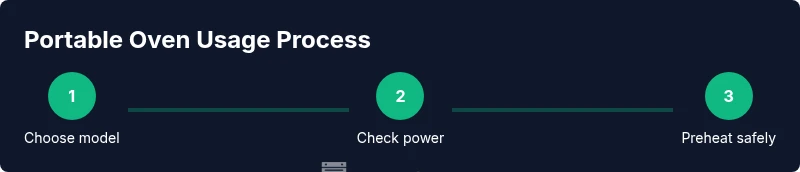
Select a model based on where you will use it most: electric for indoors, propane for outdoors, or induction-ready for compatibility with induction cooktops. Verify wattage or BTU ratings match your space and cookware. Confirm safety features and warranty coverage.
Tip: If camping, opt for a fuel source you can easily obtain on trips. - 3
Prepare safe setup
Place the portable oven on a heat-resistant mat, away from edges, and ensure all flammable items are cleared. Have your cookware ready and ensure it is dry before inserting into the oven. If the model has a glass door, handle with care to avoid shattering.
Tip: Keep a small baking tray handy to catch drips and reposition food easily. - 4
Preheat and load cookware
Preheat the oven to the target temperature as instructed by the model's manual. While it preheats, prepare the food and place it in oven-safe cookware. Load food evenly to promote uniform browning and avoid overcrowding the cavity.
Tip: Use parchment or foil to prevent sticking and simplify cleanup. - 5
Cook and monitor
Set the timer and monitor progress. Check halfway through and rotate or rearrange items for even cooking if your model allows. Use a thermometer to verify internal temperatures if safety-critical dishes are involved.
Tip: Avoid opening the door repeatedly; every opening can cause heat loss and extended cooking times. - 6
Cool, clean, and store
Power off and let the oven cool completely before cleaning. Wipe the exterior and scrub the crumb tray as needed. Store with cords neatly coiled and doors closed to protect seals from dust and moisture.
Tip: Regularly inspect gaskets and racks for wear; replace as needed to maintain safety.
Questions & Answers
What is a portable oven and how does it work?
A portable oven is a compact countertop appliance designed for mobility. It provides baking, roasting, and reheating capabilities with smaller capacity than a full-size oven. It can operate on electric, gas, or propane sources depending on the model. Always follow the manufacturer guidelines for safe use.
A portable oven is a compact countertop oven you can move and use in small spaces. It comes in different power options and should be used according to the manual.
Can I use a portable oven indoors safely?
Yes, indoor use is generally safe when you follow ventilation recommendations, place the unit on a heat-resistant surface, and avoid blocking vents. Do not use near water or flammable items and keep children away during operation.
Indoor use is safe if you have ventilation and keep the oven away from flammables and water.
What power sources do portable ovens use?
Most portable ovens use electricity or propane, with some models designed for induction-ready surfaces. Match the power source to your space and travel plans, and always follow the safety guidelines in the manual.
Electric or propane are common; choose based on where you will cook and follow safety guidelines.
How do I preheat and cook effectively?
Preheat the unit to the recommended temperature before loading food. Use appropriate cookware and avoid overcrowding to ensure even cooking. Monitor progress with a timer and, if possible, a thermometer for accurate internal temps.
Preheat as instructed, use the right cookware, and keep an eye on progress with a timer.
How should I clean and store after cooking?
Let the oven cool completely, then wipe the exterior and clean the crumb tray. Use mild soap and a non-abrasive sponge; dry thoroughly before storing. Inspect seals and cords periodically and store in a dry place.
Cool it first, clean gently, dry well, and inspect seals before storing.
Watch Video
Main Points
- Define space, power, and cooking goals before buying.
- Preheat appropriately to ensure even browning.
- Use appropriate, oven-safe cookware for best results.
- Prioritize safety with ventilation and heat protection.