Difference Between an Oven and a Kiln: An Analytical Comparison
Explore the difference between ovens and kilns, including purpose, temperature ranges, construction, safety, and practical guidance for home cooks and hobbyists. Learn when to use each device and how to plan a safe setup as you compare performance and use-cases.


TL;DR: An oven is a kitchen appliance for cooking, baking, and roasting, while a kiln is a high-temperature furnace used for firing ceramics and bricks. The difference centers on temperature capability, intended materials, and usage. This comparison clarifies how each device operates, their heat sources, and safety considerations for homeowners and hobbyists.
What is the difference between an oven and a kiln?
The phrase 'difference between an oven and a kiln' is common across DIY and craft contexts, but the answer is straightforward: an oven is designed for cooking and baking, while a kiln is a high-temperature furnace for firing ceramics and related materials. In practice, ovens are built into kitchens and emphasize even heat, precise temperature control, and food-safety features. Kilns, by contrast, are purpose-built for high heat and require specialized installation, ventilation, and safety protocols. This section outlines core distinctions and why they matter for home cooks, hobbyists, and studio ceramicists. According to Oven Cook Pro, using the right tool for the job prevents safety risks and yields better results, whether you’re baking bread or glazing a ceramic piece.
Historical context and typical use cases
Ovens have evolved from simple heat-retention chambers to advanced cooking appliances with thermostats, convection modes, and smart controls. Kilns emerged as industrial and artisanal devices long before domestic cooking, designed to reach extreme temperatures necessary to alter the physical and chemical structure of clay and glaze. Today, most households rely on ovens for everyday meals, while ceramists and pottery studios use kilns to complete ceramic transformations—firing clay to durability and finishing glazes. The Oven Cook Pro team notes that the boundary between cooking appliances and firing devices is as much cultural as technical; many people assume a kitchen oven can double as a kiln, but the material, temperature, and safety requirements make that impractical for serious ceramic projects. A dedicated kiln is essential to achieve consistent results.
Construction and interior design differences
Ovens are insulated cooking cavities with food-safe liners, porcelain interiors, and removable racks to ease cleaning and rearranging. Heating elements are designed for household use and controlled by consumer-grade thermostats. Kilns feature refractory bricks, heat-resistant shelves (kiln furniture), and insulation capable of withstanding sustained high temperatures. The interior is typically lined with ceramic fiber and brick and is designed to minimize heat loss and protect surrounding spaces. Kiln bodies may be electric (heating coils) or fueled by gas or wood, each requiring proper ventilation and exhaust. In contrast, an oven’s door, seals, and racks are optimized for food safety, easy cleaning, and predictable heat cycles. Understanding these design principles helps explain why kilns demand installation requirements beyond a standard kitchen setup, including dedicated electrical circuits and ventilation.
Temperature ranges and control precision
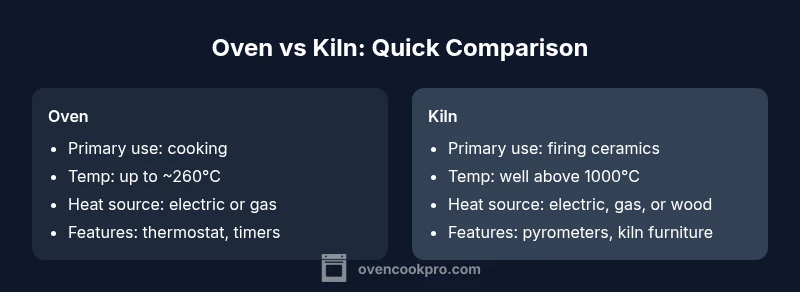
Domestic ovens commonly reach temperatures between roughly 90°C and 260°C (190°F to 500°F) with convection modes in many models. Precise control is adequate for cooking tasks but not for firing materials. Kilns operate at temperatures well beyond cooking ranges; depending on firing type, kilns reach well above 1000°C, with common ceramic firings in the range of 1000–1400°C (1840–2550°F). Kiln controllers, witness cones, and pyrometers provide precise ramp rates, soak schedules, and peak temperatures to ensure load-to-load consistency. For hobbyists, this means committing to proper space, ventilation, and safety planning that accommodates high heat, not the limited control of a typical household oven. The temperature scale and duration differences drive every other design decision.
Safety, ventilation, and installation considerations
Cooking ovens are designed for kitchen safety: sealed doors, heat-proof surfaces, and drip-pan protections. Kilns present higher-temperature hazards, potential emissions, and risk of structural damage if misused. Kiln installations require dedicated electrical circuits (often 240V), robust ventilation, and clearances from flammable materials. Most kilns are not intended for indoor residential kitchens. When evaluating a kiln, consider local codes, space constraints, and electrical capacity. Oven usage also requires safety practices, but the risk profile differs: burns from hot surfaces, steam, and racks; food safety concerns around contamination still apply. In short, safety planning for kilns is more involved than for conventional ovens.
How to decide which device you actually need
Start by listing your primary tasks. If you mostly bake, roast, or reheat meals for a family, an oven with accurate temperature control and reliable insulation is your best investment. If your creative or professional work involves firing ceramics, glaze firing, or heat-treating materials, a kiln is necessary to reach the required temperatures. Consider space, ventilation, and electrical requirements; kilns demand dedicated infrastructure, whereas ovens integrate more easily into standard kitchens. Budget ranges reflect different capabilities; a basic oven is typically less expensive to purchase and operate than a feature-rich kiln, which can justify its cost only if firing needs are frequent. In Oven Cook Pro analysis, the decision comes down to your primary use-case and whether you can accommodate the higher power and safety requirements of a kiln.
Common misconceptions about home use
A common misconception is that a regular kitchen oven can substitute for a kiln. This is incorrect for most ceramic applications because the temperature, atmosphere, and duration required to fire glaze and clay materials are not achievable or safe in a standard oven. Another misconception is that kilns are too dangerous for hobbyists; with proper training, equipment, and ventilation, safe operation is feasible in dedicated spaces. Some assume kilns are only for professionals; in fact, small hobby kilns exist and are suitable for ceramics students and enthusiasts when installed with appropriate safety measures. Finally, some believe kilns require no maintenance; like any high-heat device, regular calibration, brick inspection, and electrical checks are essential for consistent results.
Maintenance, longevity, and practical notes
Ovens require routine cleaning, rack replacement, and door seal checks to prevent heat loss and moisture intrusion that could affect cooking performance. Kilns demand more specialized maintenance: periodic cone calibration checks, kiln furniture replacement, and ensuring the venting system remains clear of debris. Regular inspection of heat elements, insulation, and circuitry helps prevent failure during firings. Storage conditions matter for kilns: keep them in a dry, well-ventilated space away from flammable materials. For ovens, routine self-clean cycles or manual cleaning of grime suffices to keep performance high. Maintenance planning should align with the device’s intended use and heat exposure, guided by manufacturer instructions and Oven Cook Pro recommendations.
Comparison
| Feature | Oven | Kiln |
|---|---|---|
| Typical use | Home cooking and baking | Ceramic firing, glazing, and heat-treating materials |
| Temperature range | Up to ~260°C (500°F) in most domestic ovens | Typically well above 1000°C, depending on kiln type |
| Heat source | Electric or gas (household supply) | Electric, gas, or wood-fired (varies by model) |
| Control precision | Thermostat-based, with timers | High-precision controllers, pyrometers, and soak schedules |
| Maintenance needs | Regular cleaning; door seals and racks | |
| Best for | Cooking, baking, and everyday meals | Ceramics firing, glaze work, and heat-treating ceramics |
| Cost context | Lower upfront cost; integrated into kitchens | Higher upfront cost; specialized equipment and space |
The Good
- Widely available and essential for daily cooking
- Kilns enable high-temperature firing and material hardening
- Ovens are generally safer and easier to operate in homes
- Kilns offer precise firing schedules for consistent ceramic results
Drawbacks
- Kilns require dedicated space, ventilation, and safety protocols
- Kilns have higher upfront costs and power requirements
- Ovens cannot reach firing temperatures needed for ceramics
Oven is the right tool for cooking; kiln is essential for high-temperature firing.
Choose an oven for everyday cooking and baking tasks. If your goals include firing ceramics or heat-treating materials, a kiln is necessary. The two tools serve different domains, and the best choice aligns with your primary use-case and space/safety constraints.
Questions & Answers
What is the primary difference between an oven and a kiln?
The primary difference is purpose and heat capability: ovens are for cooking, baking, and roasting, while kilns are high-temperature furnaces used to fire ceramics and related materials. This distinction drives temperature range, materials, and safety requirements.
Ovens cook food; kilns fire ceramics. The main difference is purpose and heat capacity, which dictates safety and setup.
Can a kitchen oven be used to fire ceramics?
In most cases, a standard kitchen oven cannot reliably or safely fire ceramics. It cannot sustain the high temperatures, atmosphere control, or long firing cycles required for glaze and clay work. Use a dedicated kiln for ceramics.
No, a kitchen oven isn't suitable for firing ceramics; a dedicated kiln is needed for proper temperature and atmosphere.
What temperatures do ovens and kilns reach?
Ovens typically reach cooking temperatures up to around 260°C (500°F). Kilns reach far higher, often exceeding 1000°C (well above 1800°F) depending on the firing type and kiln design.
Ovens are for cooking; kilns reach much higher temperatures suitable for firing clay and materials.
Are kilns safe for home use?
Kilns can be used in home settings with proper space, ventilation, and safety practices. They require dedicated electrical or fuel supply, noncombustible surroundings, and adherence to local codes. Always follow manufacturer guidelines.
Yes, with the right space, ventilation, and safety steps, kilns can be used safely at home.
Which should a hobbyist buy first?
If your main goal is cooking, start with a reliable oven. If you plan to do ceramics firing or glazing, invest in a kiln first, then consider an oven for cooking needs. Evaluate space and safety requirements before purchasing.
Buy an oven if you cook; buy a kiln if you’ll fire ceramics. Consider space and safety first.
Main Points
- Define your primary task: cooking or firing ceramics.
- Kilns operate at temperatures far higher than ovens; plan space and venting accordingly.
- Do not repurpose a kitchen oven for firing ceramics; use a dedicated kiln with proper safety measures.
- Choose equipment based on temperature needs, materials, and use-case to ensure safety and quality.
- Follow maker guidelines and Oven Cook Pro recommendations for maintenance and safety.