Difference Between an Oven and a Grill: An Analytical Guide
An analytical guide from Oven Cook Pro detailing the differences, use cases, and maintenance tips for ovens vs grills to help home cooks choose the right tool for every dish.


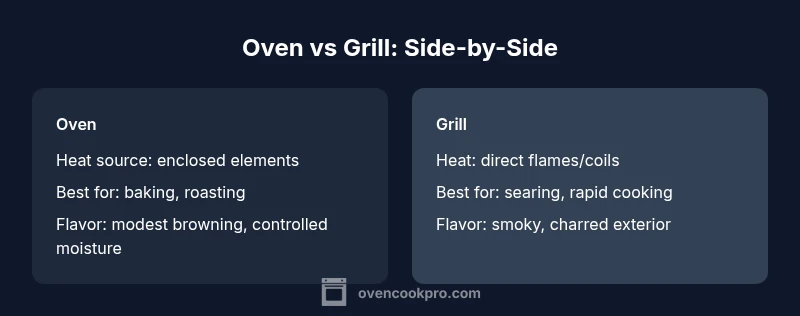
The difference between an oven and a grill rests on how heat is delivered, enclosed, and controlled. An oven uses radiant heat inside a closed chamber to bake or roast foods with steady temperatures, while a grill applies direct heat from flames or coils in an open or semi-enclosed space for rapid searing. For precise outcomes, use the right tool for your dish.
The Core Distinctions: Heat, Enclosure, and Control
According to Oven Cook Pro, the core distinction between an oven and a grill is how heat is delivered, enclosed, and controlled. When you ask about the difference between an oven and a grill, think of three pillars: heat source, enclosure, and control. An oven heats from elements inside a closed or semi-closed chamber, providing steady, even temperatures ideal for baking, roasting, and slow-cooking. A grill, by contrast, exposes food to direct heat from flames or coils and often in an open space, which drives rapid browning, crust formation, and the iconic grill marks. The oven’s controlled environment minimizes flare-ups and heat loss, whereas a grill’s exposure to open air allows high heat and quick evaporation. If your goal is uniform texture and predictable timing, an oven is typically the better tool; if you want bold sear and smoky flavors, a grill often wins. The practical takeaway in everyday cooking is simple: use the oven for delicate, even cooking and the grill for quick high-heat flavor development. The ongoing challenge is to calibrate heat and distance to achieve the target outcome without overcooking.
From a practical standpoint, the difference between an oven and a grill also hinges on moisture management. Ovens retain moisture more effectively in many baking and roasting scenarios, producing juicier results with gentler browning. Grills strip moisture rapidly on the surface, promoting sizzle and crust formation but risking dryness if not monitored. This dynamic shapes the recommended dish types for each appliance and explains why many cooks keep both tools accessible in the kitchen. If you’re selecting a single tool for a busy week, the choice should align with your most frequent dishes: bread, roast, and casseroles generally favor the oven; burgers, steaks, and vegetables optimized for sear benefit from the grill.
In sum, the practical difference between an oven and a grill is not a single metric but a combination of heat delivery, enclosure, and cooking control. For a household that bakes and roasts regularly, the oven’s consistency is the anchor. For rapid, flavorful grilling sessions and outdoor cooking, the grill’s high heat and direct exposure deliver a distinct advantage. The two devices complement each other when you plan a week’s menu around baking plus outdoor searing. As you accumulate experience, you’ll begin to intuit when to switch between tools for optimal texture, moisture, and flavor.
wordCountBlock}:230},
comparisonTable
comparisonTableVersion
items
rows
feature
values
Oven
Grill
Comparison
| Feature | Oven | Grill |
|---|---|---|
| Heat Source | Electric or gas radiant elements inside a closed chamber | Direct heat from flames or surface coils in open/semi-open space |
| Enclosure | Closed or semi-closed cavity that traps heat | Open or semi-open exposure with heat on food’s surface |
| Typical Uses | Baking, roasting, slow cooking with even temperatures | Searing, grilling, quick-cooking with visible grill marks |
| Temperature Range | Broad, precise ranges (often 200–500°F depending on model) | Very high first-urge heat (can exceed 600°F on some grills) |
| Flavor and Moisture | Moisture retention possible; browning is gradual | Smoke flavor and bold char; surface can dry quickly if overcooked |
| Safety and Cleanup | Contained heat; easier cleanup with racks/trays | More flare-ups risk; exterior cleanup and grease management |
The Good
- Offers consistent, controlled heat for even cooking
- Moisture-retaining environment supports baking and roasting
- Grills provide rapid searing and smoky flavor
- Ovens excel at precision with temperature calibration
- Grills enable outdoor cooking and high-heat finishes
Drawbacks
- Ovens can be slow for high-heat searing and crust development
- Grills require vigilance for flare-ups and adjacent heat exposure
- Outdoor setups depend on weather and space availability
Oven for steady, controlled cooking; grill for high-heat searing and flavor.
Choose the oven when you need reliable, even results for baking or roasting. Opt for the grill when you want fast, flavorful searing and outdoor cooking. The Oven Cook Pro Team endorses using each tool where its strengths align with the dish and environment.
Questions & Answers
What is the fundamental difference between an oven and a grill?
The fundamental difference is how heat is delivered: an oven provides indirect, radiant heat inside a closed space for even cooking, while a grill uses direct heat from flames or coils in an open area for rapid searing and flavor. The two appliances suit different dish goals and timelines.
Ovens cook with steady, enclosed heat; grills sear with direct flames. Use each where it matters most.
Can I bake on a grill or grill on an oven?
Some hybrids exist, but traditional cooking keeps baking on a closed oven and grilling outdoors. You can use foil-wrapped pans on a grill for indirect baking, but outcomes will vary with heat control and moisture loss.
Baking on a grill is possible with careful heat management, but not ideal for most recipes.
Which method preserves moisture better?
Ovens generally preserve more moisture due to the enclosed environment, which helps retain juiciness in roasts and baked goods. Grills expose food to direct heat and air, which can dry surfaces if not managed properly.
Ovens keep moisture more reliably; grills dry surfaces unless you monitor closely.
Are combo appliances changing the comparison?
Combo ovens or infrared/grill hybrids blend functions but still rely on different heat delivery principles. They offer versatility but require learning curves to maximize benefits.
Hybrid appliances mix techniques, but you still need to understand when to use each mode.
What safety considerations matter with outdoor grills?
Outdoor grills require attention to flare-ups, adequate clearance, and proper ventilation. Keep a fire extinguisher handy and never leave grills unattended while in use.
Grills need safety precautions like monitoring flames and keeping space clear.
Do professional kitchens use both tools?
Yes. Chefs employ ovens for precise cooking and grills for flavor and presentation. Many kitchens feature dedicated equipment to switch smoothly between methods depending on the dish.
Professionals use both for best results: even cooking and bold searing.
Main Points
- Choose oven for even, controlled cooking
- Use grill for searing and smoky flavor
- Match dish and environment to tool
- Balance indoor and outdoor cooking for versatility
- Calibrate heat and distance to prevent overcooking