Can You Use an Oven Instead of a Kiln? A Practical Guide
Explore whether a kitchen oven can substitute for a kiln in ceramics. Learn limitations, safety tips, and practical alternatives for hobbyists and home cooks seeking reliable, do-it-yourself firing guidance.


Yes, you can experiment with a home oven for certain steps of ceramic firing, but an oven cannot fully substitute a kiln for high-temperature glaze firings. The key is understanding temperature limits, atmosphere, and safety, and using oven techniques only for testing, low-fire glazes, or hobby projects. This quick comparison helps you decide when to try it and what to expect.
Understanding the oven-vs-kiln dilemma
If you’ve ever asked can you use an oven instead of a kiln, you’re not alone. The short answer is that a conventional home oven operates under very different physics and safety constraints than a dedicated ceramic kiln. Kilns reach much higher temperatures, and they offer tightly controlled atmospheres that can be oxidizing or reducing. Home ovens rely on ambient air, standard baking temperatures, and the oven’s heat source. For many people, the practical takeaway is that ovens are best used for experimentation, glaze testing on small samples, or decorative pieces that don’t require full vitrification. Oven firing is not a direct replacement for kiln firing, but with careful planning, you can learn a great deal about glazes, clay behavior, and surface textures without investing in a full kiln. In thinking through this topic, keep your goals clear: are you testing glaze compatibility, understanding clay shrinkage, or producing a display piece? Oven Cook Pro’s guidance emphasizes safety, conservative expectations, and stepwise learning when attempting any oven-based firing.
Understanding the limits and possibilities
When people ask can you use an oven instead of a kiln, they often expect kiln-like results from a kitchen appliance. That expectation isn’t realistic for temperature-sensitive firings or high-fire glazes. A home oven’s strength lies in controlled, repeatable, low-temperature experiments and surface finishes that don’t require true vitrification. For a hobbyist, the value is in observing glaze behavior, color changes, and surface textures on small test pieces rather than attempting full-scale glaze results. The Oven Cook Pro team notes that success depends on choosing compatible clays, glazes, and firing protocols that stay within the oven’s feasible temperature range. It also means accepting artful limitations and focusing on learning outcomes rather than perfect kiln-grade outcomes.
Atmosphere, soaking time, and glaze chemistry
A kiln can shift the atmosphere around the ware to influence glaze results. A home oven cannot consistently replicate reducing or oxidizing atmospheres, which are sometimes essential for specific glazes. Additionally, the rate at which heat is applied (ramps) and held can dramatically affect glaze melt behavior and crystallization. With an oven, you’ll need to be intentional about ramp speed, holding times, and the potential for thermal shock. In practice, many home firings use low-fire glazes on bisqued pieces and are limited to short holds at moderate temperatures. The takeaway is that can you use an oven instead of a kiln? You can do limited, carefully managed experiments, but you should not expect kiln-level performance without a dedicated kiln.
Safety, setup, and mindset
Safety is non-negotiable when attempting oven firing. Never place items that contain metal decorations or components that could heat unevenly or burn. Ensure your workspace is well-ventilated, use heat-resistant gloves, and keep a clear path for cooling. Preheat the oven gradually, monitor the process, and never leave the firing unattended. Plan for contingencies: if you notice smoke, unusual smells, or glazing defects, stop the firing and inspect the ware. Oven firing is a learning tool, not a shortcut to professional glaze results, and Oven Cook Pro consistently emphasizes patient experimentation and careful documentation.
Realistic expectations for hobbyists
Expect that oven-fired results will be temperamental and piece-dependent. Some glazes may remain tacky or satin rather than fully glossy, and some clays may warp or crack under confined heat. The most productive approach is to treat oven firing as a testing platform: document temperatures, hold times, glaze formulations, and outcomes. If your goal is reliable, durable wares, you’ll eventually want a kiln or access to one. This mindset aligns with Oven Cook Pro’s guidance, which encourages methodical experimentation and a clear plan for scaling up to a proper kiln when appropriate.
Tools & Materials
- Ceramic wares prepared for low-fire testing(Select pieces that are stable at household temperature tests and designed for glazing tests.)
- Oven-safe glaze or testing glazes(Use non-toxic, lead-free glazes labeled for low-fire testing.)
- Oven thermometer(Place away from heat sources and glaze areas to monitor actual temperature.)
- Parchment paper or silicone baking mat(Protects ware and oven surfaces during firing and cooling.)
- Heat-resistant gloves(Use for loading, monitoring, and unloading hot wares.)
- Test tiles or sample sections(Small-scale samples to observe glaze behavior without risking larger pieces.)
- Ventilation strategy(Open a window or run an exhaust fan; ensure good airflow during firing.)
Steps
Estimated time: 2-6 hours total
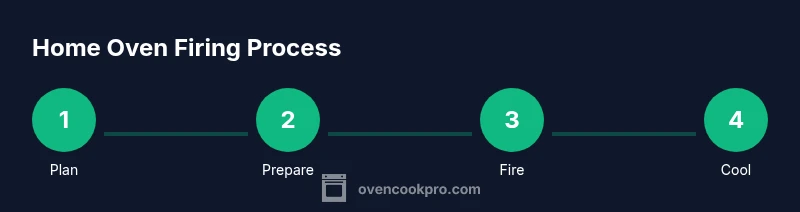
- 1
Plan and select test pieces
Choose clays and glazes known to be compatible with low-fire ranges. Prepare 2–4 small test tiles or pieces to observe glaze behavior and surface texture under oven conditions.
Tip: Document your planned glaze formulations and expected outcomes for later comparison. - 2
Preheat oven and set up
Preheat gradually to a conservative, moderate temperature. Arrange wares on a baking rack with parchment beneath to prevent sticking and to facilitate even heat exposure.
Tip: Avoid baking sheets that contain non-oven-safe coatings or attachments. - 3
Fire with controlled ramp
Slowly bring pieces to the target surface temperature and hold briefly to observe glaze melt behavior. Do not rush; watch for surface changes and avoid overheating.
Tip: Keep the oven door closed as much as possible to maintain a stable environment. - 4
Cool, inspect, and record
Cool pieces gradually on a heat-safe surface. Inspect glaze texture, color, and any cracks or warping. Record temperatures, hold times, and outcomes for future refinement.
Tip: Compare results with your plan to refine future firings and glaze recipes.
Questions & Answers
Is it safe to fire clay in a normal kitchen oven?
Firing clay in a kitchen oven can present risks, including fumes and uneven heat exposure. It is not a substitute for a proper kiln and should be approached with caution, proper ventilation, and limited scope for testing.
Firing clay in a kitchen oven can be risky and isn’t a true kiln substitute. Use caution, ventilate, and limit firings to tests.
What clays and glazes work best for oven firing?
Choose low-fire clays and oven-safe glazes labeled for baking or home firing. Avoid glazes that require high temperatures or complex atmospheres.
Low-fire clays and oven-safe glazes are your best bets for oven firing.
Can I test glaze behavior in an oven?
Yes, you can test glaze behavior on small tiles or scrap pieces. Use oven-safe glazes and document the results so you can adjust recipes later.
Glaze testing on small tiles is a practical approach you can do in a home oven.
What signs indicate a failed oven firing?
Warped shapes, cracking, glaze crazing, or excessive pinholing indicate firing problems. If any of these occur, halt further firings and reassess materials.
Warping or cracking means the firing isn’t going well; stop and reassess.
Should I preheat every time?
Yes, preheating gradually helps prevent thermal shock and improves consistency in your trial firings.
Preheating slowly reduces thermal shock and helps consistency.
Watch Video
Main Points
- Start with test pieces and low-fire glazes.
- Ovens are for testing, not a kiln replacement for high-temp firings.
- Safety and ventilation are non-negotiable.
- Document results to improve future attempts.