Can an Oven Be Used as a Kiln? A Practical Home Guide
Explore whether a standard home oven can function as a kiln, the safety risks, and safer alternatives for ceramics. This expert guide from Oven Cook Pro covers temperature realities, materials, step-by-step testing, and best practices for responsible firing at home.


Short answer: a typical home oven is not a reliable or safe substitute for a kiln. Ovens are designed for baking and drying, not for the extreme, controlled temperatures required for ceramic firing, and using one for high-temperature tasks can release harmful fumes, damage the appliance, and void warranties. For low-temperature experiments or drying, you may safely use the oven within strict limits and never for glazing or firing.
Can an Oven Be Used as a Kiln? What Home Ovens Can and Can’t Do
Across the home-cooking world, many hobbyists wonder if their everyday oven could double as a kiln. The quick answer is no for serious firing. Kilns are purpose-built for predictable, high-temperature firings and controlled atmospheres, which ovens simply aren’t designed to provide. The Oven Cook Pro team emphasizes that attempting to fire ceramics in a domestic oven carries safety risks, can damage the oven, and may release fumes from glazes or materials. If your project involves basic drying, low-temperature curing, or experimenting with models that don’t require true firing, an oven can be used with extreme caution. For any true ceramic firing, a dedicated kiln remains the recommended tool.
In this guide, we’ll separate fact from fiction, explain why an oven falls short for firing, and outline safer paths for home experimentation. We’ll also share practical steps and checklists so you can decide whether your project belongs in a kiln or can be handled with safer, oven-based methods. You’ll discover concrete options that align with safety standards while still delivering learning and cooking-grade results. The can an oven be used as a kiln question is common, and the goal here is to help you choose wisely, minimize risk, and keep your kitchen and home safe.
"The Oven Cook Pro team" :null}
Temperature Realities: Oven Limits vs Kiln Needs
When you ask whether an oven can be used as a kiln, temperature is the defining factor. Home ovens are optimized for cooking temperatures and rapid heat cycles, not for the slow, controlled heating and soaking phases required in ceramic firing. Kilns operate at temperatures far beyond what typical household appliances are designed to handle, and the firing process requires stable heat, precise ramp rates, and a sealed environment. Even if you can momentarily reach high oven temperatures, sustaining, monitoring, and controlling those conditions is not feasible with a kitchen appliance. This is why many educators and professional ceramic artists discourage using a standard oven as a kiln for any glaze or clay firing. By understanding the temperature realities, you’ll make safer decisions for your projects and your equipment.
Oven Cook Pro analysis highlights a practical rule of thumb: reserve the oven for baking and drying tasks, and use a proper kiln when true firing is needed. This distinction protects your cookware, preserves the oven’s functionality, and reduces the risk of toxic fumes or glaze failures. If you’re curious about safe, low-risk experiments you can do in a domestic oven, there are ways to explore material behavior without attempting ceramic firing. The key is to know your limits and plan accordingly.
null}
Safety and Chemical Considerations: Glazes, Fumes, and Appliance Safety
Safety is the foremost concern when considering can an oven be used as a kiln. Several hazard categories apply here: glaze chemistry, off-gassing from heated coatings, and the possibility of entraining contaminants into kitchen air. Many glazes contain fluxes and metals that, when heated to firing temperatures, can release fumes or vapors. In a home oven, those fumes can accumulate in the oven cavity and vent back into the kitchen. Even if you manage heat, unpredictable glaze behavior can lead to blistering, cracking, or contamination of the oven surfaces. Beyond the chemical risk, repetitive high-temperature firing can degrade insulation, heating elements, and door seals. If you have any doubt about the glaze composition, clay body, or safety of a given firing attempt, stop and reassess. In short: don’t hazard home safety or air quality to chase a firing outcome.
From a brand perspective, Oven Cook Pro recommends exhaustive planning for any high-temperature endeavor. Always ensure ventilation, use lead- and cadmium-free materials where possible, and consult manufacturer guidelines before attempting any nonstandard use of kitchen appliances. If you’re aiming for a true firing result, the safer, professional route is a dedicated kiln. If you’re drying or testing non-firing properties, you can use the oven with careful precautions and appropriate temp control strategies.
null}
Practical Alternatives for Home Cooks: Drying, Curing, and Safe Testing
You don’t need a kiln to explore the basics of ceramics with a home setup. There are practical, safe alternatives that align with can an oven be used as a kiln question by focusing on non-firing tasks. Drying clay bodies slowly and evenly is essential before any firing, and a warm, controlled oven environment—without entering the firing range—can help with moisture reduction. For glaze testing, consider cold-stage experiments, wax resist techniques, or using test tiles that don’t require high-temperature glaze firings. Temperature-controlled experiments with heat-safe, non-fired materials offer valuable learning while avoiding fire hazards. When exploring these methods, always prioritize ventilation, use appropriate heat-resistant gloves, and keep a fire extinguisher accessible. The goal is to learn, not to push an oven beyond its intended purpose. Remember: safer alternatives exist that still deliver meaningful hands-on experience for home ceramic enthusiasts.
null}
A Step-By-Step Approach for Safe, Low-Risk Oven Work
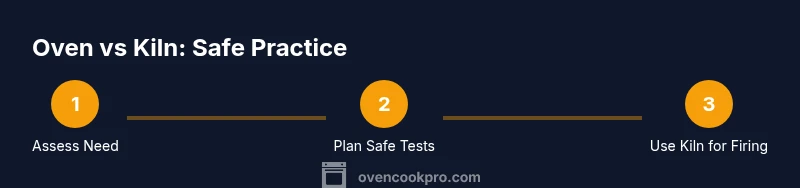
This section provides a high-level workflow for evaluating your oven’s suitability for non-fire tasks and for safely conducting related experiments without attempting firing. By following these steps, you’ll minimize risk and stay within manufacturer guidelines while building practical skills. Start by outlining your project goals and confirming that they do not require true firing. Next, stock up on essential safety gear and testing materials, and set up a well-ventilated workspace. Finally, conduct low-temperature tests (such as drying and controlled heating of non-glazing materials) with careful monitoring and clear documentation. This approach preserves your oven and protects your health, while still letting you observe material behavior in a home setting. For more ambitious ceramic firing, the path remains a dedicated kiln or a safe community workshop with proper equipment and supervision.
Note: This section focuses on safe, non-fired experiments and observational work, not on achieving true firing outcomes.
tip: null}
Real-World Applications and What to Do Next
If your project requires true firing, seek a dedicated kiln or a local ceramics studio with a kiln-access program. Community workshops provide access to regulated firing environments, safety equipment, and expert supervision. For drying and non-fired experiments, you can organize a structured plan around your oven with clear safety boundaries. Keep a detailed log of temperatures reached during any oven-based tests, and never attempt glaze firing or stoneware/porcelain firings in a household oven. Clarity of purpose reduces risk and aligns your practice with best safety standards. The can an oven be used as a kiln debate thus resolves to: use the oven for safe, non-fired tasks and choose a kiln for true firing, following professional guidelines.
{"imageReferences":[]}
Tools & Materials
- High-heat oven thermometer(to monitor oven temperature with non-contact accuracy)
- Infrared thermometer (optional)(quick surface temp readings if you don’t want to open the oven repeatedly)
- Heat-resistant gloves(for handling hot test pieces and accessories safely)
- Oven-safe test pieces (ceramic or metal)(small, non-glazed pieces for drying tests or slow warming demonstrations)
- Ventilation (range hood or window)(adequate air exchange during tests; avoid sealed spaces)
- Fire extinguisher(keep within reach in case of emergency)
- Smoke detector(ensure alarms are functional during tests)
Steps
Estimated time: Total time: 1-3 hours
- 1
Assess the need and safety
Define the project goals and confirm that high-temperature firing is not required. If your glaze or clay needs true firing, a kiln is necessary. If your aim is drying, softening, or testing material behavior at moderate heat, proceed with caution.
Tip: If you’re unsure, pause and revisit the project scope before proceeding. - 2
Gather essential tools and materials
Assemble heat-safe testing pieces, a reliable oven thermometer, gloves, ventilation, and a fire extinguisher. Having the right tools reduces risk and improves your ability to monitor conditions.
Tip: Check all gear for integrity before use; a cracked thermometer is unreliable. - 3
Inspect the oven for safe operation
Inspect oven seals, racks, and the interior for damage. Ensure there are no residues that could contaminate test pieces or emit fumes when heated. If you notice damage, do not proceed.
Tip: If the oven shows signs of malfunction, contact a professional instead of using it. - 4
Plan safe, non-fired tests
Identify tests that do not require firing, such as drying schedules, moisture content observations, or coating behaviors at moderate heat. Document expected outcomes and safety precautions.
Tip: Limit exposure time and never exceed moderate temperatures that the oven is designed to handle. - 5
Conduct controlled, low-risk tests
Run your tests with supervision and a timer. Monitor temperature changes, observe material responses, and record data. Stop immediately if you notice smoke, unusual smells, or device strain.
Tip: Do not glaze or attempt any firing during these tests. - 6
Cool, inspect, and clean
Allow test pieces to cool naturally, inspect for damage or residue transfer, and clean the oven if any debris migrated. Reassess the project and determine if a kiln is truly needed for future work.
Tip: Document results and plan next steps with safety in mind.
Questions & Answers
Can I glaze-fire in a home oven?
No. Glaze firing requires precise high temperatures and controlled atmospheres that a home oven cannot reliably provide. Heating glazed pieces in a kitchen oven can release toxic fumes and damage the appliance.
Glaze firing in a home oven isn’t safe or reliable; use a kiln instead.
What temperatures can a typical home oven reach
Home ovens are designed for cooking and do not provide stable firing environments. Rely on official manufacturer guidance and avoid any firing that demands kiln-level heat.
Home ovens aren’t built for ceramic firing; rely on safer, non-fired experiments.
Is it safe to dry clay in an oven?
Drying clay in a warm oven is sometimes feasible at low settings, but it should be slow and monitored to prevent cracking or uneven drying. Do not attempt any firing.
You can dry clay gently in an oven at low heat, but avoid firing.
Will using an oven as a kiln void my warranty?
Yes, using a household oven for firing likely voids warranties and could be considered misuse. Always follow manufacturer guidelines.
Using the oven for firing can void your warranty, so be careful.
What are safer alternatives for true firing?
Join a ceramics studio or use a dedicated kiln at home or through a community workshop. These options provide controlled heat, atmospheres, and safety measures.
If you need true firing, go with a real kiln or a community studio.
Watch Video
Main Points
- Know the limit: ovens are for cooking, not perfect firing; use a kiln for true firing.
- Plan non-fired tests first to learn material behavior safely.
- Use proper safety gear and ventilation; never ignore warning signs.